Cheng Yeong-Hsiang, Horng Yi-Bing, Chen Wei-Jung, Hua Kuo-Feng, Dybus Andrzej, Yu Yu-Hsiang
Department of Biotechnology and Animal Science, National Ilan University, Yilan 26047, Taiwan.
Department of Genetics, West Pomeranian University of Technology, 70-310 Szczecin, Poland.
Animals (Basel). 2021 Apr 26;11(5):1245. doi: 10.3390/ani11051245.
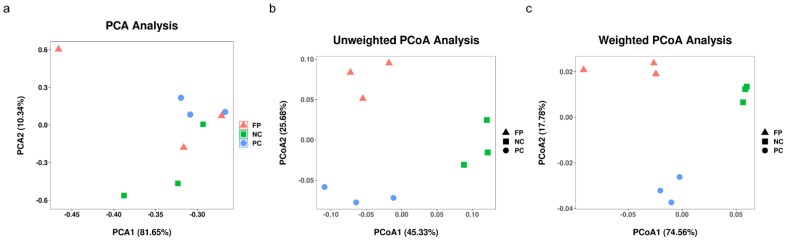
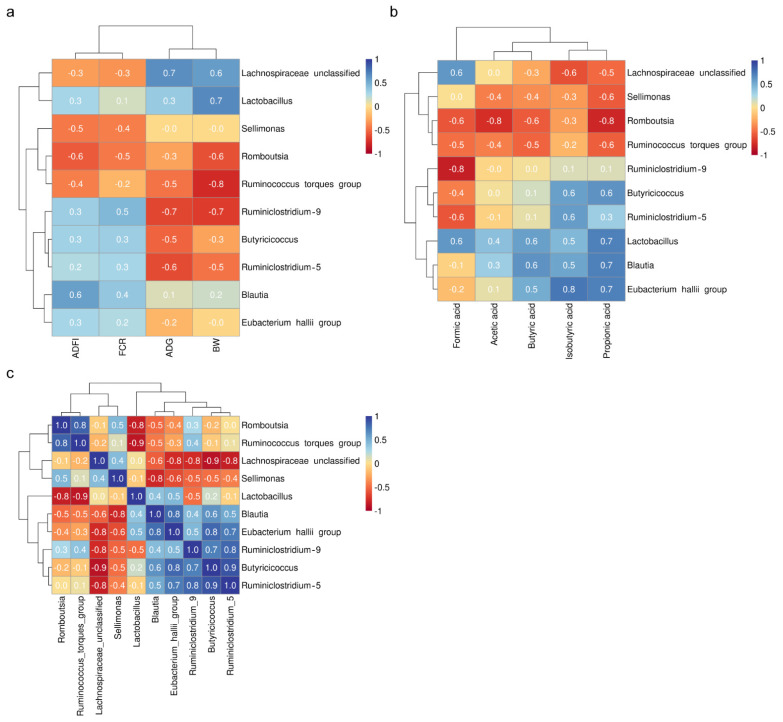
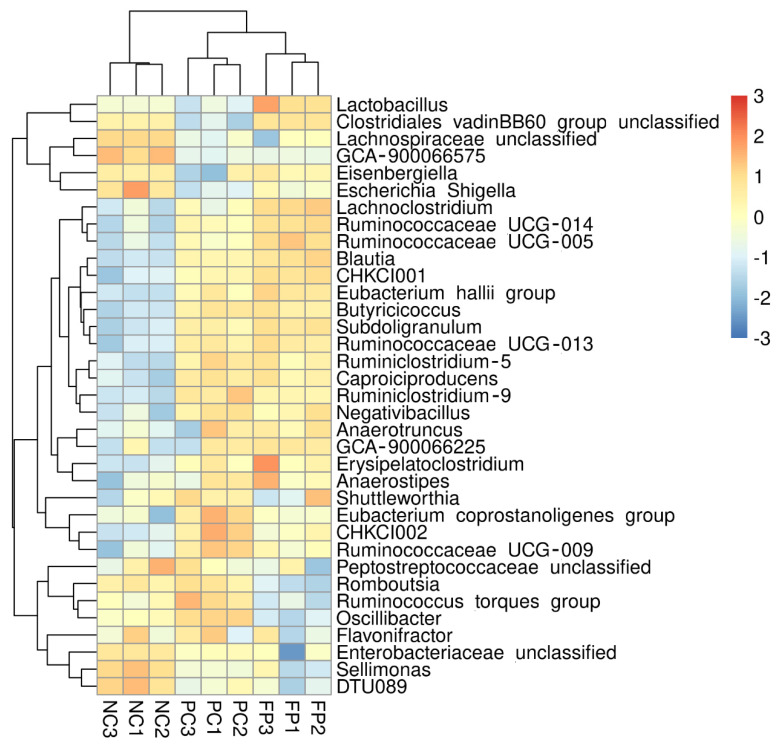
This study investigated the effects of fermented products produced by (fermented products) on the growth performance and cecal microbial community in broilers exposed to coccidial challenge. A total of 108 one-day-old male broiler chicks (Ross 308) were randomly allotted to one of three treatments. Each treatment was distributed into six replicate cages with six birds each. The treatments consisted of a basal diet without treatment (NC), basal diet plus coccidial challenge (PC), and basal diet plus the coccidial challenge and 1 g/kg of fermented products (FP). The results indicated that FP increased the average daily gain of broilers at 21 to 35 days of age compared with the PC group ( < 0.05). The anti-coccidia index in the FP group was elevated compared with the PC group ( < 0.05). Principal coordinate analysis showed significant segregation in bacterial community composition in the cecal digesta among the groups. The genus was more abundant in the cecal digesta of the FP group compared with the PC group ( < 0.05). There was a positive correlation between the abundance of the genus in the cecal digesta and growth performance (body weight, average daily gain, and average feed intake). Furthermore, the abundance of the genus in the cecal digesta was positively associated with the cecal short-chain fatty acid levels (formic acid, acetic acid, propionic acid, butyric acid, and isobutyric acid). These findings suggest that fermented products produced by can ameliorate the average daily gain of broilers exposed to coccidial challenge. -fermented product supplementation increases anti-coccidial activity and modulates gut microbiota composition by increasing beneficial microbes and decreasing harmful microbes in broilers under coccidial challenge.
本研究调查了(发酵产品)所生产的发酵产品对受球虫攻击的肉鸡生长性能和盲肠微生物群落的影响。总共108只1日龄雄性肉鸡雏鸡(罗斯308)被随机分配到三种处理之一。每种处理被分配到六个重复笼中,每个笼中有六只鸡。处理包括不进行处理的基础日粮(NC)、基础日粮加球虫攻击(PC)以及基础日粮加球虫攻击和1 g/kg发酵产品(FP)。结果表明,与PC组相比,FP提高了21至35日龄肉鸡的平均日增重(P<0.05)。FP组的抗球虫指数高于PC组(P<0.05)。主坐标分析表明,各组盲肠消化物中的细菌群落组成存在显著分离。与PC组相比,FP组盲肠消化物中某属的丰度更高(P<0.05)。盲肠消化物中该属的丰度与生长性能(体重、平均日增重和平均采食量)之间存在正相关。此外,盲肠消化物中该属的丰度与盲肠短链脂肪酸水平(甲酸、乙酸、丙酸、丁酸和异丁酸)呈正相关。这些发现表明,(某微生物)所生产的发酵产品可以改善受球虫攻击的肉鸡的平均日增重。添加(该微生物)发酵产品可提高抗球虫活性,并通过增加球虫攻击下肉鸡体内有益微生物和减少有害微生物来调节肠道微生物群组成。