Departamento de Genética Humana, Instituto Nacional de Saúde Doutor Ricardo Jorge, 1649-016, Lisbon, Portugal.
BioISI - Instituto de Biossistemas e Ciências Integrativas, Faculdade de Ciências, Universidade de Lisboa, 1749-016, Lisbon, Portugal.
Mol Cancer. 2021 Apr 29;20(1):72. doi: 10.1186/s12943-021-01364-0.
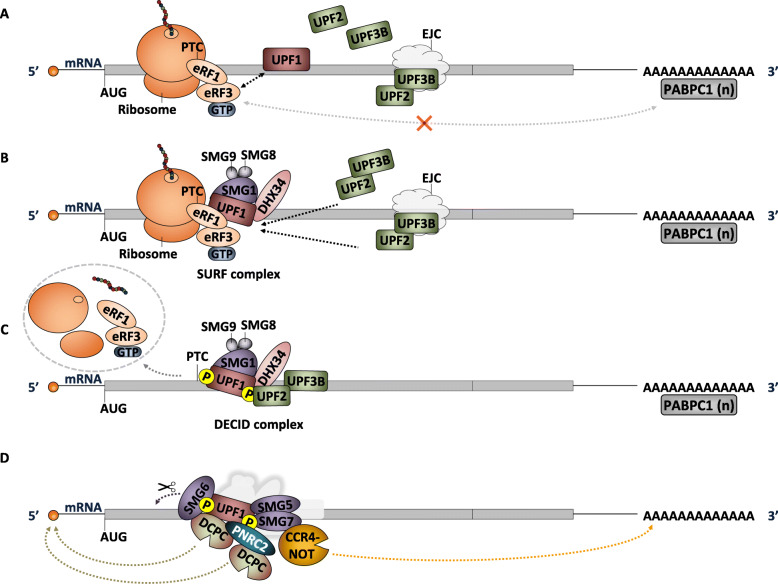
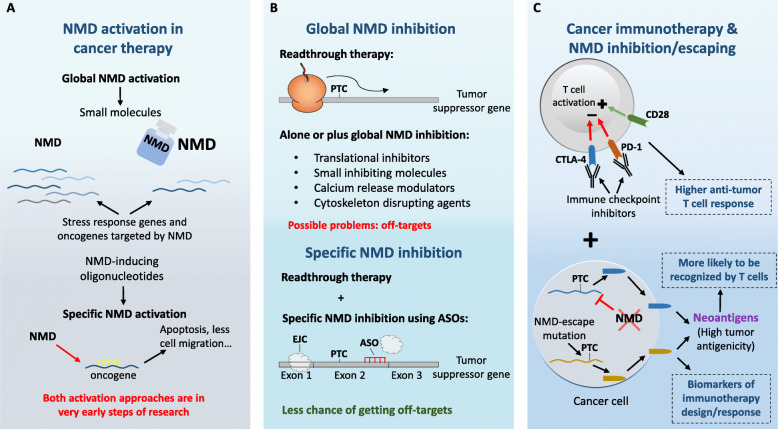
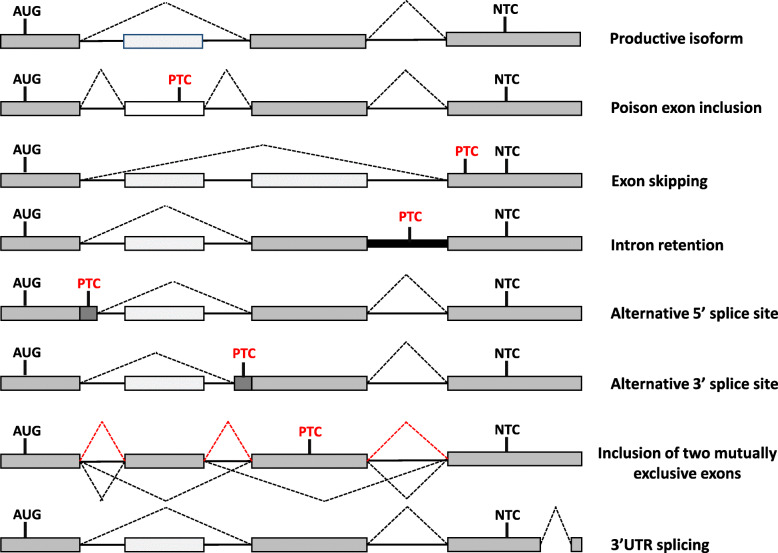
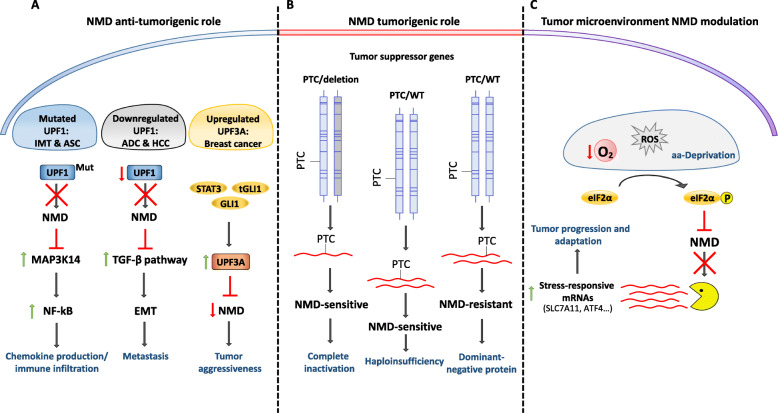
Nonsense-mediated decay (NMD) was first described as a quality-control mechanism that targets and rapidly degrades aberrant mRNAs carrying premature termination codons (PTCs). However, it was found that NMD also degrades a significant number of normal transcripts, thus arising as a mechanism of gene expression regulation. Based on these important functions, NMD regulates several biological processes and is involved in the pathophysiology of a plethora of human genetic diseases, including cancer. The present review aims to discuss the paradoxical, pro- and anti-tumorigenic roles of NMD, and how cancer cells have exploited both functions to potentiate the disease. Considering recent genetic and bioinformatic studies, we also provide a comprehensive overview of the present knowledge of the advantages and disadvantages of different NMD modulation-based approaches in cancer therapy, reflecting on the challenges imposed by the complexity of this disease. Furthermore, we discuss significant advances in the recent years providing new perspectives on the implications of aberrant NMD-escaping frameshifted transcripts in personalized immunotherapy design and predictive biomarker optimization. A better understanding of how NMD differentially impacts tumor cells according to their own genetic identity will certainly allow for the application of novel and more effective personalized treatments in the near future.
无意义介导的衰变(NMD)最初被描述为一种质量控制机制,可靶向并快速降解携带提前终止密码子(PTC)的异常 mRNA。然而,人们发现 NMD 还会降解大量正常转录本,因此它也是一种基因表达调控机制。基于这些重要功能,NMD 调节着多种生物学过程,并参与了多种人类遗传疾病的病理生理学,包括癌症。本综述旨在讨论 NMD 的矛盾的、促癌和抑癌作用,以及癌细胞如何利用这两种功能来促进疾病的发展。考虑到最近的遗传和生物信息学研究,我们还全面概述了目前基于不同 NMD 调节方法在癌症治疗中的优缺点的知识,反映了该疾病复杂性带来的挑战。此外,我们还讨论了近年来的重要进展,这些进展为异常 NMD 逃逸移码转录本在个体化免疫治疗设计和预测性生物标志物优化中的意义提供了新的视角。更好地了解 NMD 如何根据肿瘤细胞自身的遗传特征,对其产生不同的影响,必将有助于在不久的将来应用新型、更有效的个体化治疗方法。