School of Civil and Environmental Engineering, Nanyang Technological University, Singapore, Singapore.
Nanyang Environment & Water Research Institute, Nanyang Technological University, Singapore, Singapore.
Environ Health Perspect. 2021 Apr;129(4):47014. doi: 10.1289/EHP7722. Epub 2021 Apr 30.
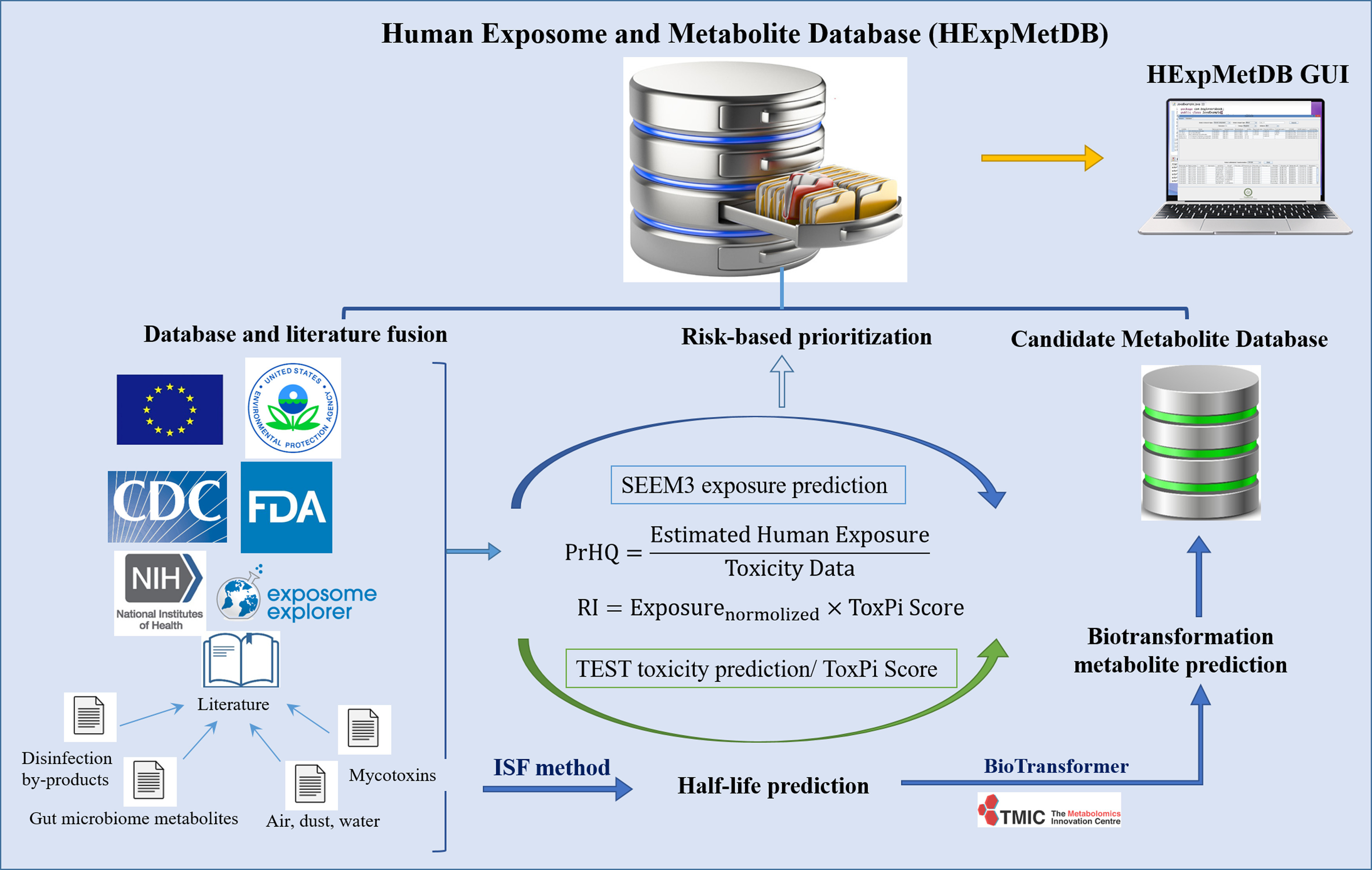
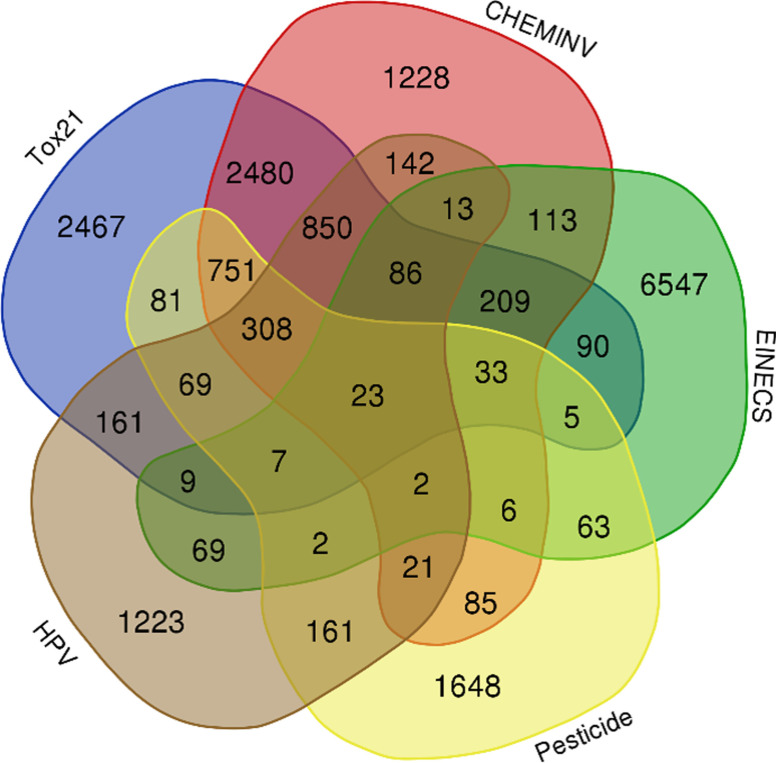
Due to the ubiquitous use of chemicals in modern society, humans are increasingly exposed to thousands of chemicals that contribute to a major portion of the human exposome. Should a comprehensive and risk-based human exposome database be created, it would be conducive to the rapid progress of human exposomics research. In addition, once a xenobiotic is biotransformed with distinct half-lives upon exposure, monitoring the parent compounds alone may not reflect the actual human exposure. To address these questions, a comprehensive and risk-prioritized human exposome database is needed.
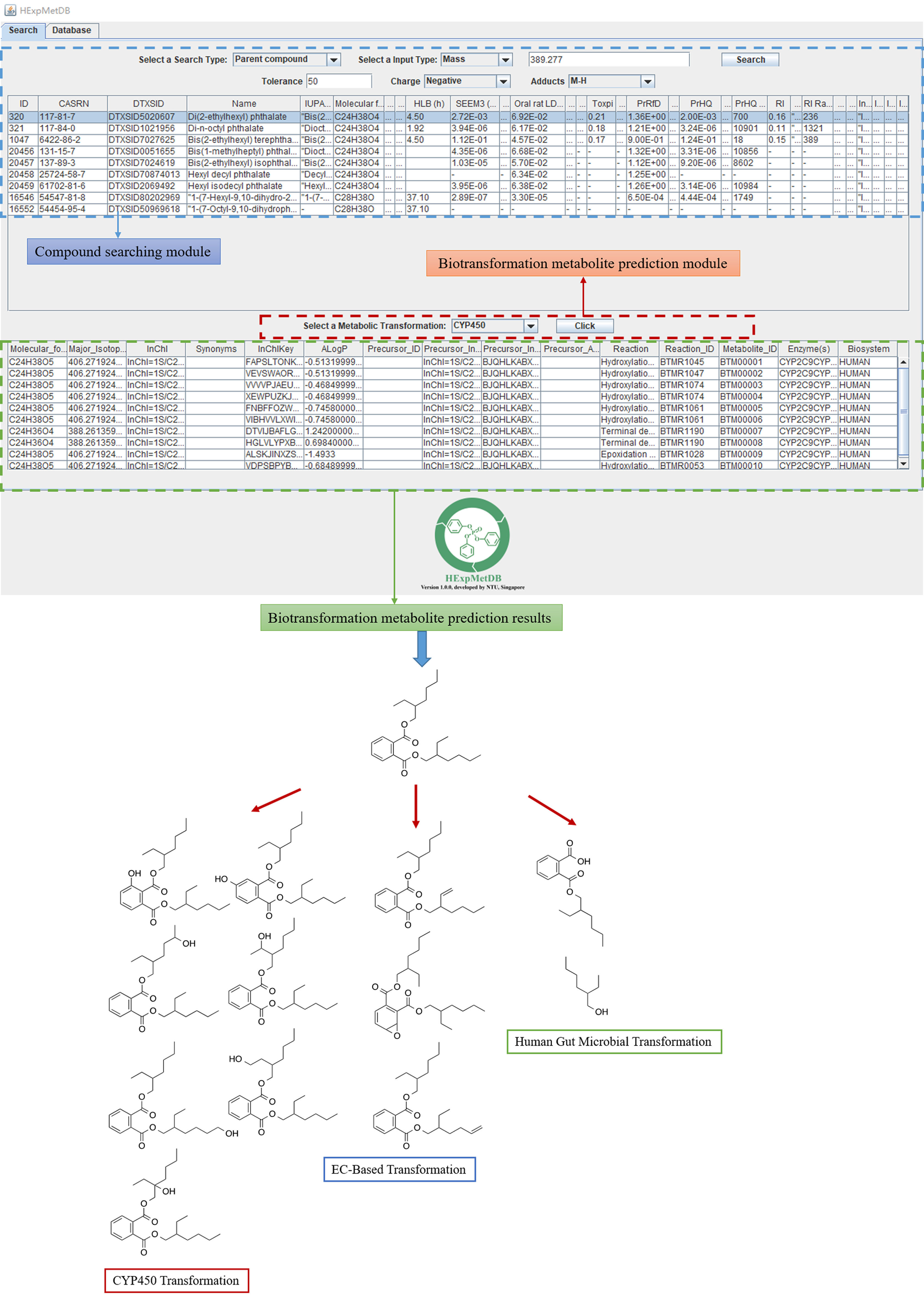
Our objective was to set up a comprehensive risk-prioritized human exposome database including physicochemical properties as well as risk prediction and develop a graphical user interface (GUI) that has the ability to conduct searches for content associated with chemicals in our database.
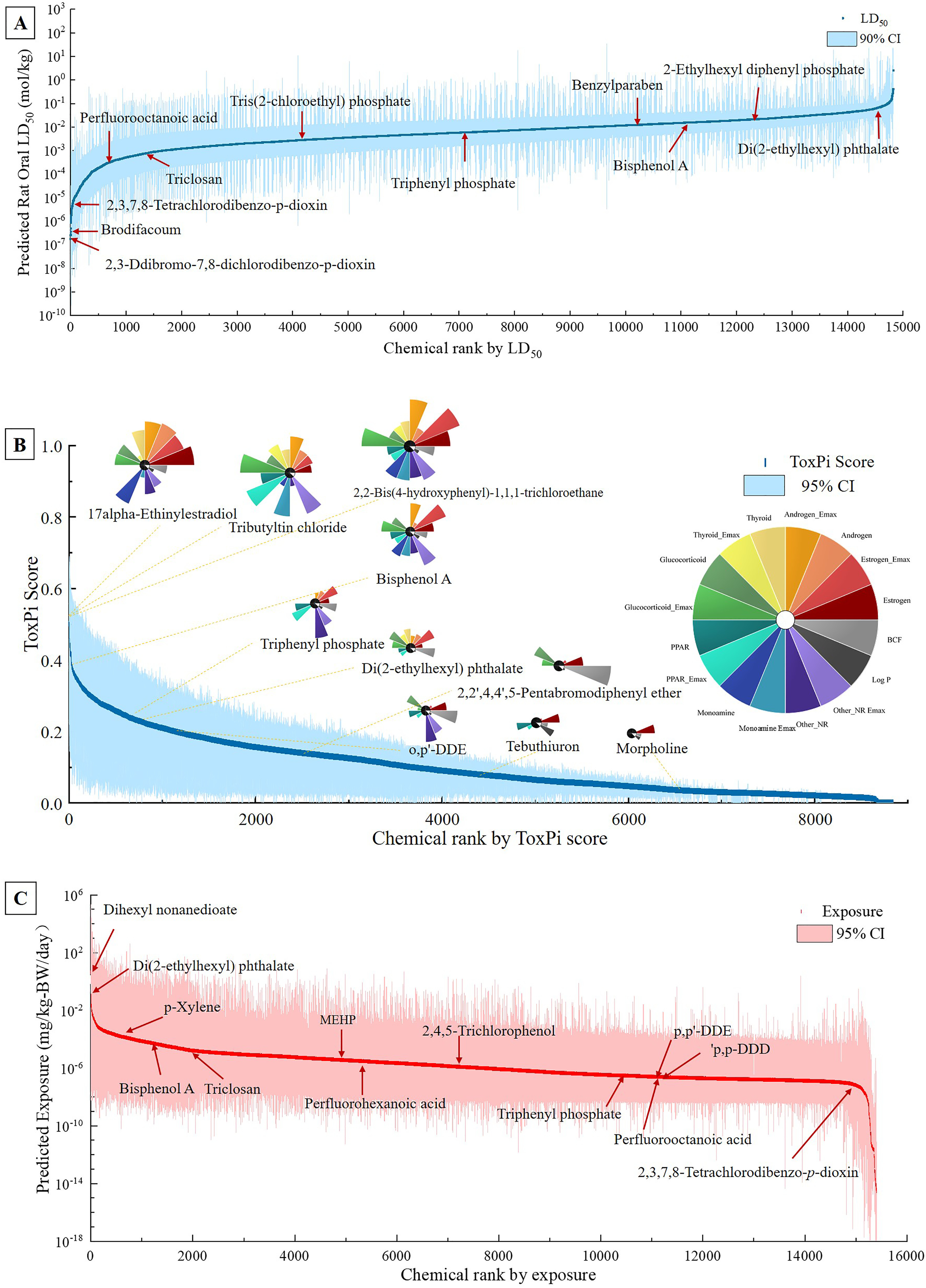
We built a comprehensive risk-prioritized human exposome database by text mining and database fusion. Subsequently, chemicals were prioritized by integrating exposure level obtained from the Systematic Empirical Evaluation of Models with toxicity data predicted by the Toxicity Estimation Software Tool and the Toxicological Priority Index calculated from the ToxCast database. The biotransformation half-lives () of all the chemicals were assessed using the Iterative Fragment Selection approach and biotransformation products were predicted using the previously developed BioTransformer machine-learning method.
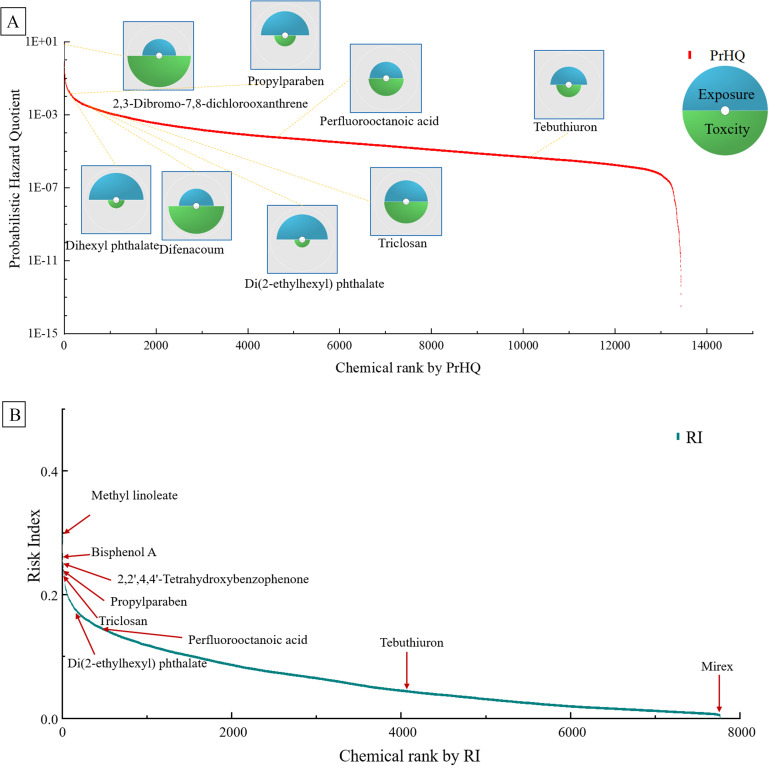
We compiled a human exposome database of chemicals, prioritized 13,441 chemicals based on probabilistic hazard quotient and 7,770 chemicals based on risk index, and provided a predicted biotransformation metabolite database of metabolites. In addition, a user-interactive Java software (Oracle)-based search GUI was generated to enable open access to this new resource.
Our database can be used to guide chemical management and enhance scientific understanding to rapidly and effectively prioritize chemicals for comprehensive biomonitoring in epidemiological investigations. https://doi.org/10.1289/EHP7722.
由于现代社会中化学物质的广泛使用,人类不断接触到数以千计的化学物质,这些化学物质构成了人类暴露组的主要部分。如果创建一个全面的、基于风险的人类暴露组数据库,将有助于人类暴露组学研究的快速发展。此外,一旦一种外源性化学物质在暴露时具有明显不同的半衰期进行生物转化,单独监测母体化合物可能无法反映实际的人体暴露情况。为了解决这些问题,需要建立一个全面的、基于风险的人类暴露组数据库。
我们的目标是建立一个全面的、基于风险的人类暴露组数据库,包括物理化学性质以及风险预测,并开发一个图形用户界面(GUI),该界面能够对与我们数据库中化学物质相关的内容进行搜索。
我们通过文本挖掘和数据库融合构建了一个全面的、基于风险的人类暴露组数据库。随后,通过整合从系统经验评估模型中获得的暴露水平、毒性数据预测的毒性估计软件工具以及从 ToxCast 数据库计算得出的毒性优先指数,对化学物质进行优先级排序。使用迭代片段选择方法评估所有化学物质的生物转化半衰期(),并使用先前开发的 BioTransformer 机器学习方法预测生物转化产物。
我们编制了一个包含 种化学物质的人类暴露组数据库,基于概率危害商对 13441 种化学物质进行了优先级排序,基于风险指数对 7770 种化学物质进行了优先级排序,并提供了一个预测的生物转化代谢产物数据库,包含 个代谢产物。此外,还生成了一个基于 Java 软件(Oracle)的用户交互搜索 GUI,以便开放访问这个新资源。
我们的数据库可用于指导化学物质管理,增强科学认识,快速有效地对化学物质进行优先级排序,以进行流行病学调查中的综合生物监测。https://doi.org/10.1289/EHP7722。