Interdisciplinary Faculty of Toxicology and Department of Veterinary Integrative Biosciences, College of Veterinary Medicine and Biomedical Sciences, Texas A&M University, College Station, Texas, USA.
Environ Health Perspect. 2021 Jan;129(1):17004. doi: 10.1289/EHP7600. Epub 2021 Jan 4.
Risk assessment of chemical mixtures or complex substances remains a major methodological challenge due to lack of available hazard or exposure data. Therefore, risk assessors usually infer hazard or risk from data on the subset of constituents with available toxicity values.
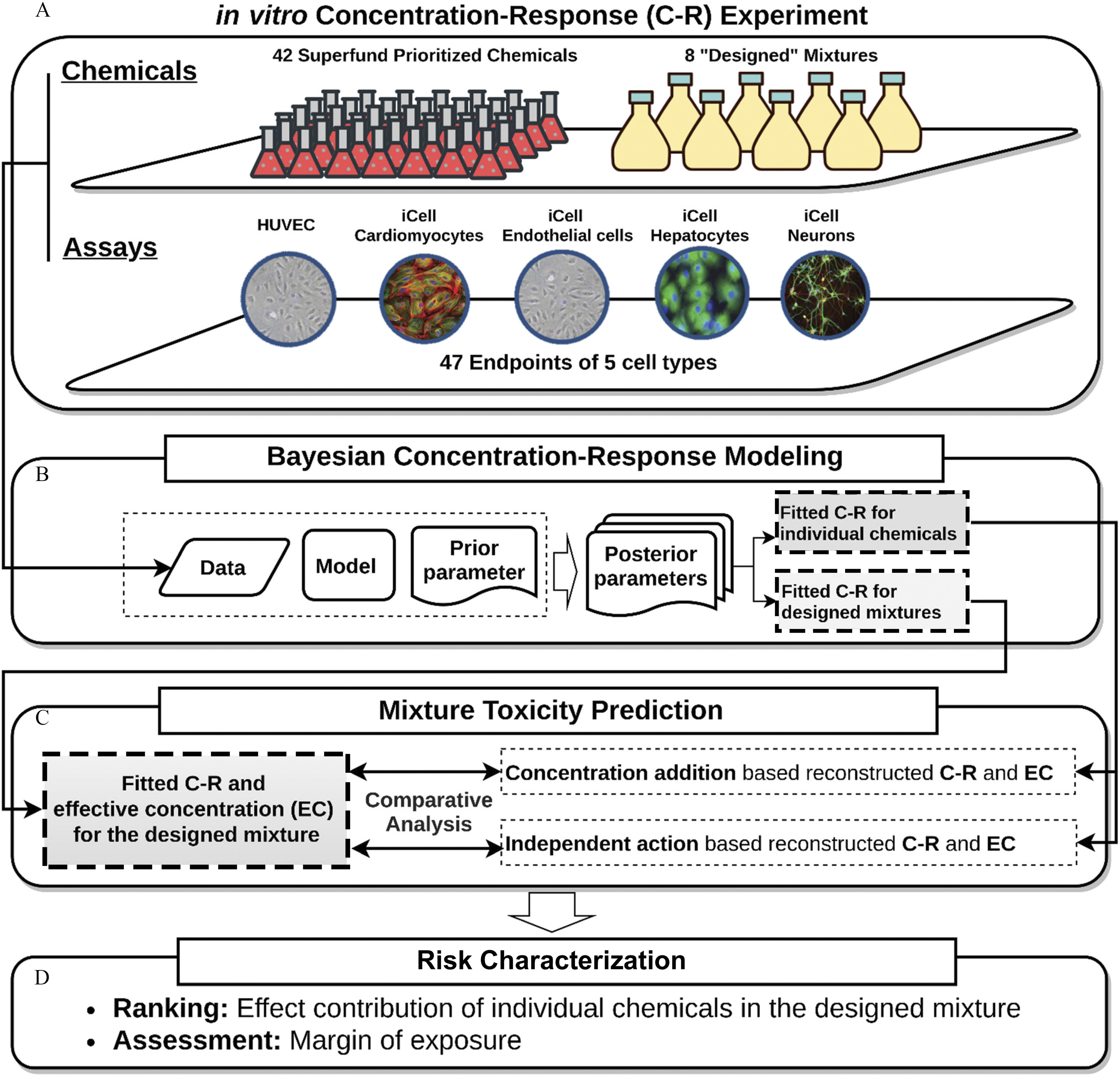
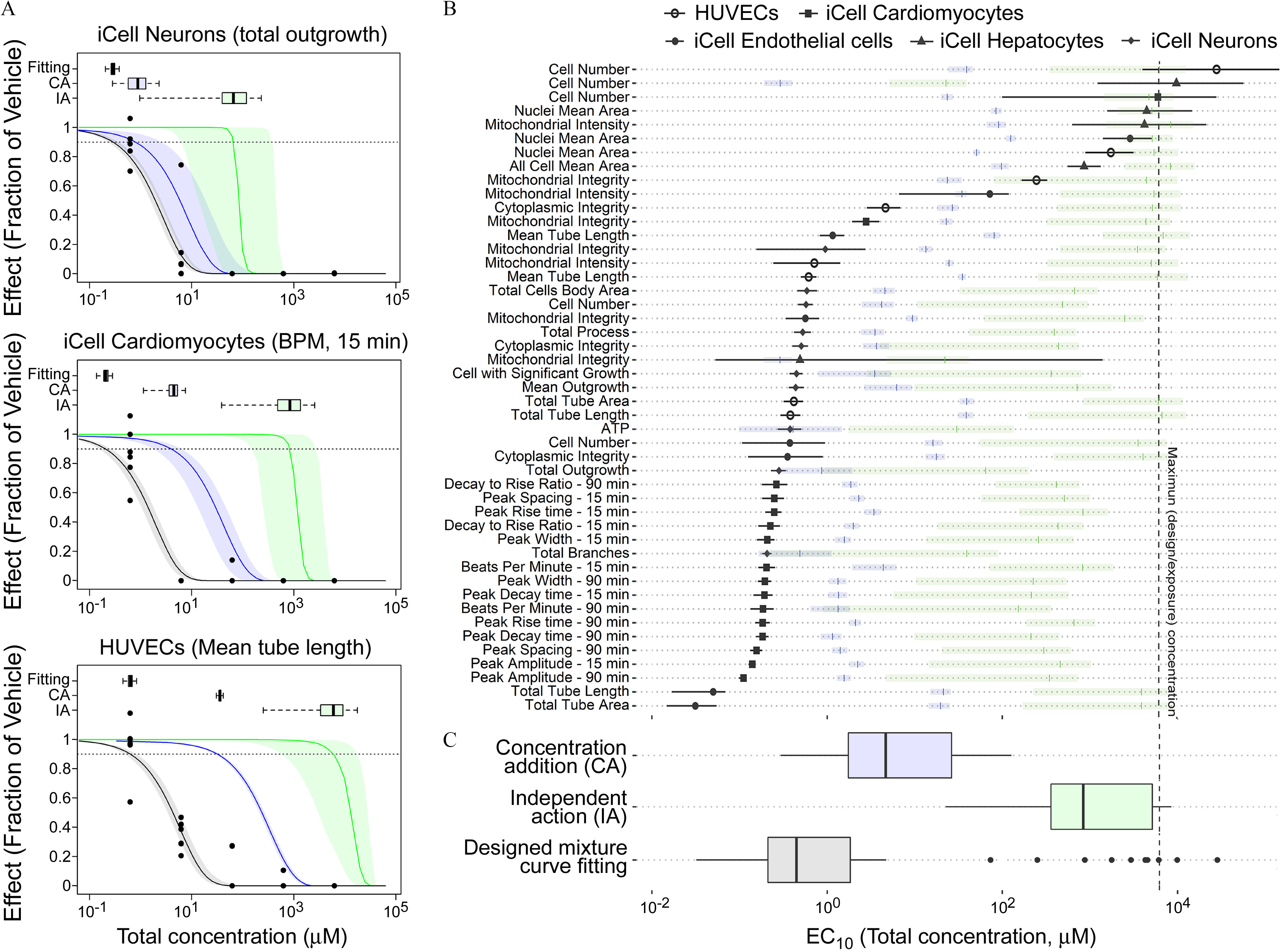
We evaluated the validity of the widely used traditional mixtures risk assessment paradigms, Independent Action (IA) and Concentration Addition (CA), with new approach methodologies (NAMs) data from human cell-based assays.
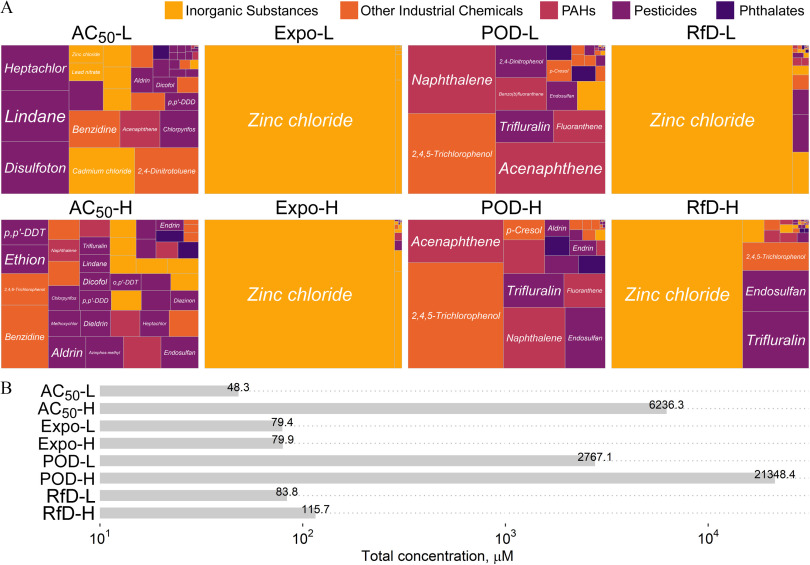
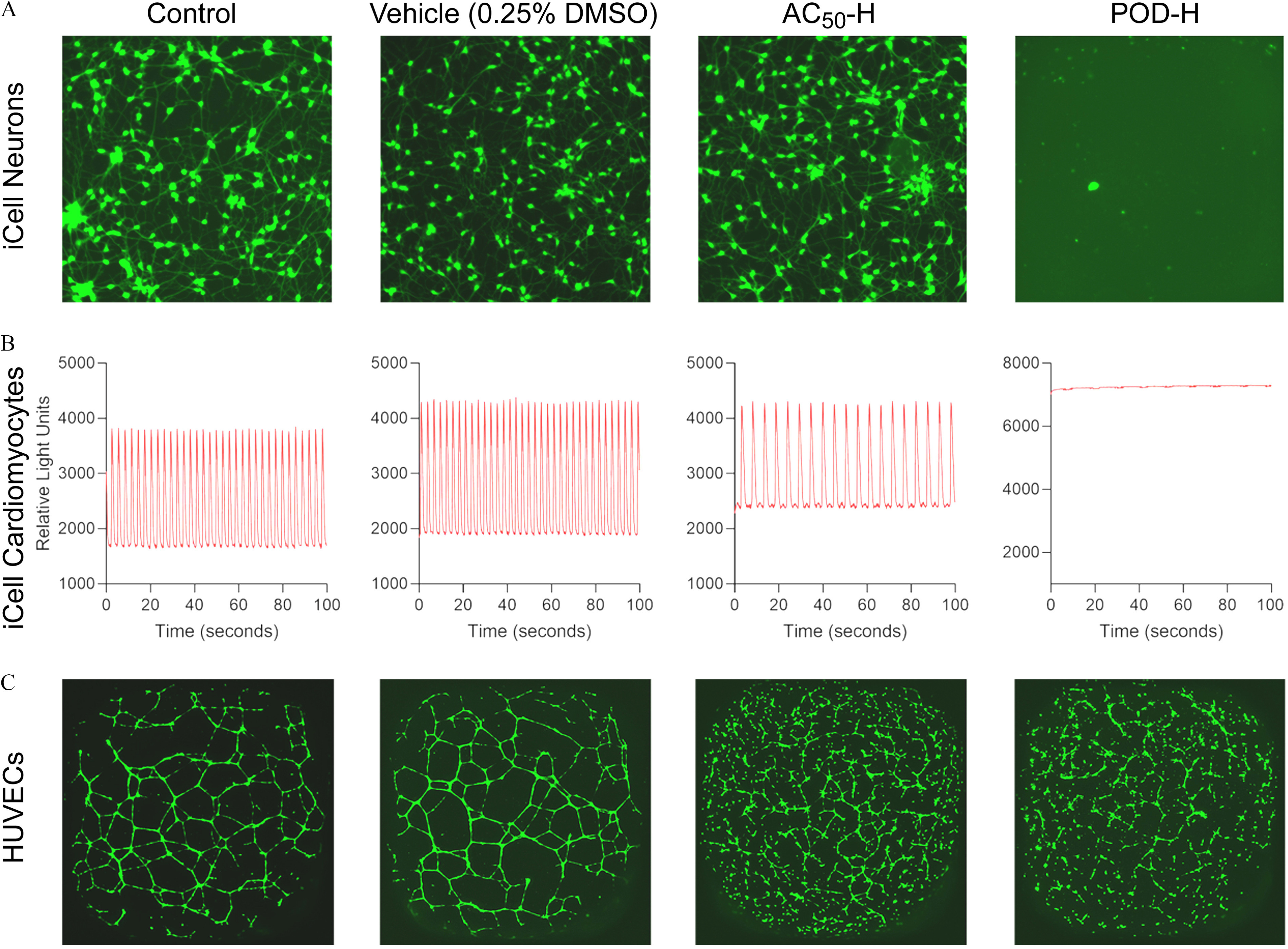
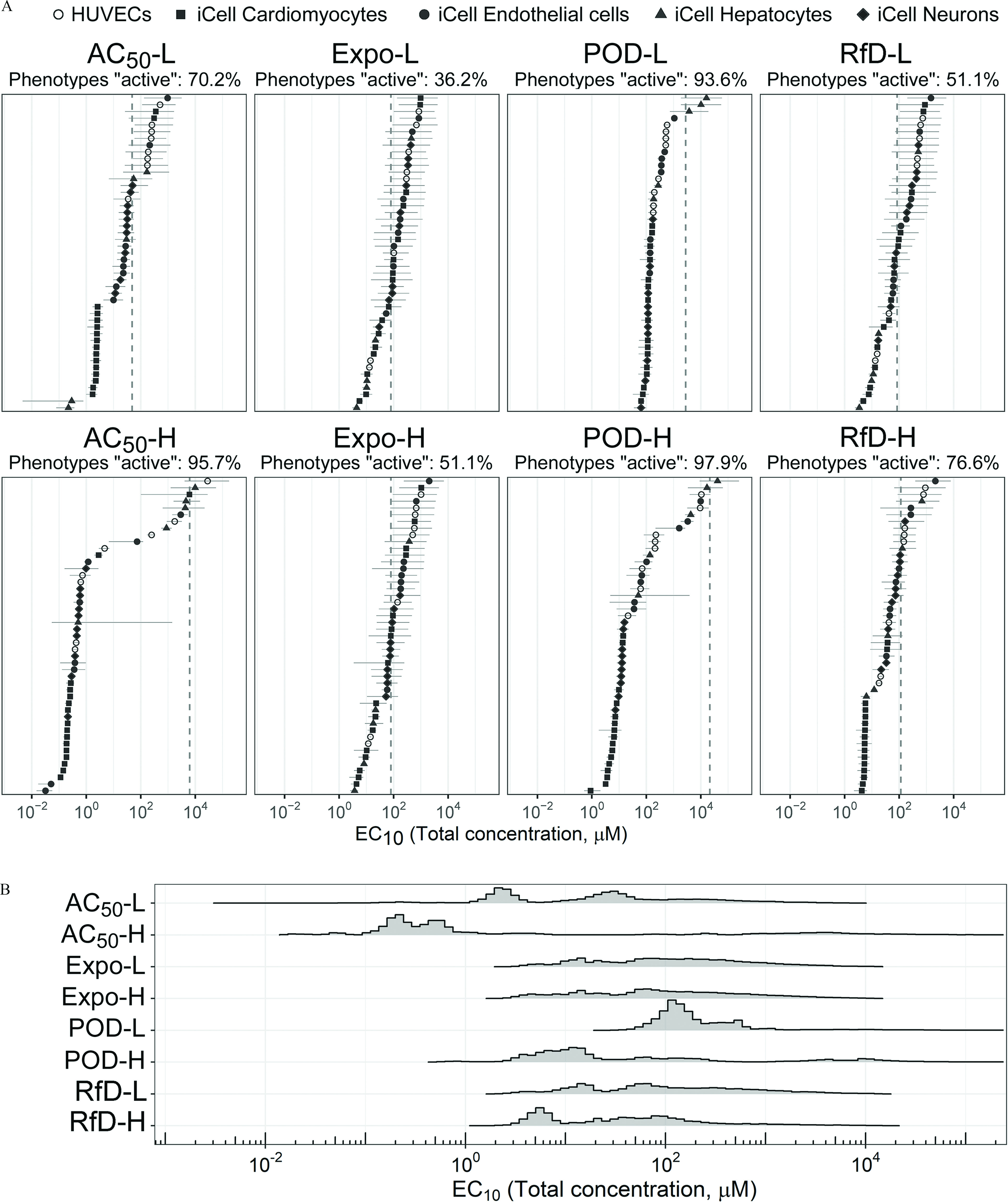
A diverse set of 42 chemicals was tested both individually and as mixtures for functional and cytotoxic effects . A panel of induced pluripotent stem cell (iPSCs)-derived models (hepatocytes, cardiomyocytes, endothelial, and neurons) and one primary cell type (HUVEC) were used. Bayesian concentration-response modeling of individual chemicals or their mixtures was performed for a total of 47 phenotypes to derive point-of-departure (POD) values. Probabilistic IA or CA was conducted to estimate the mixture effects based on the bioactivity profiles from the individual chemicals and compared with mixture bioactivity.
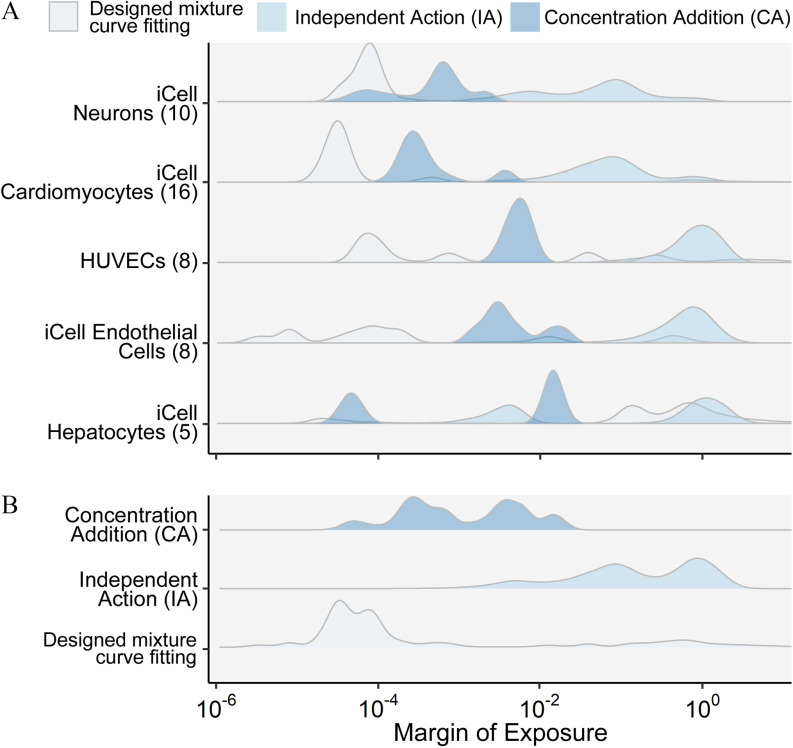
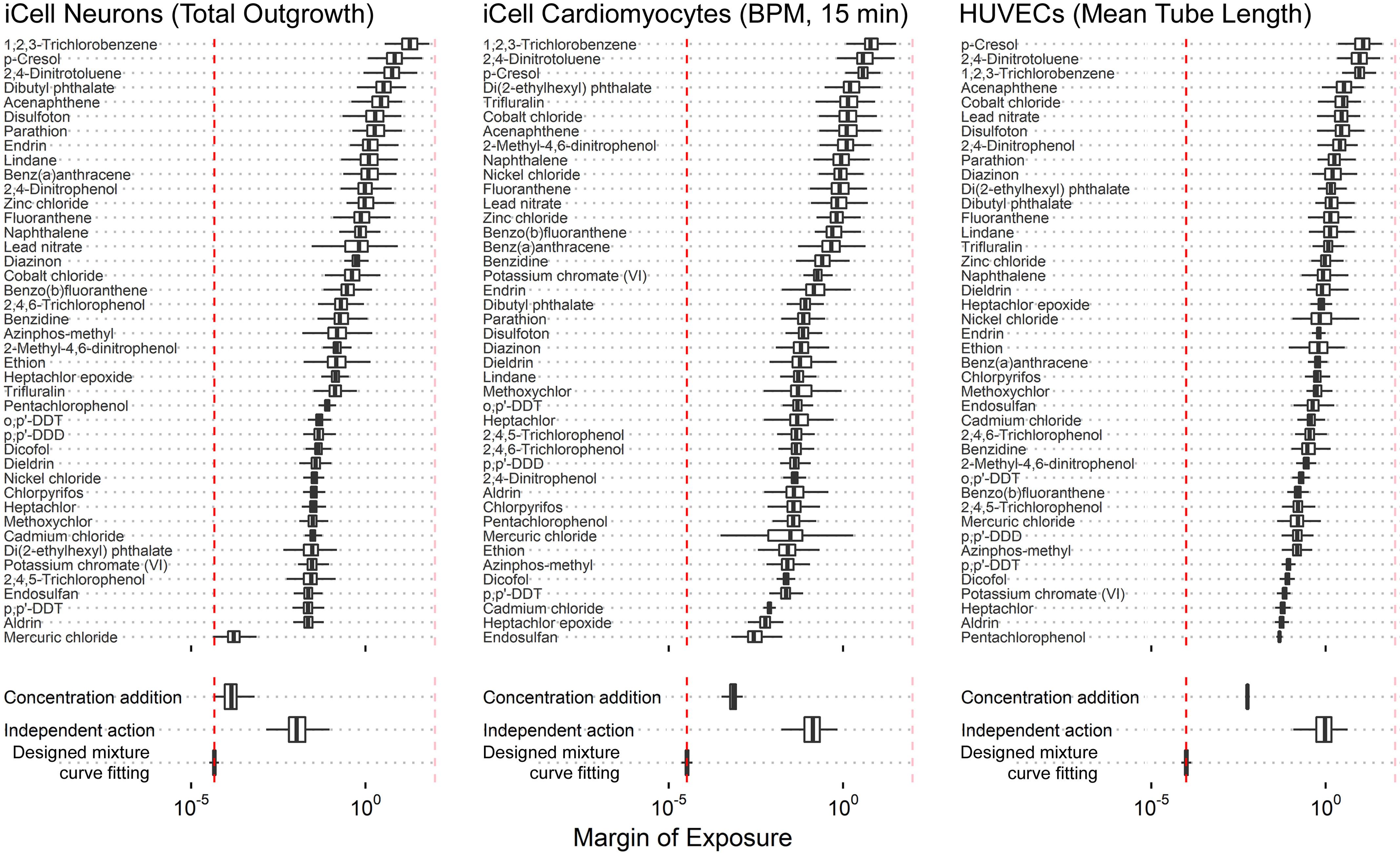
All mixtures showed significant bioactivity, even though some were constructed using individual chemical concentrations considered "low" or "safe." Even though CA is much more accurate as a predictor of mixture effects in comparison with IA, with CA-based POD typically within an order of magnitude of the actual mixture, in some cases, the bioactivity of the mixtures appeared to be much greater than that of their components under either additivity assumption.
These results suggest that CA is a preferred first approximation for predicting mixture toxicity when data for all constituents are available. However, because the accuracy of additivity assumptions varies greatly across phenotypes, we posit that mixtures and complex substances need to be directly tested for their hazard potential. NAMs provide a practical solution that rapidly yields highly informative data for mixtures risk assessment. https://doi.org/10.1289/EHP7600.
由于缺乏可用的危害或暴露数据,化学混合物或复杂物质的风险评估仍然是一个主要的方法学挑战。因此,风险评估人员通常根据具有可用毒性值的成分子集的数据推断危害或风险。
我们使用基于人类细胞的测定法的新方法学(NAMs)数据评估广泛使用的传统混合物风险评估范式,即独立作用(IA)和浓度加和(CA)的有效性。
我们测试了 42 种不同的化学物质,单独或作为混合物测试其功能和细胞毒性作用。使用了一组诱导多能干细胞(iPSC)衍生模型(肝细胞、心肌细胞、内皮细胞和神经元)和一种原代细胞类型(HUVEC)。对个体化学物质或其混合物进行了 47 种表型的贝叶斯浓度-反应建模,以得出起始点(POD)值。根据个体化学物质的生物活性谱进行概率性 IA 或 CA,以估算混合物的效应,并与混合物的生物活性进行比较。
尽管有些混合物是使用被认为“低”或“安全”的单个化学物质浓度构建的,但所有混合物都表现出显著的生物活性。尽管 CA 作为混合物效应的预测指标比 IA 更准确,基于 CA 的 POD 通常与实际混合物的数量级相同,但在某些情况下,混合物的生物活性似乎比其成分在加和假设下的生物活性大得多。
这些结果表明,当所有成分的数据都可用时,CA 是预测混合物毒性的首选初步近似值。然而,由于加和假设的准确性在表型之间差异很大,我们假设混合物和复杂物质需要直接测试其危害潜力。NAMs 提供了一种实用的解决方案,可快速为混合物风险评估提供高度信息丰富的数据。