State Key Laboratory of Stem Cell and Reproductive Biology, Institute for Stem Cell and Regeneration, Institute of Zoology, Chinese Academy of Sciences, Beijing, China.
School of Life Sciences, Qufu Normal University, Qufu, China.
Cell Prolif. 2021 May;54(5):e13034. doi: 10.1111/cpr.13034.
Dysfunction of autophagy results in accumulation of depolarized mitochondria and breakdown of self-renewal and pluripotency in ESCs. However, the regulators that control how mitochondria are degraded by autophagy for pluripotency regulation remains largely unknown. This study aims to dissect the molecular mechanisms that regulate mitochondrial homeostasis for pluripotency regulation in mouse ESCs.
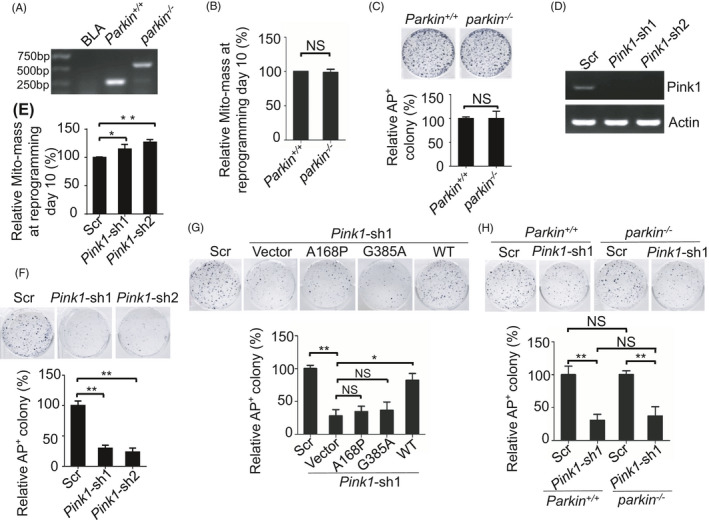
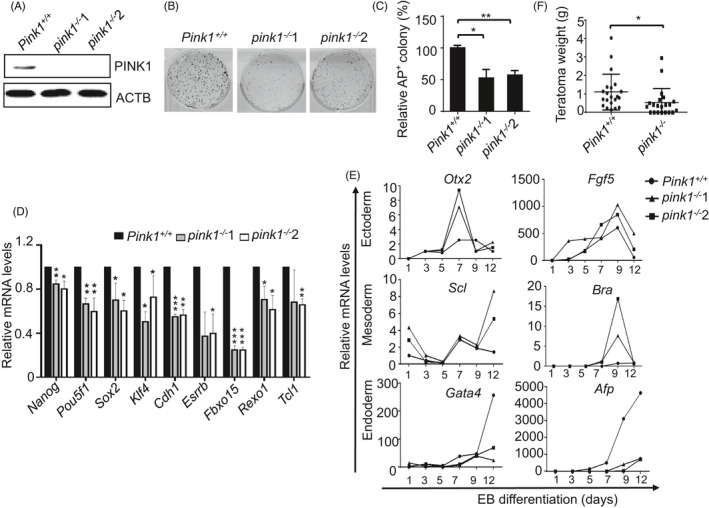
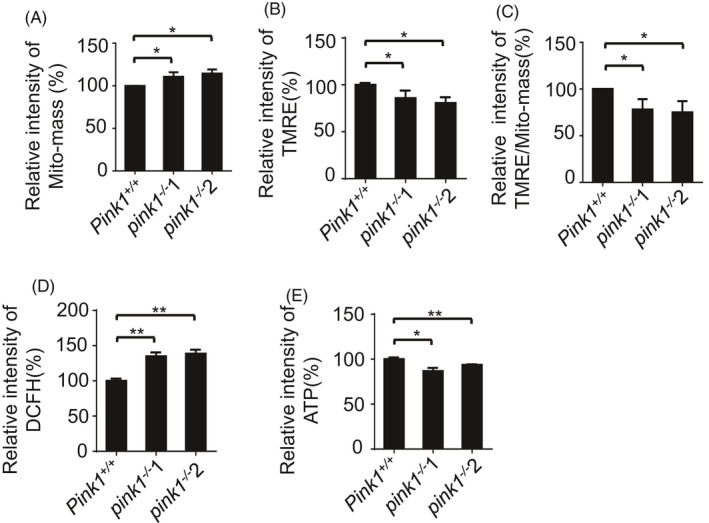
Parkin and parkin ESCs were established from E3.5 blastocysts of parkin x parkin mating mice. The pink1 , optn and ndp52 ESCs were generated by CRISPR-Cas9. shRNAs were used for function loss assay of target genes. Mito-Keima, ROS and ATP detection were used to investigate the mitophagy and mitochondrial function. Western blot, Q-PCR, AP staining and teratoma formation assay were performed to evaluate the PSC stemness.
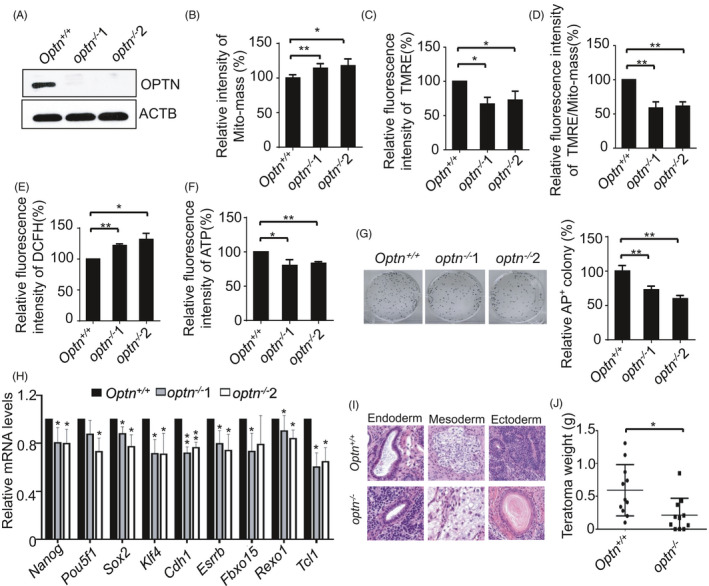
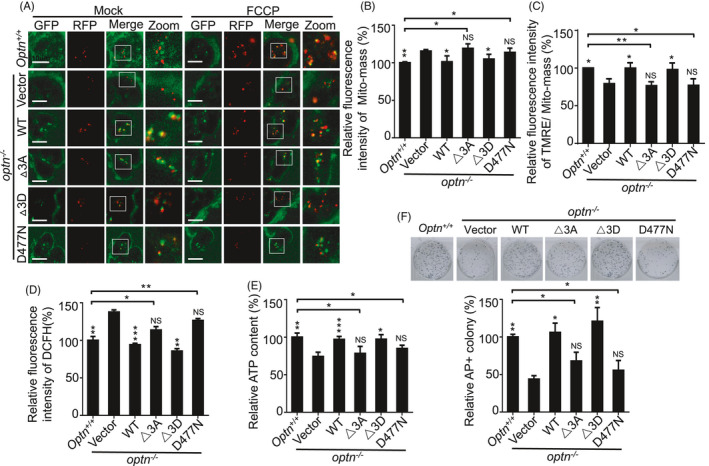
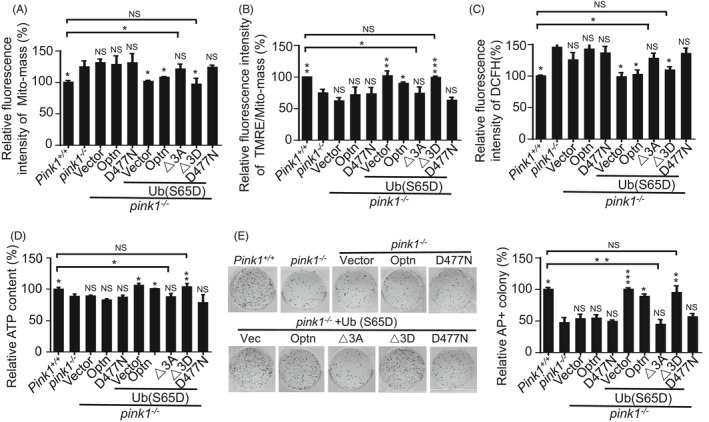
PINK1 or OPTN depletion impairs the degradation of dysfunctional mitochondria during reprogramming, and reduces the reprogramming efficiency and quality. In ESCs, PINK1 or OPTN deficiency leads to accumulation of dysfunctional mitochondria and compromised pluripotency. The defective mitochondrial homeostasis and pluripotency in pink1 ESCs can be compensated by gain expression of phosphomimetic Ubiquitin (Ub-S65D) together with WT or a constitutively active phosphomimetic OPTN mutant (S187D, S476D, S517D), rather than constitutively inactive OPTN (S187A, S476A, S517A) or a Ub-binding dead OPTN mutant (D477N).
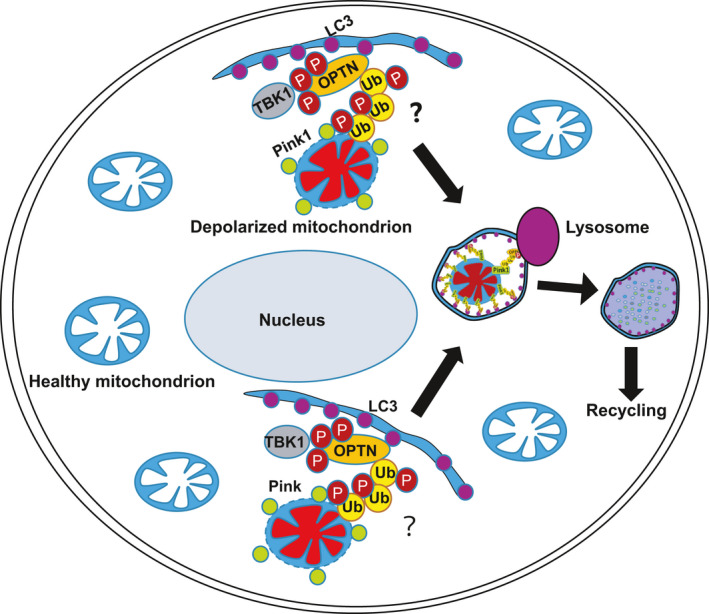
The mitophagy receptor OPTN guards ESC mitochondrial homeostasis and pluripotency by scavenging damaged mitochondria through TBK1-activated OPTN binding of PINK1-phosphorylated Ubiquitin.
自噬功能障碍导致去极化线粒体的积累,并破坏胚胎干细胞的自我更新和多能性。然而,控制自噬降解线粒体以调节多能性的调节因子在很大程度上仍然未知。本研究旨在剖析调节胚胎干细胞中线粒体动态平衡以调控多能性的分子机制。
从 parkin x parkin 交配小鼠的 E3.5 囊胚中建立 parkin 和 parkin ESCs。通过 CRISPR-Cas9 生成 pink1 、 optn 和 ndp52 ESCs。shRNA 用于靶基因的功能丧失测定。使用 Mito-Keima、ROS 和 ATP 检测来研究线粒体自噬和线粒体功能。Western blot、Q-PCR、AP 染色和畸胎瘤形成测定用于评估 PSC 干性。
PINK1 或 OPTN 缺失会在重编程过程中损害功能失调线粒体的降解,并降低重编程效率和质量。在 ESCs 中,PINK1 或 OPTN 缺失会导致功能失调线粒体的积累和多能性受损。pink1 ESCs 中缺陷的线粒体动态平衡和多能性可以通过共表达磷酸化模拟泛素(Ub-S65D)与 WT 或组成型活性磷酸化模拟 OPTN 突变体(S187D、S476D、S517D)来补偿,而不是组成型非活性 OPTN(S187A、S476A、S517A)或 Ub 结合失活的 OPTN 突变体(D477N)。
线粒体自噬受体 OPTN 通过 TBK1 激活的 OPTN 结合 PINK1 磷酸化的泛素来清除受损的线粒体,从而保护 ESC 线粒体动态平衡和多能性。