• 文献检索
  • 文档翻译
  • 深度研究
  • 学术资讯
  • Suppr Zotero 插件Zotero 插件
  • 邀请有礼
  • 套餐&价格
  • 历史记录
应用&插件
Suppr Zotero 插件Zotero 插件浏览器插件Mac 客户端Windows 客户端微信小程序
定价
高级版会员购买积分包购买API积分包
服务
文献检索文档翻译深度研究API 文档MCP 服务
关于我们
关于 Suppr公司介绍联系我们用户协议隐私条款
关注我们

Suppr 超能文献

核心技术专利:CN118964589B侵权必究
粤ICP备2023148730 号-1Suppr @ 2026

文献检索

告别复杂PubMed语法,用中文像聊天一样搜索,搜遍4000万医学文献。AI智能推荐,让科研检索更轻松。

立即免费搜索

文件翻译

保留排版,准确专业,支持PDF/Word/PPT等文件格式,支持 12+语言互译。

免费翻译文档

深度研究

AI帮你快速写综述,25分钟生成高质量综述,智能提取关键信息,辅助科研写作。

立即免费体验

利用住院期间的病程轨迹预测 COVID-19 住院患者临床恶化的模型。

A predictive model of clinical deterioration among hospitalized COVID-19 patients by harnessing hospital course trajectories.

机构信息

Department of Population Health Sciences, Weill Cornell Medicine, New York, NY, United States.

Joan and Sanford I. Weill Department of Medicine, Weill Cornell Medicine, New York, NY, United States.

出版信息

J Biomed Inform. 2021 Jun;118:103794. doi: 10.1016/j.jbi.2021.103794. Epub 2021 Apr 30.

DOI:10.1016/j.jbi.2021.103794
PMID:33933654
原文链接:https://pmc.ncbi.nlm.nih.gov/articles/PMC8084618/
Abstract

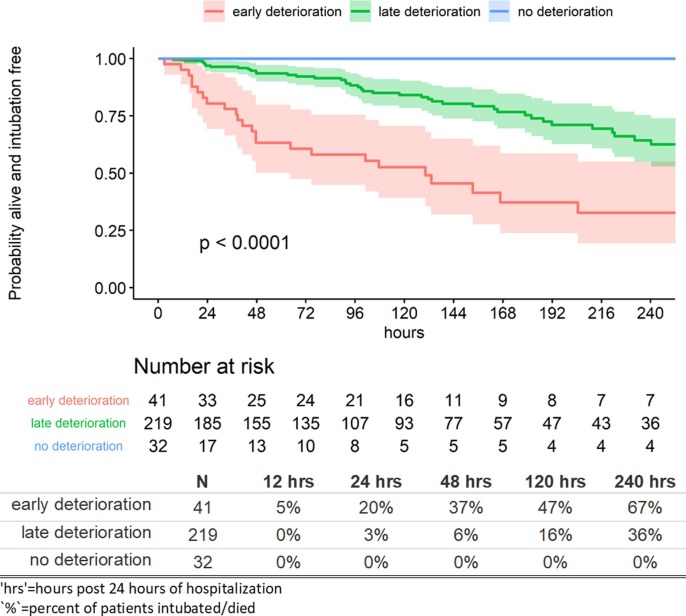
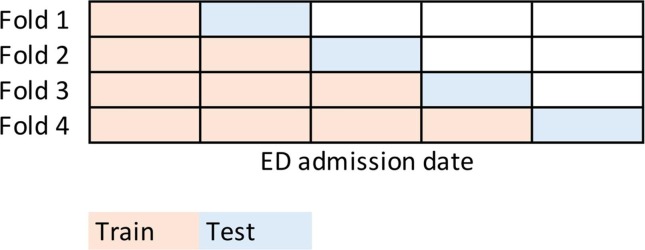
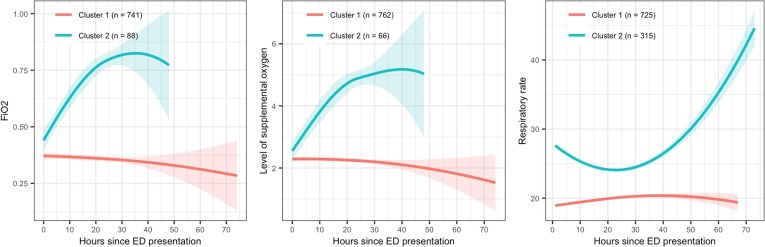
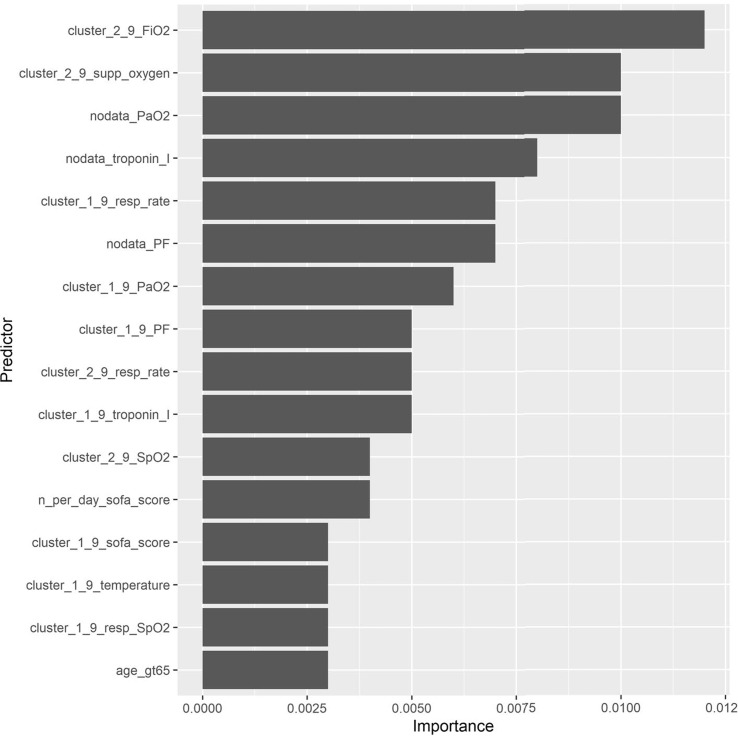
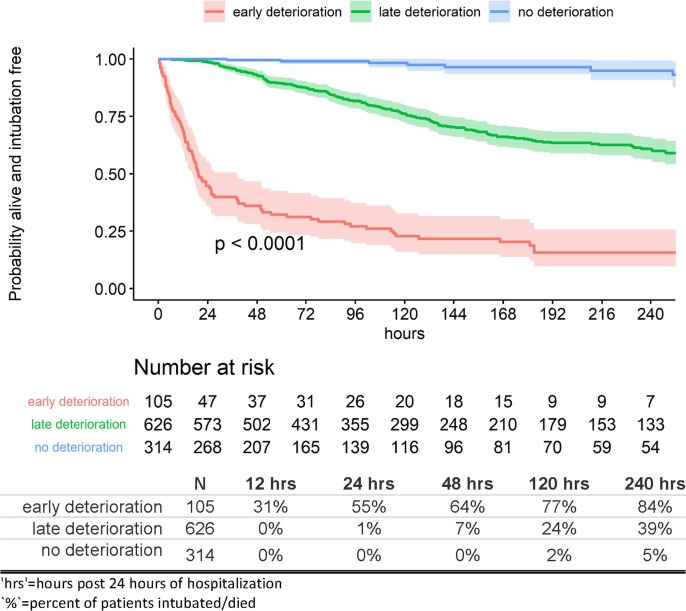
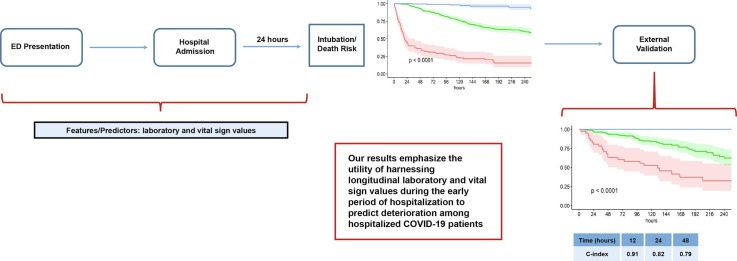
From early March through mid-May 2020, the COVID-19 pandemic overwhelmed hospitals in New York City. In anticipation of ventilator shortages and limited ICU bed capacity, hospital operations prioritized the development of prognostic tools to predict clinical deterioration. However, early experience from frontline physicians observed that some patients developed unanticipated deterioration after having relatively stable periods, attesting to the uncertainty of clinical trajectories among hospitalized patients with COVID-19. Prediction tools that incorporate clinical variables at one time-point, usually on hospital presentation, are suboptimal for patients with dynamic changes and evolving clinical trajectories. Therefore, our study team developed a machine-learning algorithm to predict clinical deterioration among hospitalized COVID-19 patients by extracting clinically meaningful features from complex longitudinal laboratory and vital sign values during the early period of hospitalization with an emphasis on informative missing-ness. To incorporate the evolution of the disease and clinical practice over the course of the pandemic, we utilized a time-dependent cross-validation strategy for model development. Finally, we validated our prediction model on an external validation cohort of COVID-19 patients served in a demographically distinct population from the training cohort. The main finding of our study is the identification of risk profiles of early, late and no clinical deterioration during the course of hospitalization. While risk prediction models that include simple predictors at ED presentation and clinical judgement are able to identify any deterioration vs. no deterioration, our methodology is able to isolate a particular risk group that remain stable initially but deteriorate at a later stage of the course of hospitalization. We demonstrate the superior predictive performance with the utilization of laboratory and vital sign data during the early period of hospitalization compared to the utilization of data at presentation alone. Our results will allow efficient hospital resource allocation and will motivate research in understanding the late deterioration risk group.

摘要

从 2020 年 3 月初到 5 月中旬,COVID-19 疫情使纽约市的医院不堪重负。为了应对呼吸机短缺和 ICU 床位容量有限的问题,医院运营部门优先开发了预测工具,以预测临床恶化的情况。然而,一线医生的早期经验观察到,一些患者在相对稳定的时期后出现了意料之外的恶化,这证明了 COVID-19 住院患者的临床轨迹存在不确定性。仅在住院时的一个时间点(通常在就诊时)纳入临床变量的预测工具,对于具有动态变化和不断发展的临床轨迹的患者来说并不理想。因此,我们的研究团队开发了一种机器学习算法,通过从住院期间复杂的纵向实验室和生命体征值中提取有意义的特征,来预测 COVID-19 住院患者的临床恶化情况,重点关注有意义的缺失值。为了纳入疾病和临床实践在疫情期间的演变,我们利用了一种时间相关的交叉验证策略来开发模型。最后,我们在一个与训练队列人口统计学不同的 COVID-19 患者外部验证队列上验证了我们的预测模型。我们研究的主要发现是确定了住院期间早期、晚期和无临床恶化的风险特征。虽然包括 ED 就诊时简单预测因子和临床判断的风险预测模型能够识别任何恶化与无恶化,但我们的方法能够分离出一个最初稳定但在住院过程后期恶化的特定风险组。与仅在就诊时使用数据相比,我们通过在住院早期使用实验室和生命体征数据,证明了优越的预测性能。我们的研究结果将有助于实现有效的医院资源分配,并激发对理解晚期恶化风险组的研究。
https://cdn.ncbi.nlm.nih.gov/pmc/blobs/314d/8084618/ea330fa80c6f/gr5_lrg.jpg
https://cdn.ncbi.nlm.nih.gov/pmc/blobs/314d/8084618/3c08e4d5c304/ga1_lrg.jpg
https://cdn.ncbi.nlm.nih.gov/pmc/blobs/314d/8084618/50319ebdcac3/gr1_lrg.jpg
https://cdn.ncbi.nlm.nih.gov/pmc/blobs/314d/8084618/6b09a92ceed2/gr2_lrg.jpg
https://cdn.ncbi.nlm.nih.gov/pmc/blobs/314d/8084618/72862fef714e/gr3_lrg.jpg
https://cdn.ncbi.nlm.nih.gov/pmc/blobs/314d/8084618/6f4b7bf64ed8/gr4_lrg.jpg
https://cdn.ncbi.nlm.nih.gov/pmc/blobs/314d/8084618/ea330fa80c6f/gr5_lrg.jpg
https://cdn.ncbi.nlm.nih.gov/pmc/blobs/314d/8084618/3c08e4d5c304/ga1_lrg.jpg
https://cdn.ncbi.nlm.nih.gov/pmc/blobs/314d/8084618/50319ebdcac3/gr1_lrg.jpg
https://cdn.ncbi.nlm.nih.gov/pmc/blobs/314d/8084618/6b09a92ceed2/gr2_lrg.jpg
https://cdn.ncbi.nlm.nih.gov/pmc/blobs/314d/8084618/72862fef714e/gr3_lrg.jpg
https://cdn.ncbi.nlm.nih.gov/pmc/blobs/314d/8084618/6f4b7bf64ed8/gr4_lrg.jpg
https://cdn.ncbi.nlm.nih.gov/pmc/blobs/314d/8084618/ea330fa80c6f/gr5_lrg.jpg

相似文献

1
A predictive model of clinical deterioration among hospitalized COVID-19 patients by harnessing hospital course trajectories.利用住院期间的病程轨迹预测 COVID-19 住院患者临床恶化的模型。
J Biomed Inform. 2021 Jun;118:103794. doi: 10.1016/j.jbi.2021.103794. Epub 2021 Apr 30.
2
Early identification of patients admitted to hospital for covid-19 at risk of clinical deterioration: model development and multisite external validation study.因 COVID-19 住院的患者临床恶化风险的早期识别:模型的建立与多中心外部验证研究。
BMJ. 2022 Feb 17;376:e068576. doi: 10.1136/bmj-2021-068576.
3
Machine Learning to Predict Mortality and Critical Events in a Cohort of Patients With COVID-19 in New York City: Model Development and Validation.机器学习预测纽约市新冠肺炎患者队列中的死亡率和危急事件:模型开发与验证
J Med Internet Res. 2020 Nov 6;22(11):e24018. doi: 10.2196/24018.
4
5
Early prediction of level-of-care requirements in patients with COVID-19.对 COVID-19 患者的医疗照护需求进行早期预测。
Elife. 2020 Oct 12;9:e60519. doi: 10.7554/eLife.60519.
6
Early risk assessment for COVID-19 patients from emergency department data using machine learning.基于机器学习的急诊科新冠患者早期风险评估。
Sci Rep. 2021 Feb 18;11(1):4200. doi: 10.1038/s41598-021-83784-y.
7
Development and Validation of a Robust and Interpretable Early Triaging Support System for Patients Hospitalized With COVID-19: Predictive Algorithm Modeling and Interpretation Study.开发和验证用于 COVID-19 住院患者的强大且可解释的早期分诊支持系统:预测算法建模和解释研究。
J Med Internet Res. 2024 Jan 11;26:e52134. doi: 10.2196/52134.
8
Learning From Past Respiratory Infections to Predict COVID-19 Outcomes: Retrospective Study.从既往呼吸道感染预测 COVID-19 结局:回顾性研究。
J Med Internet Res. 2021 Feb 22;23(2):e23026. doi: 10.2196/23026.
9
Augmenting existing deterioration indices with chest radiographs to predict clinical deterioration.用胸部 X 光片增强现有的恶化指数来预测临床恶化。
PLoS One. 2022 Feb 15;17(2):e0263922. doi: 10.1371/journal.pone.0263922. eCollection 2022.
10
Development and evaluation of a machine learning-based in-hospital COVID-19 disease outcome predictor (CODOP): A multicontinental retrospective study.基于机器学习的院内 COVID-19 疾病转归预测器(CODOP)的开发和评估:一项多大陆回顾性研究。
Elife. 2022 May 17;11:e75985. doi: 10.7554/eLife.75985.

引用本文的文献

1
Calculating the Risk of Admission to Intensive Care Units in COVID-19 Patients Using Machine Learning.使用机器学习计算COVID-19患者入住重症监护病房的风险
J Clin Med. 2025 Jun 13;14(12):4205. doi: 10.3390/jcm14124205.
2
Coronavirus Anatomy and Its Analytical Approaches for Targeting COVID-19.冠状病毒结构及其针对 COVID-19 的分析方法。
Adv Exp Med Biol. 2024;1457:33-44. doi: 10.1007/978-3-031-61939-7_2.
3
Deep learning in public health: Comparative predictive models for COVID-19 case forecasting.深度学习在公共卫生领域的应用:用于 COVID-19 病例预测的比较预测模型。

本文引用的文献

1
A validated, real-time prediction model for favorable outcomes in hospitalized COVID-19 patients.一种经过验证的用于预测住院COVID-19患者良好预后的实时预测模型。
NPJ Digit Med. 2020 Oct 6;3:130. doi: 10.1038/s41746-020-00343-x. eCollection 2020.
2
Systematic evaluation and external validation of 22 prognostic models among hospitalised adults with COVID-19: an observational cohort study.系统评价和外部验证 22 种住院成人 COVID-19 预后模型:一项观察性队列研究。
Eur Respir J. 2020 Dec 24;56(6). doi: 10.1183/13993003.03498-2020. Print 2020 Dec.
3
Prediction of respiratory decompensation in Covid-19 patients using machine learning: The READY trial.
PLoS One. 2024 Mar 14;19(3):e0294289. doi: 10.1371/journal.pone.0294289. eCollection 2024.
4
Retrospective Post-Hospitalisation COVID-19 Mortality Risk Assessment of Patients in South Africa.南非患者新冠病毒病出院后死亡风险的回顾性评估
Eur J Investig Health Psychol Educ. 2023 Sep 1;13(9):1655-1675. doi: 10.3390/ejihpe13090120.
5
Artificial intelligence and discrete-event simulation for capacity management of intensive care units during the Covid-19 pandemic: A case study.人工智能与离散事件模拟在新冠疫情期间重症监护病房容量管理中的应用:一项案例研究
J Bus Res. 2023 May;160:113806. doi: 10.1016/j.jbusres.2023.113806. Epub 2023 Mar 3.
6
Predicting oxygen requirements in patients with coronavirus disease 2019 using an artificial intelligence-clinician model based on local non-image data.使用基于本地非图像数据的人工智能-临床医生模型预测2019冠状病毒病患者的氧气需求。
Front Med (Lausanne). 2022 Nov 30;9:1042067. doi: 10.3389/fmed.2022.1042067. eCollection 2022.
7
Interpretable Machine Learning for Inpatient COVID-19 Mortality Risk Assessments: Diabetes Mellitus Exclusive Interplay.用于住院 COVID-19 死亡率评估的可解释机器学习:糖尿病的独特作用。
Sensors (Basel). 2022 Nov 12;22(22):8757. doi: 10.3390/s22228757.
8
Incubation period, clinical and lung CT features for early prediction of COVID-19 deterioration: development and internal verification of a risk model.潜伏期、临床和肺部 CT 特征对 COVID-19 恶化的早期预测:风险模型的建立和内部验证。
BMC Pulm Med. 2022 May 12;22(1):188. doi: 10.1186/s12890-022-01986-0.
9
Derivation and Validation of a Predictive Score for Respiratory Failure Worsening Leading to Secondary Intubation in COVID-19: The CERES Score.用于预测COVID-19患者呼吸衰竭恶化导致二次插管的评分系统的推导与验证:CERES评分
J Clin Med. 2022 Apr 13;11(8):2172. doi: 10.3390/jcm11082172.
10
Novel informatics approaches to COVID-19 Research: From methods to applications.新冠病毒研究的新型信息学方法:从方法到应用
J Biomed Inform. 2022 May;129:104028. doi: 10.1016/j.jbi.2022.104028. Epub 2022 Feb 16.
使用机器学习预测新冠病毒患者呼吸失代偿:READY 试验。
Comput Biol Med. 2020 Sep;124:103949. doi: 10.1016/j.compbiomed.2020.103949. Epub 2020 Aug 6.
4
Novel Use of Home Pulse Oximetry Monitoring in COVID-19 Patients Discharged From the Emergency Department Identifies Need for Hospitalization.家庭脉搏血氧饱和度监测在急诊科出院的 COVID-19 患者中的新用途可识别住院需求。
Acad Emerg Med. 2020 Aug;27(8):681-692. doi: 10.1111/acem.14053. Epub 2020 Jul 23.
5
Remote monitoring of oxygen saturation in individuals with COVID-19 pneumonia.远程监测 COVID-19 肺炎患者的血氧饱和度。
Eur Respir J. 2020 Aug 13;56(2). doi: 10.1183/13993003.01492-2020. Print 2020 Aug.
6
Using Machine Learning to Predict ICU Transfer in Hospitalized COVID-19 Patients.使用机器学习预测住院COVID-19患者的重症监护病房(ICU)转运情况。
J Clin Med. 2020 Jun 1;9(6):1668. doi: 10.3390/jcm9061668.
7
Artificial intelligence, bias and clinical safety.人工智能、偏差与临床安全。
BMJ Qual Saf. 2019 Mar;28(3):231-237. doi: 10.1136/bmjqs-2018-008370. Epub 2019 Jan 12.
8
Characterizing and Managing Missing Structured Data in Electronic Health Records: Data Analysis.电子健康记录中结构化缺失数据的特征描述与管理:数据分析
JMIR Med Inform. 2018 Feb 23;6(1):e11. doi: 10.2196/medinform.8960.
9
Approach to addressing missing data for electronic medical records and pharmacy claims data research.电子病历和药房报销数据研究中缺失数据的处理方法。
Pharmacotherapy. 2015 Apr;35(4):380-7. doi: 10.1002/phar.1569.
10
Strategies for handling missing data in electronic health record derived data.电子健康记录衍生数据中缺失数据的处理策略。
EGEMS (Wash DC). 2013 Dec 17;1(3):1035. doi: 10.13063/2327-9214.1035. eCollection 2013.