Schutz Silvia, Aidar Felipe J, Souza Rafael Luiz Mesquita, Dos Santos Jymmys Lopes, Voltarelli Fabrício Azevedo, Vieira Junior Roberto Carlos, Soares Nara Michelle Moura, Marçal Anderson Carlos
Department of Physical Education, Universidade Federal de Sergipe, São Cristóvão, Brazil.
Group of Studies and Research of Performance, Sport, Health, and Paralympic Sports, Universidade Federal de Sergipe, São Cristóvão, Brazil.
Front Physiol. 2021 Apr 14;12:639406. doi: 10.3389/fphys.2021.639406. eCollection 2021.
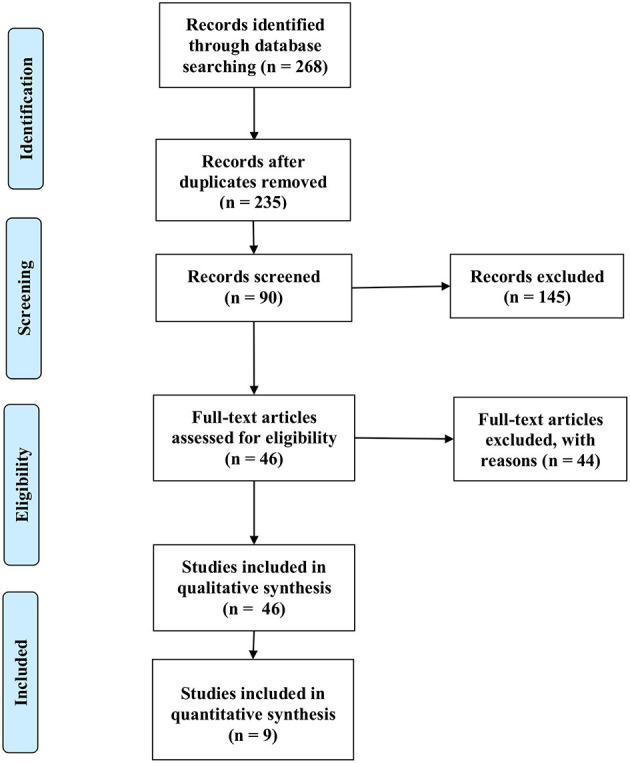
The objective of this systematic review was to identify the effects of different training methods in women who have survived breast cancer (WSBC). Studies were identified by searching SportDiscus, Web of Science, PubMed, Scopus, Scielo, and Bireme. The inclusion criteria were articles that addressed only breast cancer in women, were randomized clinical trials, and interventions involving physical training with Consort ≥80. The PICO and CONSORT strategies were used for the selection of articles and quality assessment of randomized clinical trials, respectively. Two independent reviewers searched for articles among the databases. Disagreements were discussed, and in the case of an impasse, a third reviewer was consulted. Evidence that demonstrated the beneficial effects of physical exercise programs carried out by WSBC. Moderate or high-intensity exercise sessions have been shown to benefit women survivors of breast cancer. Among the modalities, the resistance exercise showed effects from 55% of one-repetition maximum (1 RM), exclusively or associated with other training regimes, such as aerobic (from 48% of heart rate), high-intensity interval training (HIIT), or impact. The main benefits include increased muscle strength, promoted by the practice of resistance exercise in combination with other types of exercises or alone; decreased fatigue; improved quality of life; improved psychosocial effects, and increased leisure time. Physical training performed at a moderate or high intensity (aerobic or anaerobic) can reduce fatigue, improve quality of life, improve sleep quality, and increase bone mineral density in women survivors of breast cancer.
本系统评价的目的是确定不同训练方法对乳腺癌幸存者(WSBC)的影响。通过检索SportDiscus、科学网、PubMed、Scopus、Scielo和Bireme来识别相关研究。纳入标准为仅涉及女性乳腺癌的文章、随机临床试验以及涉及符合Consort标准≥80的体育训练的干预措施。PICO和CONSORT策略分别用于文章的选择和随机临床试验的质量评估。两名独立评审员在数据库中检索文章。如有分歧则进行讨论,若陷入僵局,则咨询第三位评审员。有证据表明WSBC进行体育锻炼计划具有有益效果。中等强度或高强度运动已被证明对乳腺癌女性幸存者有益。在运动方式中,抗阻运动显示出从55%的一次重复最大重量(1RM)起就有效果,单独进行或与其他训练方式相结合,如有氧运动(从心率的48%起)、高强度间歇训练(HIIT)或冲击运动。主要益处包括肌肉力量增加,这是通过抗阻运动与其他类型运动结合或单独进行实现的;疲劳减轻;生活质量改善;心理社会效应改善,以及休闲时间增加。在乳腺癌女性幸存者中,进行中等强度或高强度(有氧或无氧)的体育训练可以减轻疲劳、改善生活质量、提高睡眠质量并增加骨密度。