Department of Clinical Sciences, Lund, Cancer Epidemiology and Oncology, Lund University, Lund, Sweden.
Department of Oncology, Skane University Hospital, Lund, Sweden.
BMC Cancer. 2019 Nov 8;19(1):1073. doi: 10.1186/s12885-019-6310-0.
To measure changes in four common chemotherapy related side-effects (low energy, stress, nausea and pain) immediately after a single exercise session within the first week after treatment.
Thirty-eight patients with chemotherapy-treated breast cancer, participating in a multi-centre randomised controlled study, the Physical Training and Cancer study (Phys-Can) were included in this sub-study. The Phys-Can intervention included endurance and resistance training. Before and after a single training session (endurance or resistance) within the first week of chemotherapy, energy and stress were measured with the Stress-Energy Questionnaire during Leisure Time, and nausea and pain were assessed using a Visual Analog Scale 0-10. Paired t-tests were performed to analyse the changes, and linear regression was used to analyse associations with potential predictors.
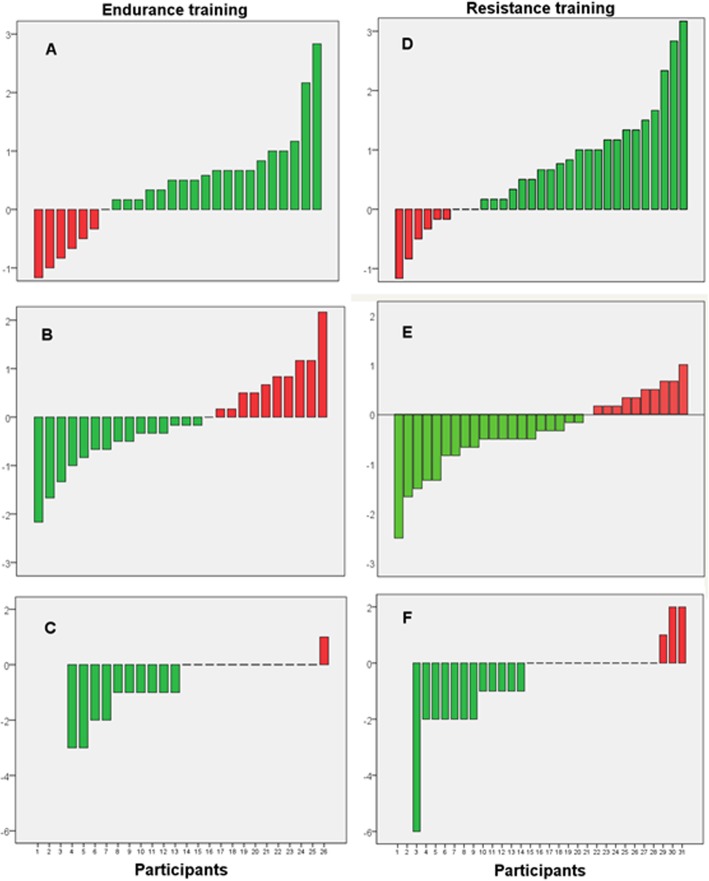
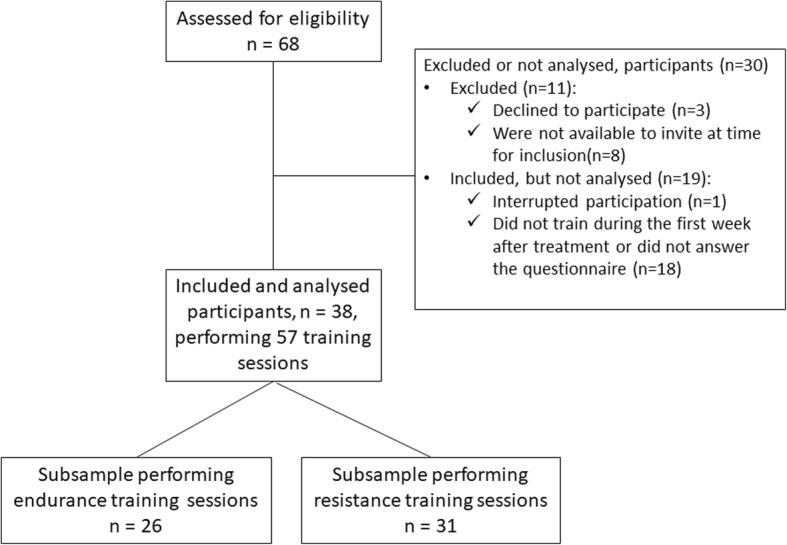
Thirty-eight participants performed 26 endurance training sessions and 31 resistance training sessions in the first week after chemotherapy. Energy and nausea improved significantly after endurance training, and energy, stress and nausea improved significantly after resistance training. Energy increased (p = 0.03 and 0.001) and nausea decreased (p = 0.006 and 0.034) immediately after a single session of endurance or resistance training, and stress decreased (p = 0.014) after resistance exercise.
Both endurance and resistance training were followed by an immediate improvement of common chemotherapy-related side-effects in patients with breast cancer. Patients should be encouraged to exercise even if they suffer from fatigue or nausea during chemotherapy.
NCT02473003, June 16, 2015.
在化疗后第一周内单次运动后立即测量四种常见化疗相关副作用(低能量、压力、恶心和疼痛)的变化。
38 名接受化疗的乳腺癌患者参加了一项多中心随机对照研究,即物理训练和癌症研究(Phys-Can),该研究包括在此子研究中。Phys-Can 干预包括耐力和阻力训练。在化疗后第一周内的单次训练(耐力或阻力)前后,使用 Leisure Time 中的应激能量问卷测量能量和应激,使用 0-10 的视觉模拟量表评估恶心和疼痛。进行配对 t 检验分析变化,并使用线性回归分析与潜在预测因子的关联。
38 名参与者在化疗后第一周内进行了 26 次耐力训练和 31 次阻力训练。耐力训练后能量和恶心明显改善,阻力训练后能量、压力和恶心明显改善。单次耐力或阻力训练后能量增加(p=0.03 和 0.001),恶心减少(p=0.006 和 0.034),阻力运动后压力降低(p=0.014)。
耐力和阻力训练都能立即改善乳腺癌患者常见的化疗相关副作用。即使患者在化疗期间感到疲劳或恶心,也应鼓励他们进行锻炼。
NCT02473003,2015 年 6 月 16 日。