Chou Po-Han, Yao Yun-Han, Zheng Rui-Xuan, Liou Yi-Long, Liu Tsung-Te, Lane Hsien-Yuan, Yang Albert C, Wang Shao-Cheng
Department of Psychiatry, China Medical University Hsinchu Hospital, Hsinchu, Taiwan.
Department of Photonics, National Chiao Tung University, Hsinchu, Taiwan.
Front Psychiatry. 2021 Apr 15;12:655292. doi: 10.3389/fpsyt.2021.655292. eCollection 2021.
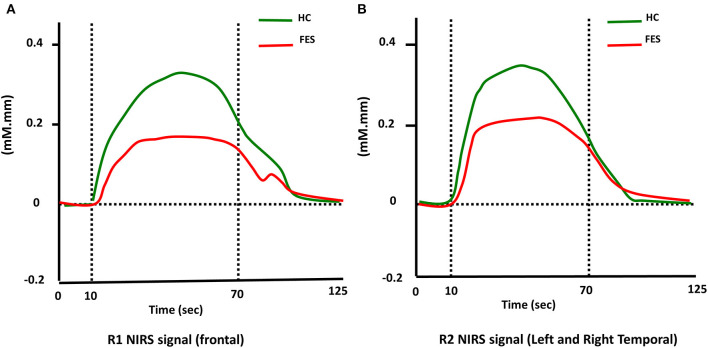
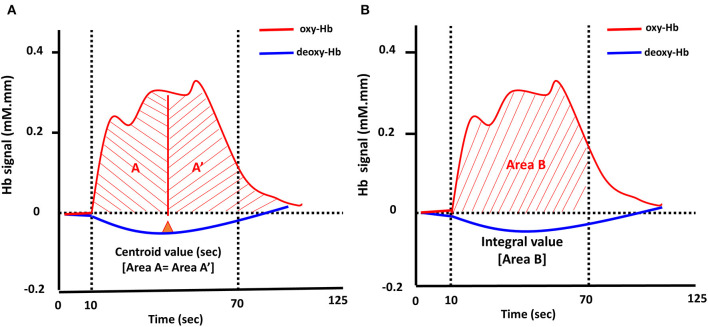
Reduced brain cortical activity over the frontotemporal regions measured by near infrared spectroscopy (NIRS) has been reported in patients with first-episode schizophrenia (FES). This study aimed to differentiate between patients with FES and healthy controls (HCs) on basis of the frontotemporal activity measured by NIRS with a support vector machine (SVM) and deep neural network (DNN) classifier. In addition, we compared the accuracy of performance of SVM and DNN. In total, 33 FES patients and 34 HCs were recruited. Their brain cortical activities were measured using NIRS while performing letter and category versions of verbal fluency tests (VFTs). The integral and centroid values of brain cortical activity in the bilateral frontotemporal regions during the VFTs were selected as features in SVM and DNN classifier. Compared to HCs, FES patients displayed reduced brain cortical activity over the bilateral frontotemporal regions during both types of VFTs. Regarding the classifier performance, SVM reached an accuracy of 68.6%, sensitivity of 70.1%, and specificity of 64.6%, while DNN reached an accuracy of 79.7%, sensitivity of 88.8%, and specificity of 74.9% in the classification of FES patients and HCs. Compared to findings of previous structural neuroimaging studies, we found that using DNN to measure the NIRS signals during the VFTs to differentiate between FES patients and HCs could achieve a higher accuracy, indicating that NIRS can be used as a potential marker to classify FES patients from HCs. Future additional independent datasets are needed to confirm the validity of our model.
据报道,首发精神分裂症(FES)患者通过近红外光谱(NIRS)测量的额颞叶区域脑皮质活动降低。本研究旨在基于NIRS测量的额颞叶活动,使用支持向量机(SVM)和深度神经网络(DNN)分类器区分FES患者和健康对照(HCs)。此外,我们比较了SVM和DNN的性能准确性。总共招募了33名FES患者和34名HCs。在他们进行字母版和类别版语言流畅性测试(VFTs)时,使用NIRS测量他们的脑皮质活动。VFTs期间双侧额颞叶区域脑皮质活动的积分和质心值被选为SVM和DNN分类器的特征。与HCs相比,FES患者在两种类型的VFTs期间双侧额颞叶区域的脑皮质活动均降低。关于分类器性能,在FES患者和HCs的分类中,SVM的准确率达到68.6%,灵敏度达到70.1%,特异性达到64.6%,而DNN的准确率达到79.7%,灵敏度达到88.8%,特异性达到74.9%。与先前结构神经影像学研究的结果相比,我们发现使用DNN在VFTs期间测量NIRS信号以区分FES患者和HCs可以获得更高的准确率,这表明NIRS可以用作将FES患者与HCs分类的潜在标志物。未来需要更多独立数据集来证实我们模型的有效性。