• 文献检索
  • 文档翻译
  • 深度研究
  • 学术资讯
  • Suppr Zotero 插件Zotero 插件
  • 邀请有礼
  • 套餐&价格
  • 历史记录
应用&插件
Suppr Zotero 插件Zotero 插件浏览器插件Mac 客户端Windows 客户端微信小程序
定价
高级版会员购买积分包购买API积分包
服务
文献检索文档翻译深度研究API 文档MCP 服务
关于我们
关于 Suppr公司介绍联系我们用户协议隐私条款
关注我们

Suppr 超能文献

核心技术专利:CN118964589B侵权必究
粤ICP备2023148730 号-1Suppr @ 2026

文献检索

告别复杂PubMed语法,用中文像聊天一样搜索,搜遍4000万医学文献。AI智能推荐,让科研检索更轻松。

立即免费搜索

文件翻译

保留排版,准确专业,支持PDF/Word/PPT等文件格式,支持 12+语言互译。

免费翻译文档

深度研究

AI帮你快速写综述,25分钟生成高质量综述,智能提取关键信息,辅助科研写作。

立即免费体验

使用机器学习和结构神经影像学检测首发精神病:重新考虑证据。

Using Machine Learning and Structural Neuroimaging to Detect First Episode Psychosis: Reconsidering the Evidence.

机构信息

Department of Psychosis Studies, Institute of Psychiatry, Psychology and Neuroscience, King's College London, United Kingdom.

Huaxi MR Research Center (HMRRC), Department of Radiology, West China Hospital of Sichuan University, Chengdu, China.

出版信息

Schizophr Bull. 2020 Jan 4;46(1):17-26. doi: 10.1093/schbul/sby189.

DOI:10.1093/schbul/sby189
PMID:30809667
原文链接:https://pmc.ncbi.nlm.nih.gov/articles/PMC6942152/
Abstract

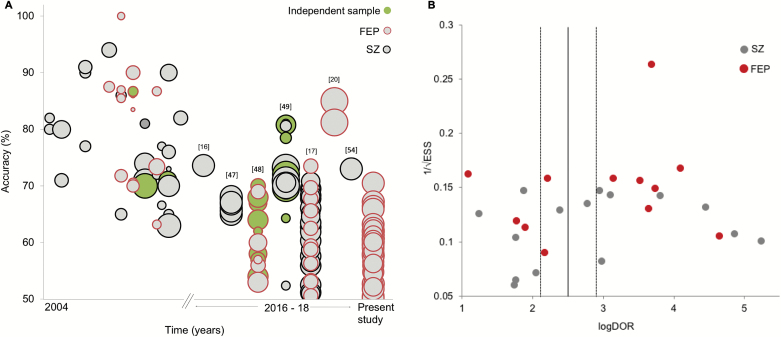
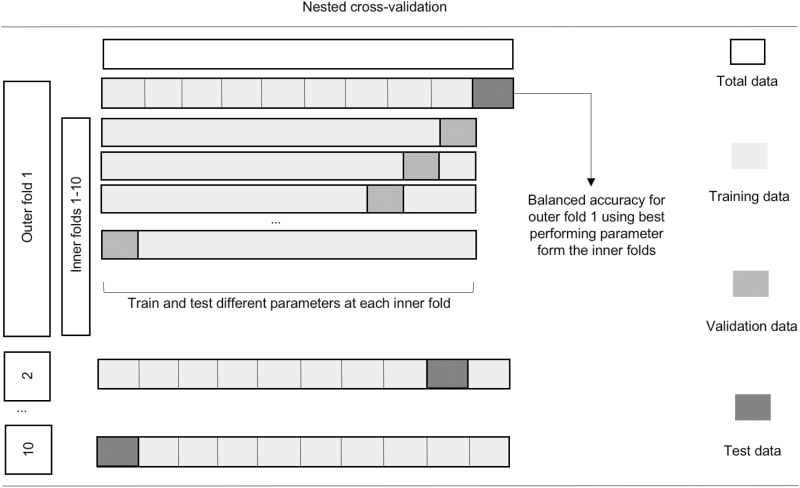
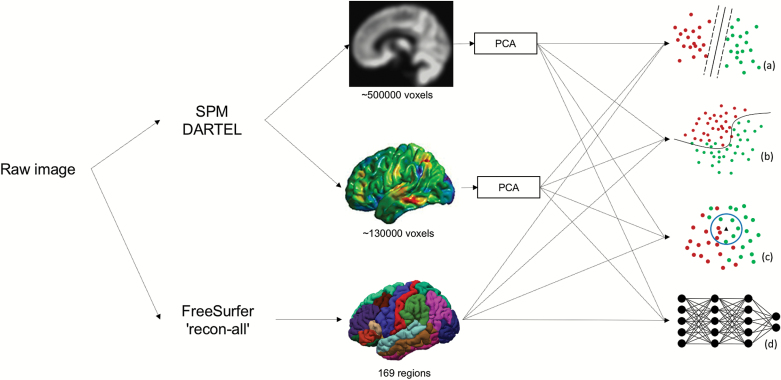
Despite the high level of interest in the use of machine learning (ML) and neuroimaging to detect psychosis at the individual level, the reliability of the findings is unclear due to potential methodological issues that may have inflated the existing literature. This study aimed to elucidate the extent to which the application of ML to neuroanatomical data allows detection of first episode psychosis (FEP), while putting in place methodological precautions to avoid overoptimistic results. We tested both traditional ML and an emerging approach known as deep learning (DL) using 3 feature sets of interest: (1) surface-based regional volumes and cortical thickness, (2) voxel-based gray matter volume (GMV) and (3) voxel-based cortical thickness (VBCT). To assess the reliability of the findings, we repeated all analyses in 5 independent datasets, totaling 956 participants (514 FEP and 444 within-site matched controls). The performance was assessed via nested cross-validation (CV) and cross-site CV. Accuracies ranged from 50% to 70% for surfaced-based features; from 50% to 63% for GMV; and from 51% to 68% for VBCT. The best accuracies (70%) were achieved when DL was applied to surface-based features; however, these models generalized poorly to other sites. Findings from this study suggest that, when methodological precautions are adopted to avoid overoptimistic results, detection of individuals in the early stages of psychosis is more challenging than originally thought. In light of this, we argue that the current evidence for the diagnostic value of ML and structural neuroimaging should be reconsidered toward a more cautious interpretation.

摘要

尽管人们对使用机器学习 (ML) 和神经影像学来检测个体水平的精神病非常感兴趣,但由于可能存在夸大现有文献的潜在方法问题,因此发现的可靠性尚不清楚。本研究旨在阐明将 ML 应用于神经解剖数据在多大程度上可以检测首发精神病 (FEP),同时采取方法学预防措施以避免过于乐观的结果。我们使用 3 种感兴趣的特征集:(1)基于表面的区域体积和皮质厚度,(2)体素基于的灰质体积 (GMV) 和(3)体素基于的皮质厚度 (VBCT),测试了传统 ML 和一种新兴方法,即深度学习 (DL)。为了评估研究结果的可靠性,我们在 5 个独立数据集(总计 956 名参与者,514 名 FEP 和 444 名同一站点匹配的对照组)中重复了所有分析。通过嵌套交叉验证 (CV) 和跨站点 CV 来评估性能。基于表面的特征的准确率从 50%到 70%不等;GMV 的准确率从 50%到 63%不等;VBCT 的准确率从 51%到 68%不等。当将 DL 应用于基于表面的特征时,可实现最佳准确率(70%);但是,这些模型在其他站点的泛化能力较差。本研究的结果表明,当采用方法学预防措施避免过于乐观的结果时,检测精神病早期个体比最初想象的更具挑战性。有鉴于此,我们认为应该重新考虑当前关于 ML 和结构神经影像学诊断价值的证据,以进行更谨慎的解释。
https://cdn.ncbi.nlm.nih.gov/pmc/blobs/c87c/6942152/d09edafdc9c1/sby189f0003.jpg
https://cdn.ncbi.nlm.nih.gov/pmc/blobs/c87c/6942152/7a482319b343/sby189f0001.jpg
https://cdn.ncbi.nlm.nih.gov/pmc/blobs/c87c/6942152/3ff3aedee541/sby189f0002.jpg
https://cdn.ncbi.nlm.nih.gov/pmc/blobs/c87c/6942152/d09edafdc9c1/sby189f0003.jpg
https://cdn.ncbi.nlm.nih.gov/pmc/blobs/c87c/6942152/7a482319b343/sby189f0001.jpg
https://cdn.ncbi.nlm.nih.gov/pmc/blobs/c87c/6942152/3ff3aedee541/sby189f0002.jpg
https://cdn.ncbi.nlm.nih.gov/pmc/blobs/c87c/6942152/d09edafdc9c1/sby189f0003.jpg

相似文献

1
Using Machine Learning and Structural Neuroimaging to Detect First Episode Psychosis: Reconsidering the Evidence.使用机器学习和结构神经影像学检测首发精神病:重新考虑证据。
Schizophr Bull. 2020 Jan 4;46(1):17-26. doi: 10.1093/schbul/sby189.
2
Structural Associations of Cortical Contrast and Thickness in First Episode Psychosis.首发精神病患者皮质对比和厚度的结构关联。
Cereb Cortex. 2019 Dec 17;29(12):5009-5021. doi: 10.1093/cercor/bhz040.
3
Structural neuroimaging abnormality and neurocognitive deficit in the first-degree relatives of schizophrenia patients (FDR) compared to the first-episode patients with schizophrenia (FEP) and healthy controls.与首发精神分裂症患者(FEP)及健康对照相比,精神分裂症患者一级亲属(FDR)的结构性神经影像学异常及神经认知缺陷。
Asian J Psychiatr. 2025 Mar;105:104408. doi: 10.1016/j.ajp.2025.104408. Epub 2025 Feb 21.
4
Progressive loss of cortical gray matter in first episode psychosis patients with auditory hallucinations.首发精神病患者伴幻听者皮质灰质进行性丢失。
Schizophr Res. 2024 May;267:534-545. doi: 10.1016/j.schres.2023.11.011. Epub 2023 Dec 2.
5
Partial-volume modeling reveals reduced gray matter in specific thalamic nuclei early in the time course of psychosis and chronic schizophrenia.部分容积效应建模揭示了精神病和慢性精神分裂症病程早期特定丘脑核的灰质减少。
Hum Brain Mapp. 2020 Oct 1;41(14):4041-4061. doi: 10.1002/hbm.25108. Epub 2020 Jul 10.
6
Neuroanatomical abnormalities in first-episode psychosis across independent samples: a multi-centre mega-analysis.首发精神病患者的神经解剖异常:多中心大型荟萃分析。
Psychol Med. 2021 Jan;51(2):340-350. doi: 10.1017/S0033291719003568. Epub 2019 Dec 20.
7
Prediction of outcome in the psychosis prodrome using neuroanatomical pattern classification.使用神经解剖学模式分类预测精神病前驱期的结局。
Schizophr Res. 2016 Jun;173(3):159-165. doi: 10.1016/j.schres.2015.03.005. Epub 2015 Mar 26.
8
Classification of first-episode psychosis in a large cohort of patients using support vector machine and multiple kernel learning techniques.使用支持向量机和多核学习技术对一大群首发精神病患者进行分类。
Neuroimage. 2017 Jan 15;145(Pt B):238-245. doi: 10.1016/j.neuroimage.2015.12.007. Epub 2015 Dec 12.
9
Voxel-Based Morphometry Correlates of an Agitated-Aggressive Syndrome in the At-Risk Mental State for Psychosis and First Episode Psychosis.基于体素的形态学分析与精神病高危人群和首发精神病中激越/攻击综合征的相关性。
Sci Rep. 2018 Nov 8;8(1):16516. doi: 10.1038/s41598-018-33770-8.
10
Classification of first-episode psychosis using cortical thickness: A large multicenter MRI study.基于皮质厚度的首发精神病分类:一项大型多中心 MRI 研究。
Eur Neuropsychopharmacol. 2021 Jun;47:34-47. doi: 10.1016/j.euroneuro.2021.04.002. Epub 2021 May 3.

引用本文的文献

1
Classification of schizophrenia spectrum disorder using machine learning and functional connectivity: reconsidering the clinical application.使用机器学习和功能连接对精神分裂症谱系障碍进行分类:重新审视临床应用
BMC Psychiatry. 2025 Apr 14;25(1):372. doi: 10.1186/s12888-025-06817-0.
2
Abnormalities in cognitive-related functional connectivity can be used to identify patients with schizophrenia and individuals in clinical high-risk.认知相关功能连接的异常可用于识别精神分裂症患者和临床高危个体。
BMC Psychiatry. 2025 Mar 31;25(1):308. doi: 10.1186/s12888-025-06747-x.
3
Predictive and Explainable Artificial Intelligence for Neuroimaging Applications.

本文引用的文献

1
Will Machine Learning Enable Us to Finally Cut the Gordian Knot of Schizophrenia.机器学习能否最终让我们解开精神分裂症的死结?
Schizophr Bull. 2018 Aug 20;44(5):939-941. doi: 10.1093/schbul/sby101.
2
Cortical Brain Abnormalities in 4474 Individuals With Schizophrenia and 5098 Control Subjects via the Enhancing Neuro Imaging Genetics Through Meta Analysis (ENIGMA) Consortium.通过增强神经影像学遗传学的荟萃分析(ENIGMA)联盟,对 4474 名精神分裂症患者和 5098 名对照个体的皮质脑异常进行研究。
Biol Psychiatry. 2018 Nov 1;84(9):644-654. doi: 10.1016/j.biopsych.2018.04.023. Epub 2018 May 14.
3
Making Individual Prognoses in Psychiatry Using Neuroimaging and Machine Learning.
用于神经成像应用的预测性和可解释性人工智能
Diagnostics (Basel). 2024 Oct 27;14(21):2394. doi: 10.3390/diagnostics14212394.
4
Multivariable prediction of functional outcome after first-episode psychosis: a crossover validation approach in EUFEST and PSYSCAN.首发精神病后功能结局的多变量预测:EUFEST和PSYSCAN研究中的交叉验证方法
Schizophrenia (Heidelb). 2024 Oct 7;10(1):89. doi: 10.1038/s41537-024-00505-w.
5
Magnetic resonance imaging-based machine learning classification of schizophrenia spectrum disorders: a meta-analysis.基于磁共振成像的精神分裂症谱系障碍机器学习分类:一项荟萃分析。
Psychiatry Clin Neurosci. 2024 Dec;78(12):732-743. doi: 10.1111/pcn.13736. Epub 2024 Sep 18.
6
Cognitive subgroups of affective and non-affective psychosis show differences in medication and cortico-subcortical brain networks.情感性和非情感性精神病的认知亚组在药物治疗和皮质下脑网络方面存在差异。
Sci Rep. 2024 Sep 2;14(1):20314. doi: 10.1038/s41598-024-71316-3.
7
Cumulative Impact of Morphometric Features in Schizophrenia in Two Independent Samples.精神分裂症形态学特征在两个独立样本中的累积影响
Schizophr Bull Open. 2023 Nov 4;4(1):sgad031. doi: 10.1093/schizbullopen/sgad031. eCollection 2023 Jan.
8
External validation of a prognostic model to improve prediction of psychosis: a retrospective cohort study in primary care.预测精神病预后模型的外部验证:初级保健中的回顾性队列研究。
Br J Gen Pract. 2024 Nov 28;74(749):e854-e860. doi: 10.3399/BJGP.2024.0017. Print 2024 Dec.
9
Functional magnetic resonance imaging in schizophrenia: current evidence, methodological advances, limitations and future directions.精神分裂症的功能磁共振成像:当前证据、方法学进展、局限性及未来方向。
World Psychiatry. 2024 Feb;23(1):26-51. doi: 10.1002/wps.21159.
10
Single-label machine learning classification revealed some hidden but inter-related causes of five psychotic disorder diseases.单标签机器学习分类揭示了五种精神障碍疾病的一些隐藏但相互关联的病因。
Heliyon. 2023 Aug 23;9(9):e19422. doi: 10.1016/j.heliyon.2023.e19422. eCollection 2023 Sep.
使用神经影像学和机器学习对精神病学进行个体预后预测。
Biol Psychiatry Cogn Neurosci Neuroimaging. 2018 Sep;3(9):798-808. doi: 10.1016/j.bpsc.2018.04.004. Epub 2018 Apr 22.
4
Investigating brain structural patterns in first episode psychosis and schizophrenia using MRI and a machine learning approach.利用 MRI 和机器学习方法研究首发精神病和精神分裂症的大脑结构模式。
Psychiatry Res Neuroimaging. 2018 May 30;275:14-20. doi: 10.1016/j.pscychresns.2018.03.003. Epub 2018 Mar 6.
5
Can we accurately classify schizophrenia patients from healthy controls using magnetic resonance imaging and machine learning? A multi-method and multi-dataset study.我们能否使用磁共振成像和机器学习准确地区分精神分裂症患者和健康对照者?一项多方法和多数据集研究。
Schizophr Res. 2019 Dec;214:3-10. doi: 10.1016/j.schres.2017.11.038. Epub 2017 Dec 21.
6
Support vector machine-based classification of first episode drug-naïve schizophrenia patients and healthy controls using structural MRI.基于支持向量机的结构 MRI 对首发未用药精神分裂症患者与健康对照的分类。
Schizophr Res. 2019 Dec;214:11-17. doi: 10.1016/j.schres.2017.11.037. Epub 2017 Dec 6.
7
Multisite Machine Learning Analysis Provides a Robust Structural Imaging Signature of Schizophrenia Detectable Across Diverse Patient Populations and Within Individuals.多中心机器学习分析提供了一个稳健的精神分裂症结构影像学特征,可在不同的患者群体和个体中检测到。
Schizophr Bull. 2018 Aug 20;44(5):1035-1044. doi: 10.1093/schbul/sbx137.
8
Improving individual predictions: Machine learning approaches for detecting and attacking heterogeneity in schizophrenia (and other psychiatric diseases).提高个体预测:用于检测和攻击精神分裂症(和其他精神疾病)异质性的机器学习方法。
Schizophr Res. 2019 Dec;214:34-42. doi: 10.1016/j.schres.2017.10.023. Epub 2017 Nov 1.
9
Cross-validation failure: Small sample sizes lead to large error bars.交叉验证失败:样本量小导致误差幅度大。
Neuroimage. 2018 Oct 15;180(Pt A):68-77. doi: 10.1016/j.neuroimage.2017.06.061. Epub 2017 Jun 24.
10
Inference in the age of big data: Future perspectives on neuroscience.大数据时代的推理:神经科学的未来展望。
Neuroimage. 2017 Jul 15;155:549-564. doi: 10.1016/j.neuroimage.2017.04.061. Epub 2017 Apr 27.