Akrout Brizard Basma, Limbu Bharati, Baeza-Velasco Carolina, Deb Shoumitro
Université de Paris, Laboratory of Psychopathology and Health Processes, F-92100 Boulogne Billancourt, France.
Department of Brain Sciences, Faculty of Medicine, Imperial College London, UK.
BJPsych Open. 2021 May 3;7(3):e95. doi: 10.1192/bjo.2021.55.
Psychiatric disorders, such as depression and anxiety, are commonly associated with epilepsy in the general population, but the relationship between psychiatric disorders and epilepsy among adults with intellectual disabilities is unclear.
To conduct a systematic review and meta-analysis to assess whether epilepsy is associated with an increased rate of psychiatric disorders in adults with intellectual disabilities.
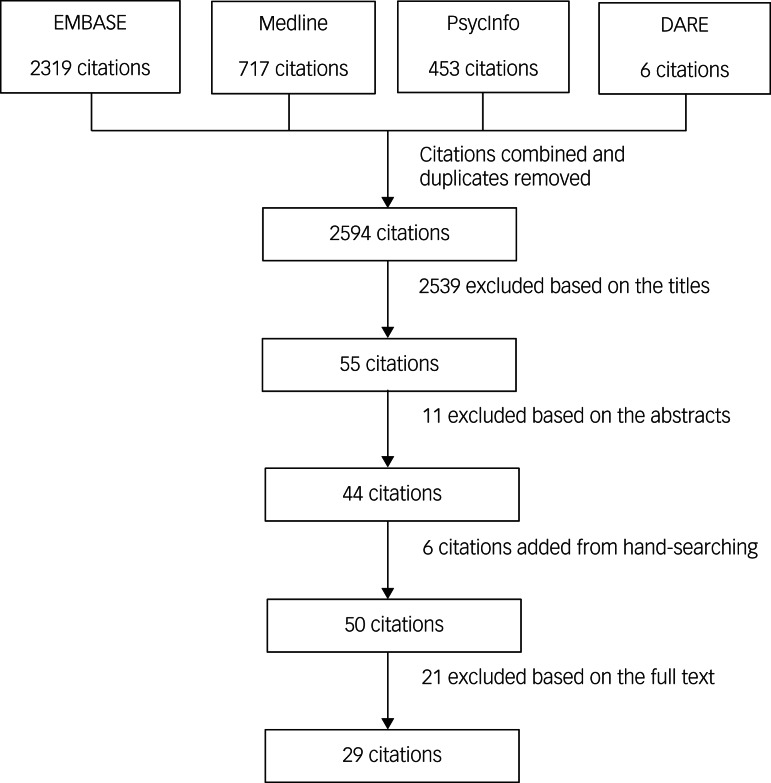
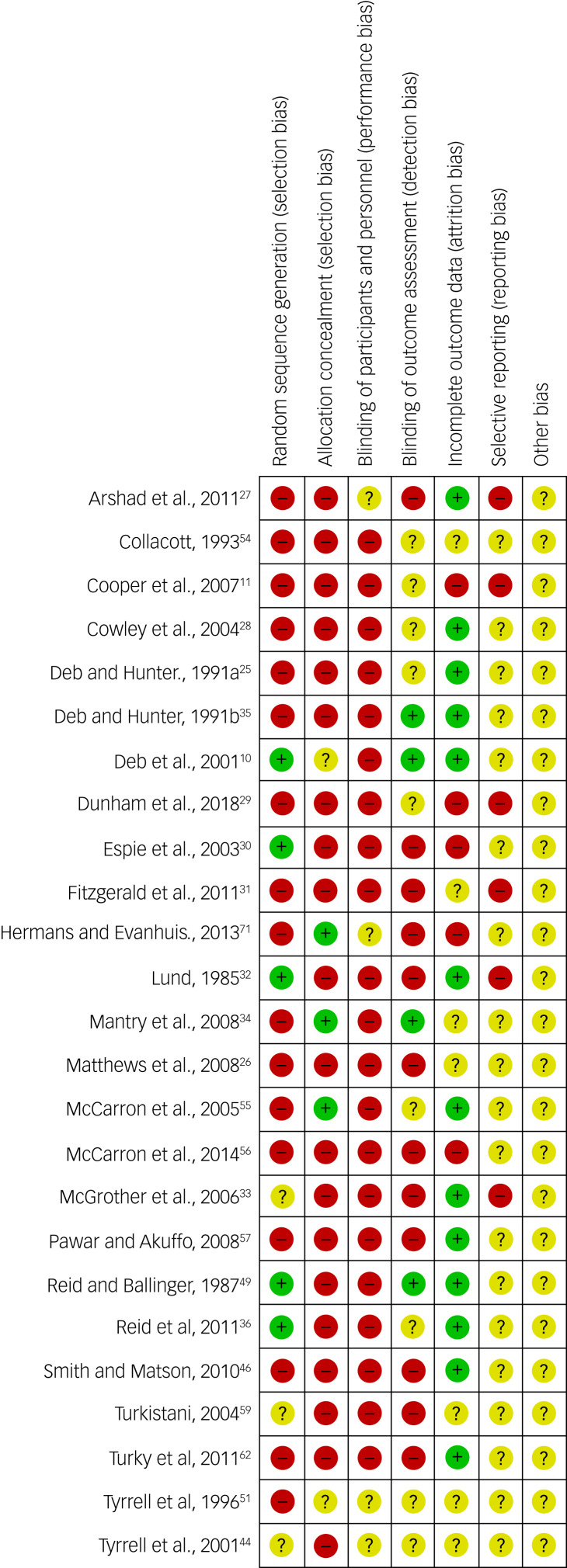
We included literature published between 1985 and 2020 from four databases, and hand-searched six relevant journals. We assessed risk of bias by using SIGN 50 and the Cochrane risk of bias tool. Several meta-analyses were carried out.
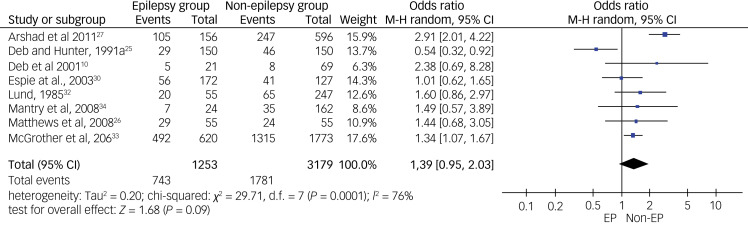
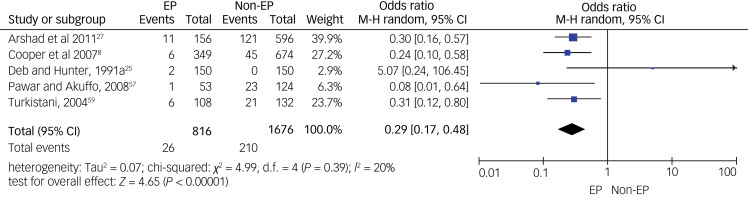
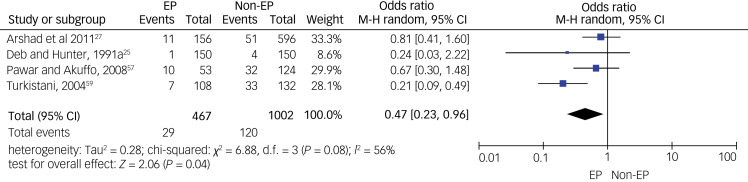
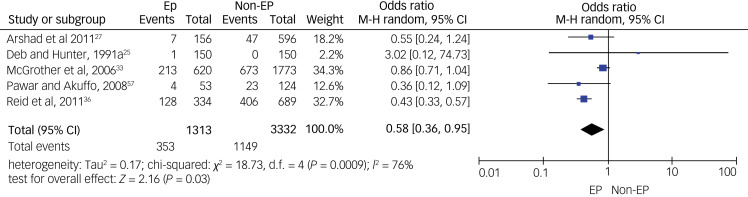
We included 29 papers involving data on 9594 adults with intellectual disabilities, 3180 of whom had epilepsy and 6414 did not. Of the 11 controlled studies that compared the overall rate of psychiatric disorders between the epilepsy and non-epilepsy groups, seven did not show any significant inter-group difference. Meta-analysis was possible on pooled data from seven controlled studies, which did not show any significant inter-group difference in the overall rate of psychiatric disorders. The rates of psychotic disorders, depressive disorders and anxiety disorders were significantly higher in the non-epilepsy control groups compared with the epilepsy group, with effect sizes of 0.29, 0.47 and 0.58, respectively. Epilepsy-related factors did not show any definite association with psychiatric disorders.
It is difficult to pool data from such heterogeneous studies and draw any definitive conclusion because most studies lacked an appropriately matched control group, which will be required for future studies.
在普通人群中,诸如抑郁症和焦虑症等精神障碍通常与癫痫有关,但在成年智障患者中,精神障碍与癫痫之间的关系尚不清楚。
进行一项系统评价和荟萃分析,以评估癫痫是否与成年智障患者精神障碍发病率的增加有关。
我们纳入了1985年至2020年间来自四个数据库的文献,并手工检索了六种相关期刊。我们使用SIGN 50和Cochrane偏倚风险工具评估偏倚风险。进行了多项荟萃分析。
我们纳入了29篇论文,涉及9594名成年智障患者的数据,其中3180人患有癫痫,6414人未患癫痫。在11项比较癫痫组和非癫痫组精神障碍总体发病率的对照研究中,有7项未显示出任何显著的组间差异。对来自7项对照研究的汇总数据进行荟萃分析,结果未显示精神障碍总体发病率存在任何显著的组间差异。与癫痫组相比,非癫痫对照组的精神分裂症、抑郁症和焦虑症发病率显著更高,效应大小分别为0.29、0.47和0.58。癫痫相关因素与精神障碍未显示出任何明确的关联。
由于大多数研究缺乏适当匹配的对照组,因此很难汇总这些异质性研究的数据并得出任何明确的结论,而未来的研究将需要这样的对照组。