Department of Geography, Environment & Spatial Sciences, Michigan State University, East Lansing, MI, USA.
Department of Public Health, University of Otago, Wellington, New Zealand.
Int J Health Geogr. 2021 May 3;20(1):19. doi: 10.1186/s12942-021-00271-3.
Individuals living in low-income neighborhoods have disproportionately high rates of obesity, Type-2 diabetes, and cardiometabolic conditions. Perceived safety in one's neighborhood may influence stress and physical activity, with cascading effects on cardiometabolic health.
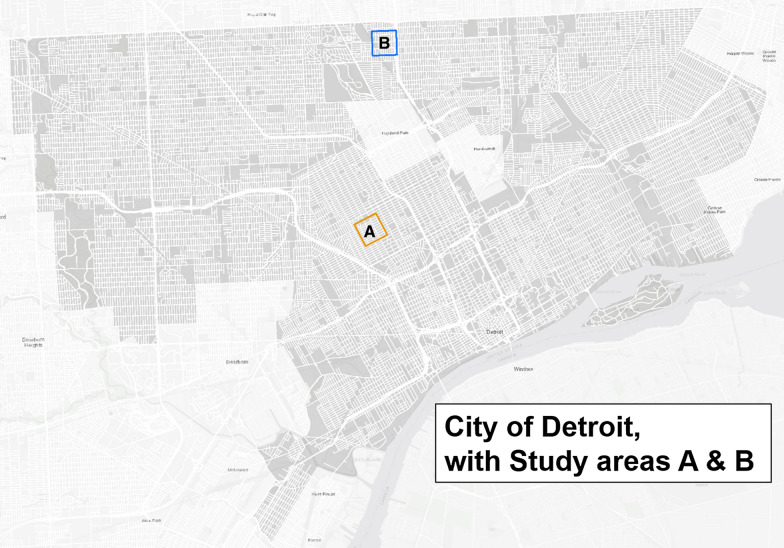
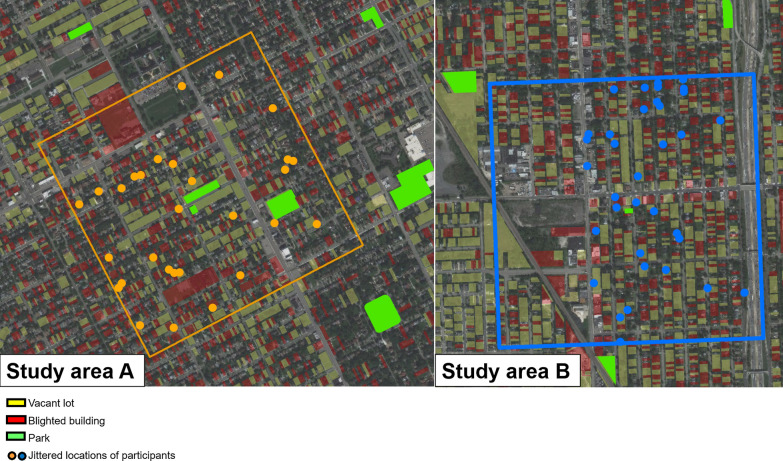
In this study, we examined relationships among feelings of safety while walking during the day and mental health [perceived stress (PSS), depression score], moderate-to-vigorous physical activity (PA), Body Mass Index (BMI), and hemoglobin A1C (A1C) in low-income, high-vacancy neighborhoods in Detroit, Michigan. We recruited 69 adults who wore accelerometers for one week and completed a survey on demographics, mental health, and neighborhood perceptions. Anthropometrics were collected and A1C was measured using A1CNow test strips. We compiled spatial data on vacant buildings and lots across the city. We fitted conventional and multilevel regression models to predict each outcome, using perceived safety during daytime walking as the independent variable of interest and individual or both individual and neighborhood-level covariates (e.g., number of vacant lots). Last, we examined trends in neighborhood features according to perceived safety.
In this predominantly African American sample (91%), 47% felt unsafe during daytime walking. Feelings of perceived safety significantly predicted PSS (β = - 2.34, p = 0.017), depression scores (β = - 4.22, p = 0.006), and BMI (β = - 2.87, p = 0.01), after full adjustment. For PA, we detected a significant association for sex only. For A1C we detected significant associations with blighted lots near the home. Those feeling unsafe lived in neighborhoods with higher park area and number of blighted lots.
Future research is needed to assess a critical pathway through which neighborhood features, including vacant or poor-quality green spaces, may affect obesity-via stress reduction and concomitant effects on cardiometabolic health.
居住在低收入社区的个人肥胖、2 型糖尿病和心血管代谢疾病的发病率极高。人们对社区安全性的感知可能会影响压力和身体活动,从而对心血管代谢健康产生连锁反应。
在这项研究中,我们研究了密歇根州底特律市低收入、高空缺率社区白天散步时的安全感与心理健康(感知压力(PSS)、抑郁评分)、中高强度体力活动(PA)、体重指数(BMI)和血红蛋白 A1C(A1C)之间的关系。我们招募了 69 名成年人,他们佩戴加速度计一周,并完成了一项关于人口统计学、心理健康和社区认知的调查。测量了人体测量学数据,并使用 A1CNow 测试条测量了 A1C。我们整理了城市范围内的空置建筑物和地段的空间数据。我们使用日间步行时的感知安全感作为感兴趣的自变量,并使用个体或个体和社区层面的协变量(例如,空地数量)拟合常规和多层次回归模型,来预测每个结果。最后,我们根据感知安全性检查了社区特征的趋势。
在这个主要是非洲裔美国人的样本中(91%),47%的人在白天散步时感到不安全。在充分调整后,安全感的感知显著预测了 PSS(β=-2.34,p=0.017)、抑郁评分(β=-4.22,p=0.006)和 BMI(β=-2.87,p=0.01)。对于 PA,我们只检测到性别存在显著关联。对于 A1C,我们检测到与家附近的荒芜地段有关的显著关联。感到不安全的人居住在公园面积较大和荒芜地段较多的社区。
需要进一步研究,以评估通过社区特征(包括空置或劣质绿地)影响肥胖的关键途径,这种途径可能通过减轻压力和对心血管代谢健康产生相应影响来实现。