Department of Biomedical Engineering, Case Western Reserve University, Cleveland, OH, USA.
Public Health Agency of Catalonia, Lleida, Catalonia, Spain.
Eur Urol Focus. 2021 Jul;7(4):722-732. doi: 10.1016/j.euf.2021.04.016. Epub 2021 Apr 30.
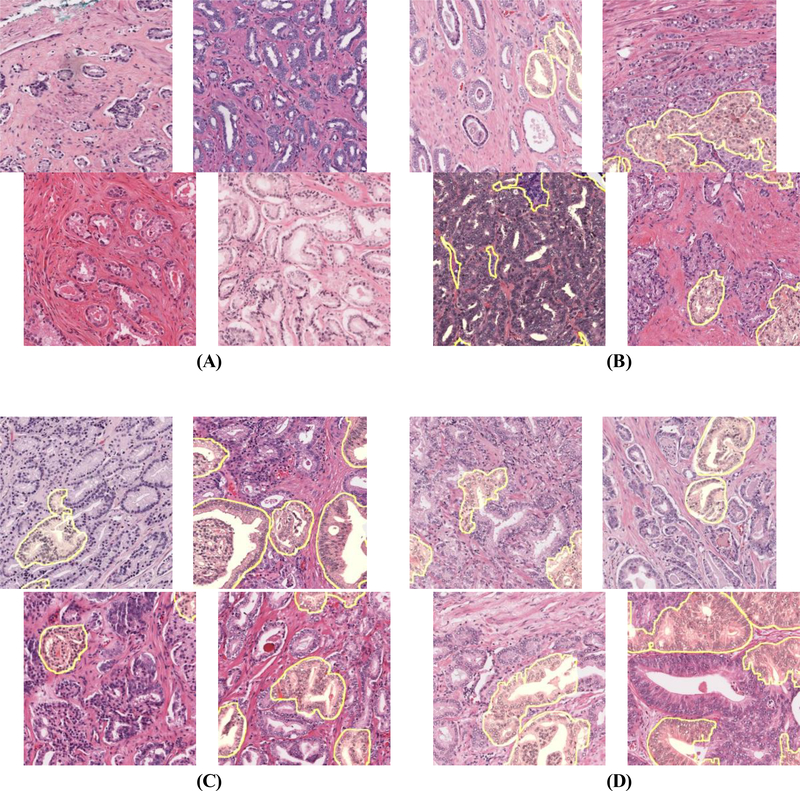
The presence of invasive cribriform adenocarcinoma (ICC), an expanse of cells containing punched-out lumina uninterrupted by stroma, in radical prostatectomy (RP) specimens has been associated with biochemical recurrence (BCR). However, ICC identification has only moderate inter-reviewer agreement.
To investigate quantitative machine-based assessment of the extent and prognostic utility of ICC, especially within individual Gleason grade groups.
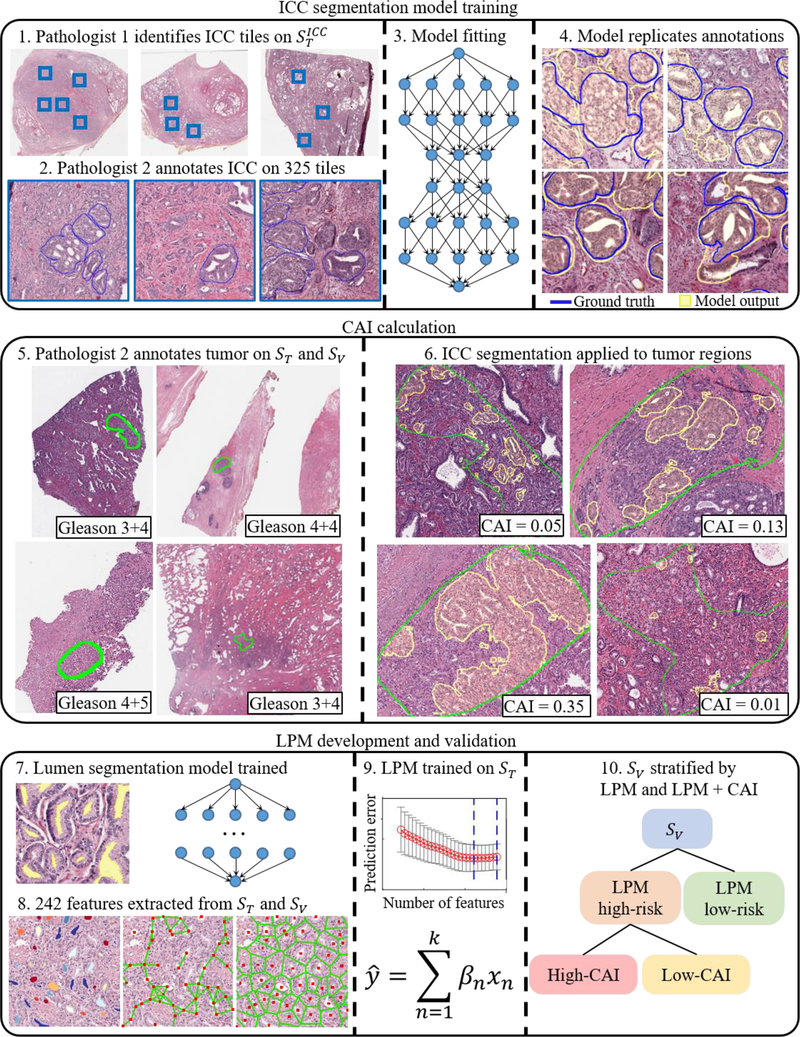
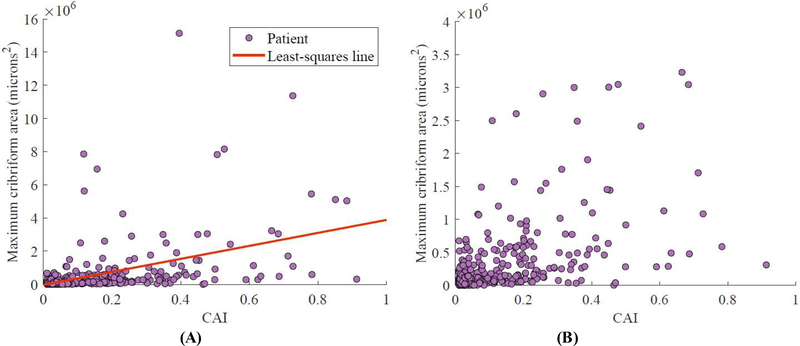
DESIGN, SETTING, AND PARTICIPANTS: A machine learning approach was developed for ICC segmentation using 70 RP patients and validated in a cohort of 749 patients from four sites whose median year of surgery was 2007 and with median follow-up of 28 mo. ICC was segmented on one representative hematoxylin and eosin RP slide per patient and the fraction of tumor area composed of ICC, the cribriform area index (CAI), was measured.
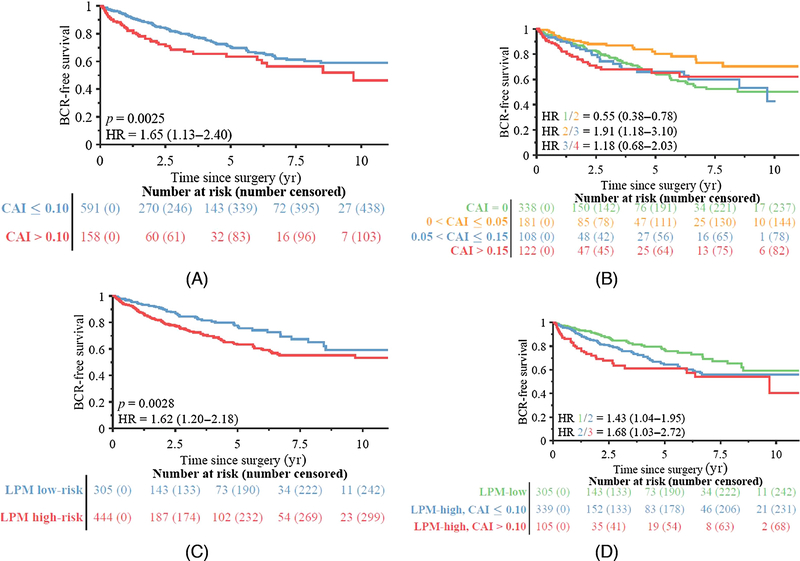
The association between CAI and BCR was measured in terms of the concordance index (c index) and hazard ratio (HR).
CAI was correlated with BCR (c index 0.62) in the validation set of 411 patients with ICC morphology, especially those with Gleason grade group 2 cancer (n = 192; c index 0.66), and was less prognostic when patients without ICC were included (c index 0.54). A doubling of CAI in the group with ICC morphology was prognostic after controlling for Gleason grade, surgical margin positivity, preoperative prostate-specific antigen level, pathological T stage, and age (HR 1.19, 95% confidence interval 1.03-1.38; p = 0.018).
Automated image analysis and machine learning could provide an objective, quantitative, reproducible, and high-throughput method of quantifying ICC area. The performance of CAI for grade group 2 cancer suggests that for patients with little Gleason 4 pattern, the ICC fraction has a strong prognostic role.
Machine-based measurement of a specific cell pattern (cribriform; sieve-like, with lots of spaces) in images of prostate specimens could improve risk stratification for patients with prostate cancer. In the future, this could help in expanding the criteria for active surveillance.
在根治性前列腺切除术(RP)标本中,存在广泛的细胞浸润性筛状腺癌(ICC),其特征为细胞呈打孔状排列,其间无基质分隔,与生化复发(BCR)相关。然而,ICC 的识别仅具有中等的复查者间一致性。
研究 ICC 的定量机器评估方法及其在个别 Gleason 分级组中的预后价值,尤其是 ICC 的程度和预后价值。
设计、设置和参与者:使用 70 例 RP 患者开发了一种用于 ICC 分割的机器学习方法,并在来自四个地点的 749 例患者的队列中进行了验证,这些患者的中位手术年份为 2007 年,中位随访时间为 28 个月。每位患者均从一张代表性的前列腺组织石蜡切片上分割 ICC,并测量肿瘤区域中由 ICC 组成的部分(筛状区域指数,CAI)。
使用一致性指数(c 指数)和风险比(HR)来衡量 CAI 与 BCR 之间的相关性。
CAI 与验证队列中 411 例具有 ICC 形态的患者的 BCR 相关(c 指数 0.62),尤其是 Gleason 分级组 2 癌症患者(n = 192;c 指数 0.66),而当包含没有 ICC 的患者时,CAI 的预后作用较小(c 指数 0.54)。在控制 Gleason 分级、手术切缘阳性、术前前列腺特异性抗原水平、病理 T 分期和年龄后,ICC 形态组中 CAI 的翻倍与预后相关(HR 1.19,95%置信区间 1.03-1.38;p = 0.018)。
自动化图像分析和机器学习可以为定量 ICC 区域提供客观、定量、可重复和高通量的方法。CAI 对 2 级癌症的表现表明,对于 Gleason 4 模式较少的患者,ICC 分数具有很强的预后作用。
基于图像的前列腺标本中特定细胞模式(筛状,有很多空间)的机器测量可能会改善前列腺癌患者的风险分层。在未来,这可能有助于扩大主动监测的标准。