National Animal Health Diagnostic and Investigation Center, Sebeta, Ethiopia.
Department of Microbiology, Immunology and Parasitology, College of Health Sciences, Addis Ababa University, Addis Ababa, Ethiopia.
Microb Genom. 2021 May;7(5). doi: 10.1099/mgen.0.000539.
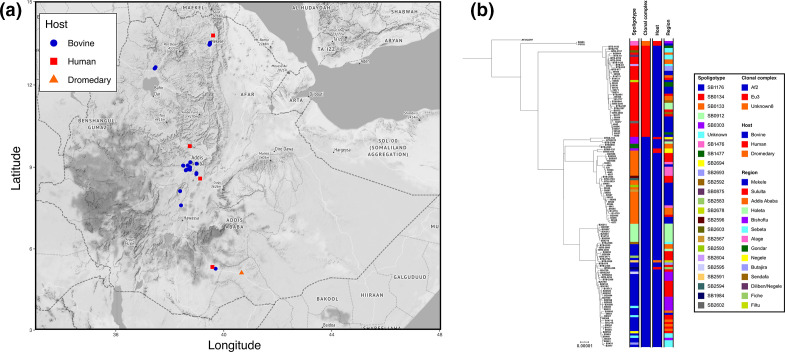
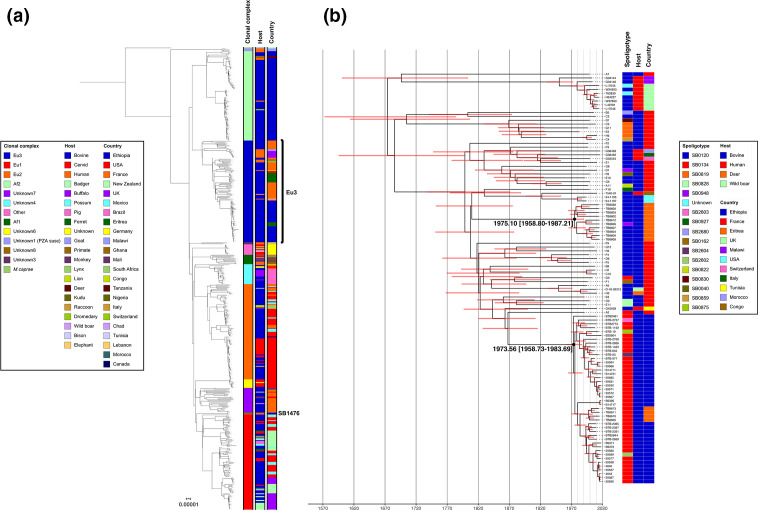
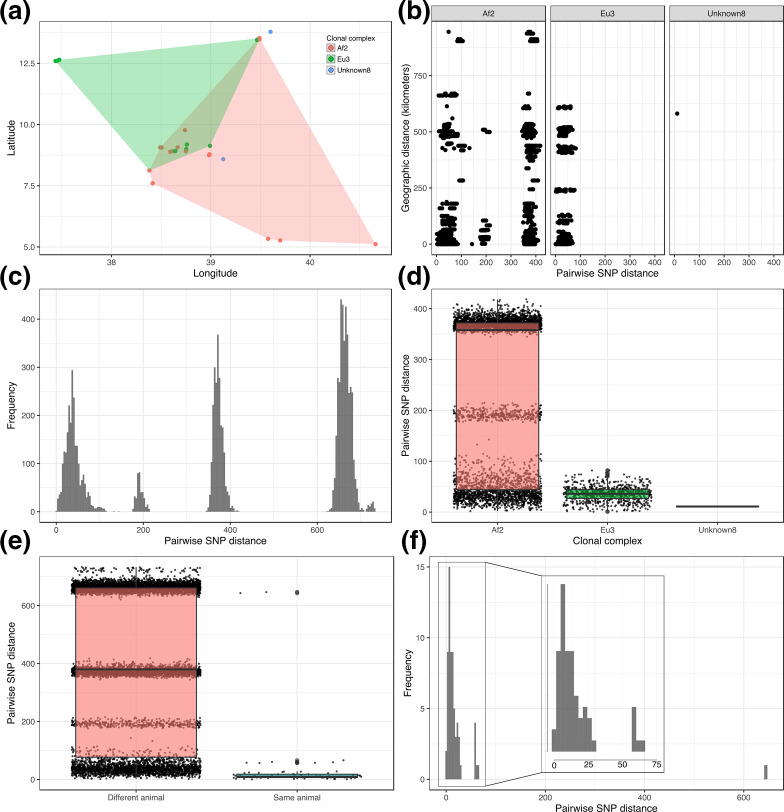
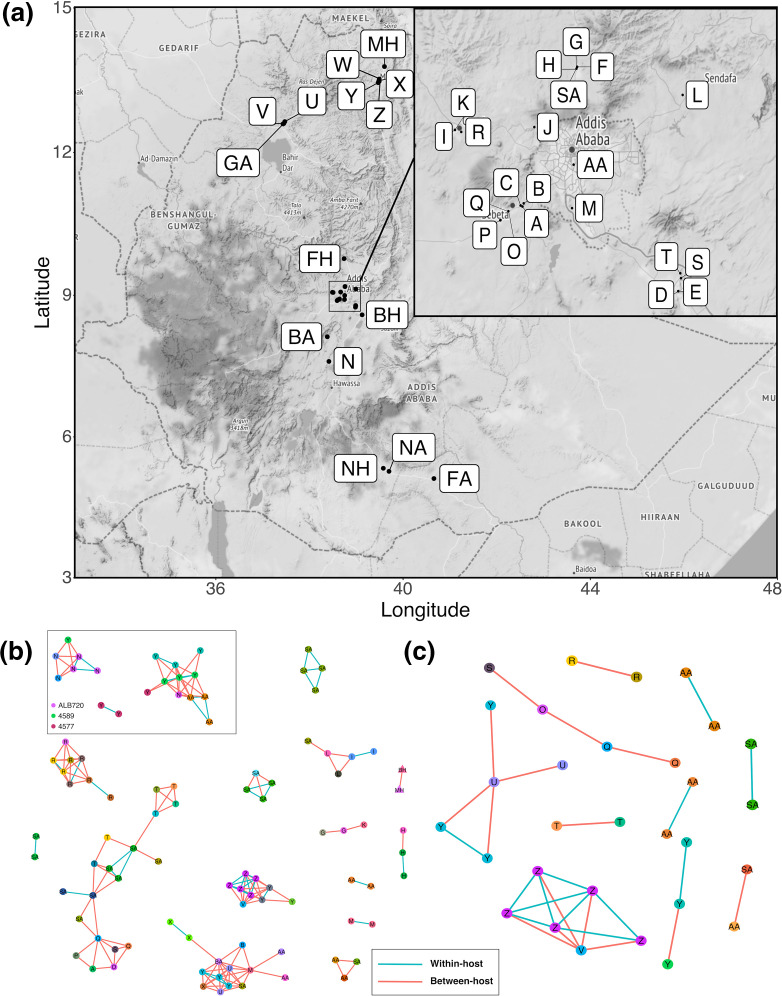
Bovine tuberculosis (bTB) is endemic in cattle in Ethiopia, a country that hosts the largest national cattle herd in Africa. The intensive dairy sector, most of which is peri-urban, has the highest prevalence of disease. Previous studies in Ethiopia have demonstrated that the main cause is , which has been investigated using conventional molecular tools including deletion typing, spoligotyping and Mycobacterial interspersed repetitive unit-variable number tandem repeat (MIRU-VNTR). Here we use whole-genome sequencing to examine the population structure of in Ethiopia. A total of 134 . isolates were sequenced including 128 genomes from 85 mainly dairy cattle and six genomes isolated from humans, originating from 12 study sites across Ethiopia. These genomes provided a good representation of the previously described population structure of , based on spoligotyping and demonstrated that the population is dominated by the clonal complexes African 2 (Af2) and European 3 (Eu3). A range of within-host diversity was observed amongst the isolates and evidence was found for both short- and long-distance transmission. Detailed analysis of available genomes from the Eu3 clonal complex combined with previously published genomes revealed two distinct introductions of this clonal complex into Ethiopia between 1950 and 1987, likely from Europe. This work is important to help better understand bTB transmission in cattle in Ethiopia and can potentially inform national strategies for bTB control in Ethiopia and beyond.
牛结核病(bTB)在埃塞俄比亚的牛群中流行,该国拥有非洲最大的国家牛群。集约化的奶牛业主要集中在城市周边地区,疾病的流行率最高。埃塞俄比亚以前的研究表明,主要原因是 ,已经使用传统的分子工具进行了研究,包括缺失型分型、 spoligotyping 和分枝杆菌插入重复单元-可变数量串联重复(MIRU-VNTR)。在这里,我们使用全基因组测序来研究 在埃塞俄比亚的种群结构。总共对 134 株. 进行了测序,包括来自 85 头主要奶牛和 6 株从人类分离的菌株,来自埃塞俄比亚 12 个研究地点。这些基因组很好地代表了先前描述的 的种群结构,基于 spoligotyping 并表明该种群主要由克隆复合体非洲 2(Af2)和欧洲 3(Eu3)主导。在分离株中观察到了一系列宿主内多样性,并发现了短距离和长距离传播的证据。对 Eu3 克隆复合体中可用基因组的详细分析结合以前发表的基因组揭示了该克隆复合体在 1950 年至 1987 年期间两次引入埃塞俄比亚,可能来自欧洲。这项工作对于帮助更好地了解埃塞俄比亚牛群中的 bTB 传播非常重要,并可能为埃塞俄比亚及其他地区的 bTB 控制国家战略提供信息。