Departamento de Engenharia de Produção, Centro de Tecnologia, Universidade Federal do Rio Grande do Norte, Natal, 59072-970, Brazil.
BMC Med Inform Decis Mak. 2021 May 6;21(1):151. doi: 10.1186/s12911-021-01503-z.
Despite the proven value of multicriteria decision analysis in the health field, there is a lack of studies focused on prioritising victims in the Emergency Medical Service, EMS. With this, and knowing that the decision maker needs a direction on which choice may be the most appropriate, based on different and often conflicting criteria. The current work developed a new model for prioritizing victims of SAMU/192, based on the multicriteria decision methodology, taking into account the scarcity of resources.
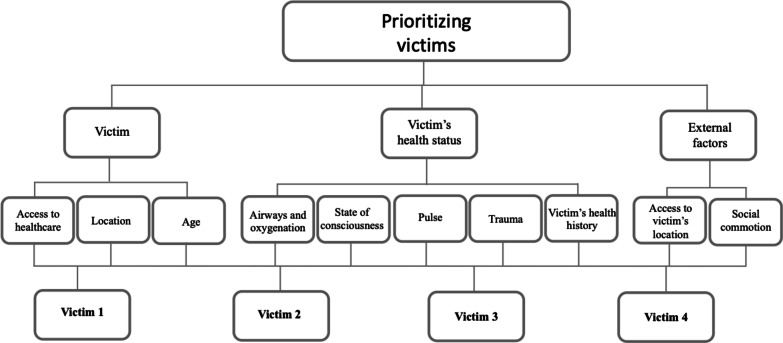
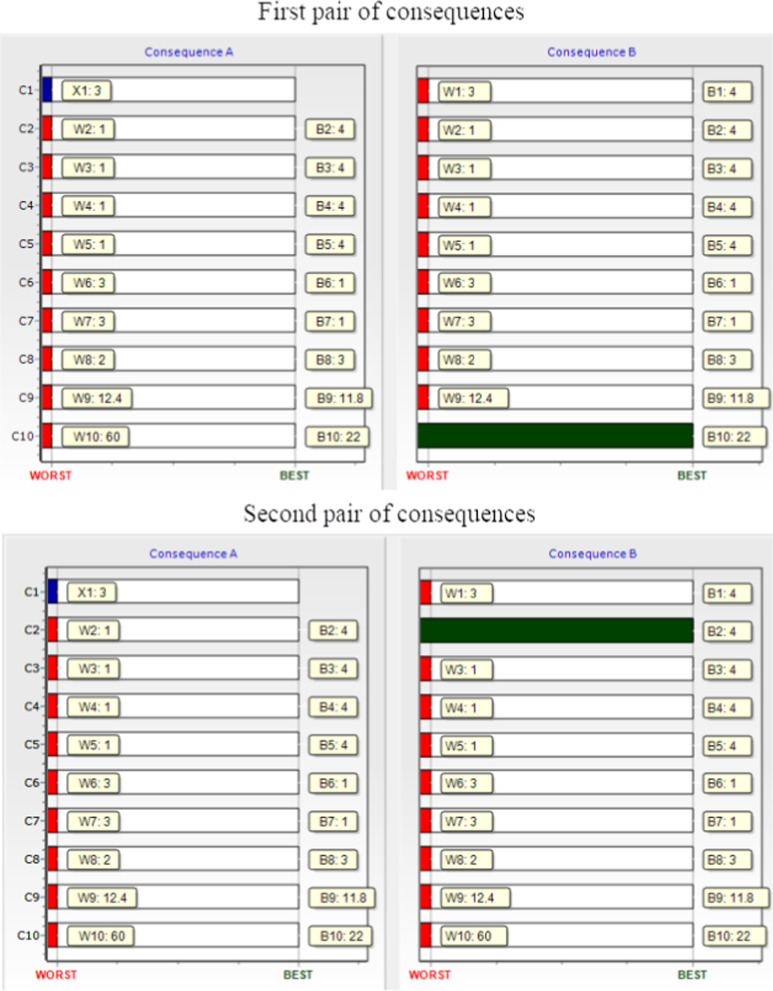
An expert panel and a discussion group were formed, which defined the limits of the problem, and identified the evaluation criteria for choosing a victim, amongst four alternatives illustrated from hypothetical scenarios of emergency situations-clinical and traumatic diseases of absolute priority. For prioritization, an additive mathematical method was used that aggregates criteria in a flexible and interactive version, FITradeoff.
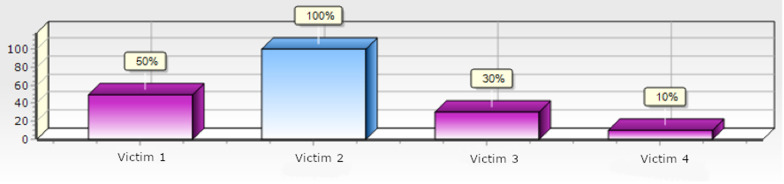
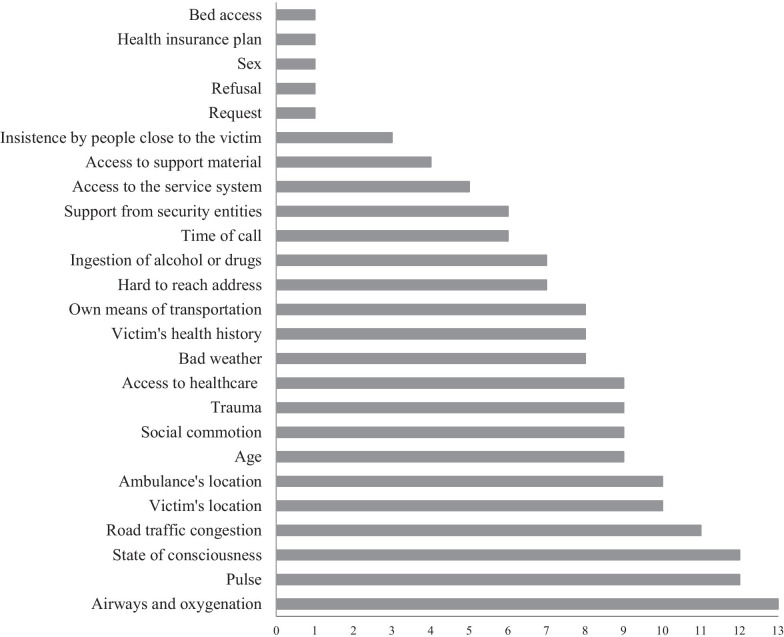
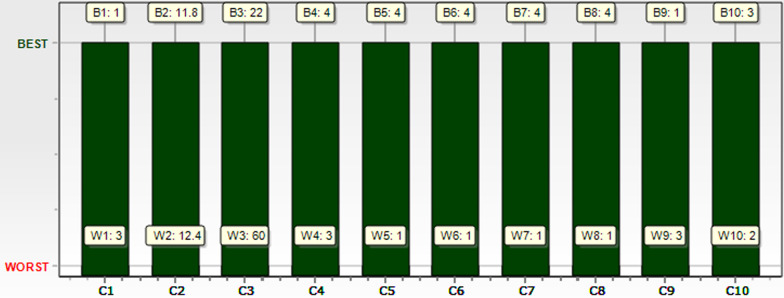
The structuring of the problem led the researchers to identify twenty-five evaluation criteria, amongst which ten were essential to guide decisions. As a result, in the simulation of prioritization of four requesting victims in view of the availability of only one ambulance, the proposed model supported the decision by suggesting the prioritization of one of the victims.
This work contributed to the prioritization of victims using multicriteria decision support methodology. Selecting and weighing the criteria in this study indicated that the protocols that guide regulatory physicians do not consider all the criteria for prioritizing victims in an environment of scarcity of resources. Finally, the proposed model can support crucial decision based on a rational and transparent decision-making process that can be applied in other EMS.
尽管多准则决策分析在卫生领域的价值已得到证实,但在紧急医疗服务(EMS)中,针对受害者进行优先级排序的研究却相对较少。在此背景下,决策者需要根据不同且往往相互冲突的标准,了解到哪种选择可能最合适。本研究旨在开发一种新的基于多准则决策方法的 SAMU/192 受害者优先级排序模型,同时考虑到资源的稀缺性。
成立了一个专家小组和一个讨论小组,确定了问题的范围,并确定了从急诊情况下的四个假设情景(绝对优先的临床和创伤性疾病)中选择受害者的评估标准。为了进行优先级排序,使用了一种加性数学方法,该方法以灵活和交互式的版本 FITradeoff 对标准进行聚合。
问题的结构化使研究人员确定了 25 个评估标准,其中 10 个标准对于指导决策至关重要。因此,在考虑到仅一辆救护车可用的情况下,对四个请求的受害者进行优先级排序的模拟中,所提出的模型通过建议对其中一名受害者进行优先级排序来支持决策。
这项工作使用多准则决策支持方法为受害者的优先级排序做出了贡献。在本研究中选择和权衡标准表明,指导监管医师的协议并未考虑到资源稀缺环境下对受害者进行优先级排序的所有标准。最后,所提出的模型可以支持基于理性和透明决策过程的关键决策,该模型可应用于其他 EMS 中。