• 文献检索
  • 文档翻译
  • 深度研究
  • 学术资讯
  • Suppr Zotero 插件Zotero 插件
  • 邀请有礼
  • 套餐&价格
  • 历史记录
应用&插件
Suppr Zotero 插件Zotero 插件浏览器插件Mac 客户端Windows 客户端微信小程序
定价
高级版会员购买积分包购买API积分包
服务
文献检索文档翻译深度研究API 文档MCP 服务
关于我们
关于 Suppr公司介绍联系我们用户协议隐私条款
关注我们

Suppr 超能文献

核心技术专利:CN118964589B侵权必究
粤ICP备2023148730 号-1Suppr @ 2026

文献检索

告别复杂PubMed语法,用中文像聊天一样搜索,搜遍4000万医学文献。AI智能推荐,让科研检索更轻松。

立即免费搜索

文件翻译

保留排版,准确专业,支持PDF/Word/PPT等文件格式,支持 12+语言互译。

免费翻译文档

深度研究

AI帮你快速写综述,25分钟生成高质量综述,智能提取关键信息,辅助科研写作。

立即免费体验

生命与生计?与感知健康风险相比,感知经济风险与对 COVID-19 预防措施的支持具有更强的相关性。

Lives versus Livelihoods? Perceived economic risk has a stronger association with support for COVID-19 preventive measures than perceived health risk.

机构信息

Department of Psychology, New York University Abu Dhabi, PO BOX 129188, Saadiyat Island, UAE.

University of Virginia, Charlottesville, USA.

出版信息

Sci Rep. 2021 May 6;11(1):9669. doi: 10.1038/s41598-021-88314-4.

DOI:10.1038/s41598-021-88314-4
PMID:33958617
原文链接:https://pmc.ncbi.nlm.nih.gov/articles/PMC8102566/
Abstract

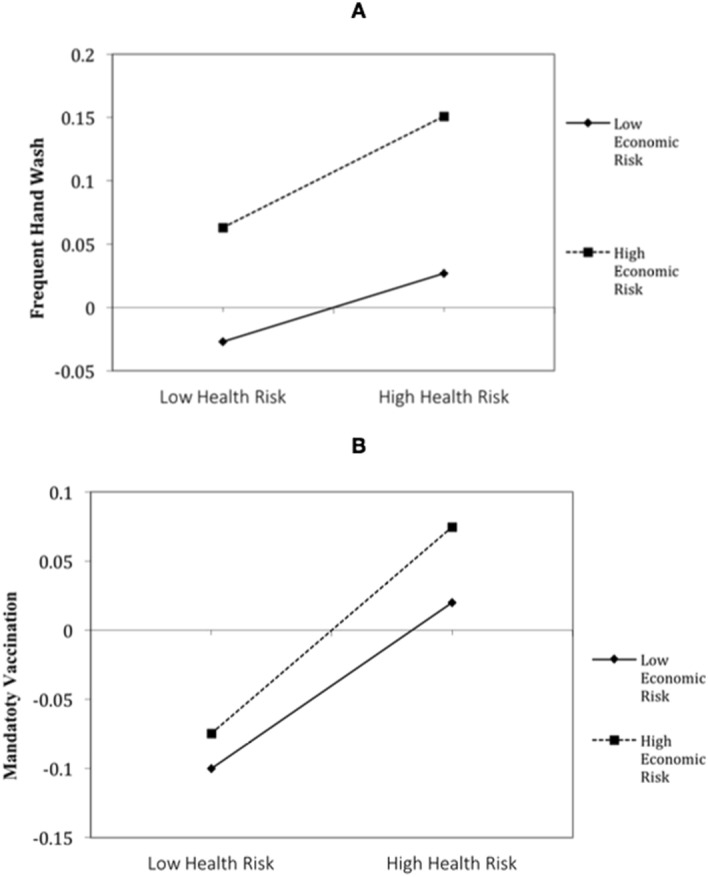
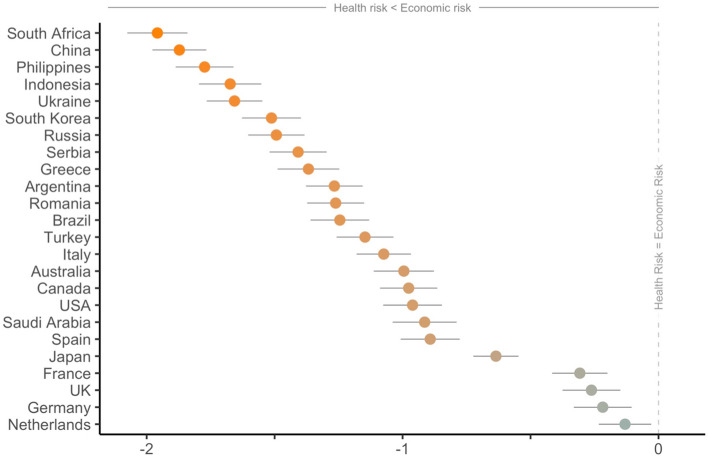
This paper examines whether compliance with COVID-19 mitigation measures is motivated by wanting to save lives or save the economy (or both), and which implications this carries to fight the pandemic. National representative samples were collected from 24 countries (N = 25,435). The main predictors were (1) perceived risk to contract coronavirus, (2) perceived risk to suffer economic losses due to coronavirus, and (3) their interaction effect. Individual and country-level variables were added as covariates in multilevel regression models. We examined compliance with various preventive health behaviors and support for strict containment policies. Results show that perceived economic risk consistently predicted mitigation behavior and policy support-and its effects were positive. Perceived health risk had mixed effects. Only two significant interactions between health and economic risk were identified-both positive.

摘要

本文探讨了人们遵守 COVID-19 缓解措施的动机是为了拯救生命还是拯救经济(或两者兼而有之),以及这对抗击大流行有何影响。从 24 个国家收集了具有全国代表性的样本(N=25435)。主要预测指标包括(1)感染冠状病毒的风险感知,(2)因冠状病毒而遭受经济损失的风险感知,以及(3)两者的交互作用。在多层回归模型中,还加入了个体和国家层面的变量作为协变量。我们研究了对各种预防保健行为的遵守情况以及对严格遏制政策的支持情况。结果表明,感知到的经济风险一直是预测缓解行为和政策支持的因素,其影响是积极的。而感知到的健康风险则具有混合效应。只确定了两个健康风险和经济风险之间的显著交互作用,均为正相关。
https://cdn.ncbi.nlm.nih.gov/pmc/blobs/5e27/8102566/dc95d2fce8cd/41598_2021_88314_Fig4_HTML.jpg
https://cdn.ncbi.nlm.nih.gov/pmc/blobs/5e27/8102566/2382c277623c/41598_2021_88314_Fig1_HTML.jpg
https://cdn.ncbi.nlm.nih.gov/pmc/blobs/5e27/8102566/4593693e20c9/41598_2021_88314_Fig2_HTML.jpg
https://cdn.ncbi.nlm.nih.gov/pmc/blobs/5e27/8102566/d9563efa23d5/41598_2021_88314_Fig3_HTML.jpg
https://cdn.ncbi.nlm.nih.gov/pmc/blobs/5e27/8102566/dc95d2fce8cd/41598_2021_88314_Fig4_HTML.jpg
https://cdn.ncbi.nlm.nih.gov/pmc/blobs/5e27/8102566/2382c277623c/41598_2021_88314_Fig1_HTML.jpg
https://cdn.ncbi.nlm.nih.gov/pmc/blobs/5e27/8102566/4593693e20c9/41598_2021_88314_Fig2_HTML.jpg
https://cdn.ncbi.nlm.nih.gov/pmc/blobs/5e27/8102566/d9563efa23d5/41598_2021_88314_Fig3_HTML.jpg
https://cdn.ncbi.nlm.nih.gov/pmc/blobs/5e27/8102566/dc95d2fce8cd/41598_2021_88314_Fig4_HTML.jpg

相似文献

1
Lives versus Livelihoods? Perceived economic risk has a stronger association with support for COVID-19 preventive measures than perceived health risk.生命与生计?与感知健康风险相比,感知经济风险与对 COVID-19 预防措施的支持具有更强的相关性。
Sci Rep. 2021 May 6;11(1):9669. doi: 10.1038/s41598-021-88314-4.
2
Effects of the COVID-19 Emergency and National Lockdown on Italian Citizens' Economic Concerns, Government Trust, and Health Engagement: Evidence From a Two-Wave Panel Study.COVID-19 紧急状态和全国封锁对意大利公民经济担忧、政府信任和健康参与的影响:来自两轮面板研究的证据。
Milbank Q. 2021 Jun;99(2):369-392. doi: 10.1111/1468-0009.12506. Epub 2021 Apr 6.
3
Risk perception and conspiracy theory endorsement predict compliance with COVID-19 public health measures.风险感知和阴谋论支持预测了对 COVID-19 公共卫生措施的遵守。
Br J Psychol. 2023 Feb;114(1):282-293. doi: 10.1111/bjop.12613. Epub 2022 Nov 22.
4
Self-Reported Compliance With Personal Preventive Measures Among Chinese Factory Workers at the Beginning of Work Resumption Following the COVID-19 Outbreak: Cross-Sectional Survey Study.新冠疫情爆发后复工初期中国工厂工人自我报告的个人预防措施遵守情况:横断面调查研究
J Med Internet Res. 2020 Sep 29;22(9):e22457. doi: 10.2196/22457.
5
Behavioral measures to fight COVID-19: An 8-country study of perceived usefulness, adherence and their predictors.应对 COVID-19 的行为措施:一项针对 8 个国家的感知有用性、依从性及其预测因素的研究。
PLoS One. 2020 Dec 7;15(12):e0243523. doi: 10.1371/journal.pone.0243523. eCollection 2020.
6
Public health matters: why is Latin America struggling in addressing the pandemic?公共卫生事务:为何拉丁美洲在应对大流行方面举步维艰?
J Public Health Policy. 2021 Mar;42(1):27-40. doi: 10.1057/s41271-020-00269-4. Epub 2021 Jan 28.
7
Modeling for the Stringency of Lock-Down Policies: Effects of Macroeconomic and Healthcare Variables in Response to the COVID-19 Pandemic.建模锁定政策的严格程度:应对 COVID-19 大流行的宏观经济和医疗变量的影响。
Front Public Health. 2022 May 25;10:872704. doi: 10.3389/fpubh.2022.872704. eCollection 2022.
8
Knowledge, Perceived Beliefs, and Preventive Behaviors Related to COVID-19 Among Chinese Older Adults: Cross-Sectional Web-Based Survey.中文老年人群对 COVID-19 的知识、认知信念和预防行为:基于网络的横断面调查。
J Med Internet Res. 2020 Dec 31;22(12):e23729. doi: 10.2196/23729.
9
Public perceptions, individual characteristics, and preventive behaviors for COVID-19 in six countries: a cross-sectional study.六个国家 COVID-19 的公众认知、个体特征和预防行为:一项横断面研究。
Environ Health Prev Med. 2021 Mar 3;26(1):29. doi: 10.1186/s12199-021-00952-2.
10
A control framework to optimize public health policies in the course of the COVID-19 pandemic.在 COVID-19 大流行期间优化公共卫生政策的控制框架。
Sci Rep. 2021 Jun 28;11(1):13403. doi: 10.1038/s41598-021-92636-8.

引用本文的文献

1
COVID-19's shadow on families: A structural equation model of parental stress, family relationships, and child wellbeing.COVID-19 对家庭的影响:父母压力、家庭关系和儿童幸福感的结构方程模型。
PLoS One. 2023 Oct 12;18(10):e0292292. doi: 10.1371/journal.pone.0292292. eCollection 2023.
2
COVID-19 may have increased global support for universal health coverage: multi-country observational study.新冠可能增加全球对全民健康覆盖的支持:多国观察性研究。
Front Public Health. 2023 Aug 25;11:1213037. doi: 10.3389/fpubh.2023.1213037. eCollection 2023.
3
What If…? Pandemic policy-decision-support to guide a cost-benefit-optimised, country-specific response.

本文引用的文献

1
Intergenerational conflicts of interest and prosocial behavior during the COVID-19 pandemic.新冠疫情期间的代际利益冲突与亲社会行为
Pers Individ Dif. 2021 Mar;171:110535. doi: 10.1016/j.paid.2020.110535. Epub 2020 Dec 17.
2
Associations of risk perception of COVID-19 with emotion and mental health during the pandemic.新冠肺炎疫情期间风险感知与情绪和心理健康的关联。
J Affect Disord. 2021 Apr 1;284:247-255. doi: 10.1016/j.jad.2021.01.049. Epub 2021 Jan 26.
3
Pareto-based evaluation of national responses to COVID-19 pandemic shows that saving lives and protecting economy are non-trade-off objectives.
如果……呢?大流行政策决策支持,以指导成本效益优化的、针对特定国家的应对措施。
PLOS Glob Public Health. 2022 Aug 24;2(8):e0000721. doi: 10.1371/journal.pgph.0000721. eCollection 2022.
4
Satisfaction With Governmental Risk Communication Both Increases and Decreases COVID-19 Mitigation Behaviours.民众对政府风险沟通的满意度既会增加也会降低 COVID-19 缓解行为。
Int J Public Health. 2023 Mar 1;68:1604966. doi: 10.3389/ijph.2023.1604966. eCollection 2023.
5
Risk Perception of the SARS-CoV-2 Pandemic: Influencing Factors and Implications for Environmental Health Crises.SARS-CoV-2 大流行的风险认知:影响因素及其对环境健康危机的启示。
Int J Environ Res Public Health. 2023 Feb 14;20(4):3363. doi: 10.3390/ijerph20043363.
6
Potential of Microneedle Systems for COVID-19 Vaccination: Current Trends and Challenges.微针系统用于新冠疫苗接种的潜力:当前趋势与挑战
Pharmaceutics. 2022 May 16;14(5):1066. doi: 10.3390/pharmaceutics14051066.
7
Trends in educational disparities in preventive behaviours, risk perception, perceived effectiveness and trust in the first year of the COVID-19 pandemic in Germany.新冠疫情大流行第一年德国预防行为、风险感知、感知有效性和信任方面教育差距的变化趋势。
BMC Public Health. 2022 May 6;22(1):903. doi: 10.1186/s12889-022-13341-3.
8
Ethnic minority, immigrants, and Indigenous people's well-being disparities in Canada during the COVID-19 pandemic: The mediating role of threat perceptions.新冠疫情期间加拿大少数族裔、移民和原住民的福祉差异:威胁认知的中介作用
Int J Intercult Relat. 2022 May;88:148-156. doi: 10.1016/j.ijintrel.2022.04.006. Epub 2022 Apr 22.
9
Using what we know about threat reactivity models to understand mental health during the COVID-19 pandemic.利用我们对威胁反应模型的了解来理解 COVID-19 大流行期间的心理健康。
Behav Res Ther. 2022 Jun;153:104082. doi: 10.1016/j.brat.2022.104082. Epub 2022 Mar 25.
10
COVID-19 stressors and health behaviors: A multilevel longitudinal study across 86 countries.新冠疫情压力源与健康行为:一项涵盖86个国家的多层次纵向研究。
Prev Med Rep. 2022 Mar 17;27:101764. doi: 10.1016/j.pmedr.2022.101764. eCollection 2022 Jun.
基于帕累托的 COVID-19 大流行应对措施的国家评估表明,拯救生命和保护经济不是相互排斥的目标。
Sci Rep. 2021 Jan 28;11(1):2425. doi: 10.1038/s41598-021-81869-2.
4
Polarization and public health: Partisan differences in social distancing during the coronavirus pandemic.两极分化与公共卫生:新冠疫情期间社会 distancing 方面的党派差异。 (注:这里“social distancing”常见释义为“社交距离” ,但原文中该词似乎有误,可能是“social distancing measures”之类表述会更准确,直接翻译的话就是“社会距离” )
J Public Econ. 2020 Nov;191:104254. doi: 10.1016/j.jpubeco.2020.104254. Epub 2020 Aug 6.
5
How Will COVID-19 Affect the Health Care Economy?新冠病毒肺炎将如何影响医疗保健经济?
JAMA. 2020 Jun 9;323(22):2237-2238. doi: 10.1001/jama.2020.7308.
6
Which interventions work best in a pandemic?在大流行期间,哪些干预措施效果最佳?
Science. 2020 Jun 5;368(6495):1063-1065. doi: 10.1126/science.abb6144. Epub 2020 May 21.
7
If the world fails to protect the economy, COVID-19 will damage health not just now but also in the future.如果全球未能保护好经济,新冠疫情不仅会在当下损害健康,还会在未来造成危害。
Nat Med. 2020 May;26(5):640-642. doi: 10.1038/s41591-020-0863-y.
8
Defining the Epidemiology of Covid-19 - Studies Needed.定义新冠病毒病的流行病学——所需的研究。
N Engl J Med. 2020 Mar 26;382(13):1194-1196. doi: 10.1056/NEJMp2002125. Epub 2020 Feb 19.
9
Meta-analysis of randomised controlled trials testing behavioural interventions to promote household action on climate change.随机对照试验的荟萃分析,以测试促进家庭采取行动应对气候变化的行为干预措施。
Nat Commun. 2019 Oct 4;10(1):4545. doi: 10.1038/s41467-019-12457-2.
10
Institutional trust and misinformation in the response to the 2018-19 Ebola outbreak in North Kivu, DR Congo: a population-based survey.在应对 2018-19 年刚果民主共和国北基伍埃博拉疫情中的机构信任和错误信息:一项基于人群的调查。
Lancet Infect Dis. 2019 May;19(5):529-536. doi: 10.1016/S1473-3099(19)30063-5. Epub 2019 Mar 27.