School of Public Health, Georgia State University, Atlanta, Georgia, United States of America.
NORC at the University of Chicago, Chicago, Illinois, United States of America.
PLoS One. 2021 May 7;16(5):e0251203. doi: 10.1371/journal.pone.0251203. eCollection 2021.
E-cigarette advertising has been shown to increase e-cigarette awareness and use. Although e-cigarette marketing in the early 2010s has been well-documented, little is known about how it has changed in recent years in response to the regulatory scrutiny from the FDA and the Congress to combat youth vaping epidemic. This study aims to examine the exposure to e-cigarette TV advertising among youth and adults in the U.S. from 2013 to 2019, overall and by media market and brand.
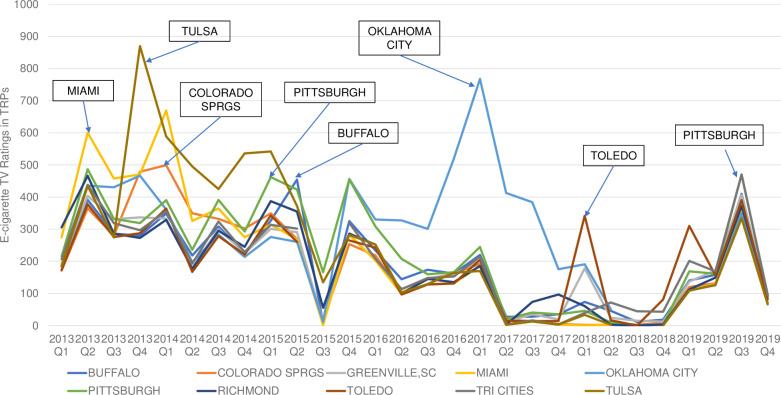
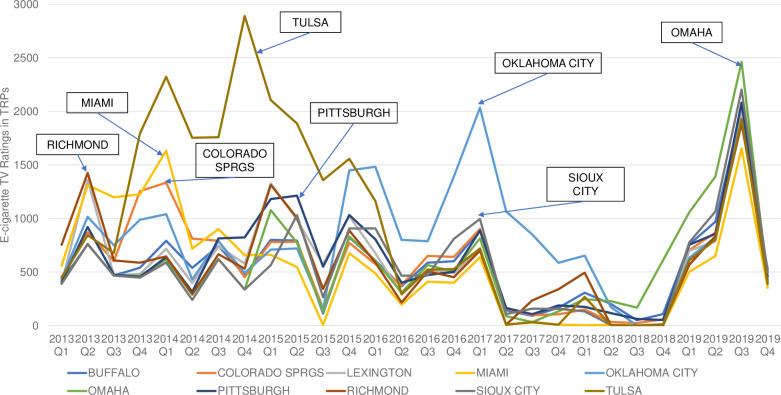
Quarterly data on e-cigarette TV advertising exposure, measured by target rating points (TRPs), and expenditures from 2013 to 2019 were compiled from the StradegyTM of Kantar Media. Trends of quarterly e-cigarette advertising TRPs were reported by age group, market, and brand.
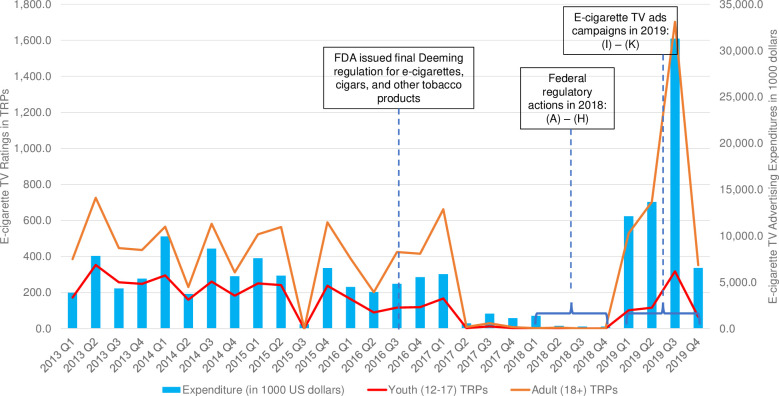
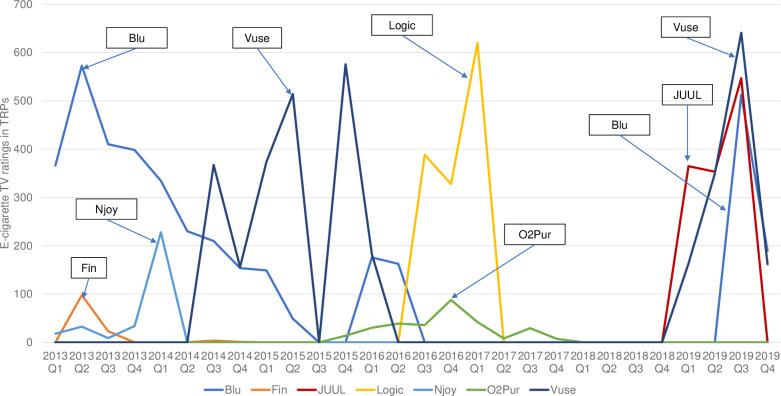
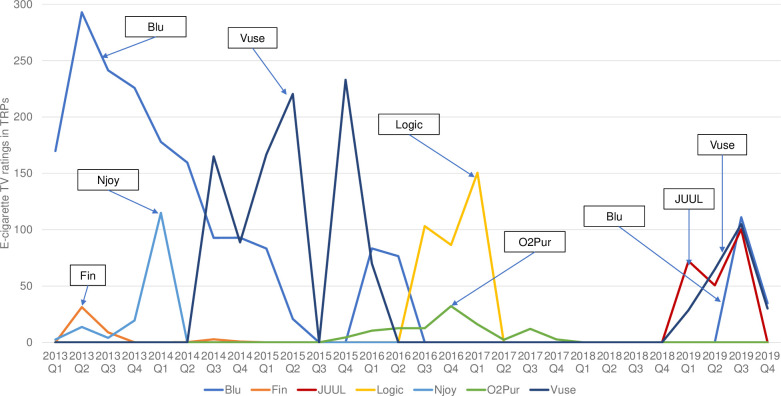
Over the study period, overall exposure to e-cigarette TV advertising was higher among adults than among youth. E-cigarette advertising TRPs and expenditures were relatively stable, despite intermittent fluctuations, between 2013 Q1 and 2017 Q1 except for a one-time dip in 2015 Q3, followed by a sharp decline in 2017 Q2 and stayed low till the end of 2018. A resurgence of e-cigarette advertising TRPs occurred in 2019 Q1, led by the advertising from JUUL, Blu, and Vuse, which peaked in the third quarter of 2019, with quarterly TRPs reaching 316.8 for youth and 1,701.9 for adults, and quarterly advertising expenditure totaling $31 million.
Significant variations, both over time and across media markets and brands, were observed for e-cigarette televised advertising between 2013 and 2019. Following a lull in TV advertising in 2017/18, major e-cigarette companies have substantially increased advertising of their products on American television since early 2019, resulting in a surge in exposure to e-cigarette advertising among both youth and adults. Our findings highlighted the importance of continued monitoring of e-cigarette advertising in the U.S.
电子烟广告已被证明可以提高电子烟的知名度和使用率。尽管 2010 年代早期的电子烟营销活动已经有详细记录,但对于近年来电子烟营销活动的变化却知之甚少,因为这些营销活动受到了 FDA 和国会为应对青少年电子烟泛滥而进行的监管审查。本研究旨在调查 2013 年至 2019 年期间,美国青少年和成年人接触电子烟电视广告的情况,总体情况以及按媒体市场和品牌细分的情况。
从 Kantar Media 的 StradegyTM 收集了 2013 年至 2019 年期间电子烟电视广告曝光率(以目标收视率点 (TRPs) 衡量)和支出的季度数据。按年龄组、市场和品牌报告了电子烟广告 TRPs 的季度趋势。
在整个研究期间,成年人群体接触电子烟电视广告的比例高于青少年群体。尽管在 2013 年第一季度至 2017 年第一季度期间出现间歇性波动,但电子烟广告 TRPs 和支出相对稳定,2015 年第三季度出现一次性下降后,2017 年第二季度急剧下降,并持续到 2018 年底。2019 年第一季度,JUUL、Blu 和 Vuse 的广告引发了电子烟广告 TRPs 的复苏,2019 年第三季度达到顶峰,青少年群体的季度 TRPs 达到 316.8,成年群体达到 1701.9,广告支出总计 3100 万美元。
在 2013 年至 2019 年期间,电子烟电视广告在时间、媒体市场和品牌方面都存在显著差异。在 2017/18 年电视广告活动放缓之后,自 2019 年初以来,主要的电子烟公司大幅增加了其产品在美国电视上的广告投放,导致青少年和成年人接触电子烟广告的人数激增。我们的研究结果强调了持续监测美国电子烟广告的重要性。