Department of Neurology, The First Affiliated Hospital of Chongqing Medical University, Chongqing, China.
Front Cell Infect Microbiol. 2021 Apr 22;11:663967. doi: 10.3389/fcimb.2021.663967. eCollection 2021.
The pathogenesis of post-stroke depression (PSD) remains largely unknown. There is growing evidence indicating that gut microbiota participates in the development of brain diseases through the gut-brain axis. Here, we aim to determine whether and how microbial composition and function altered among control, stroke and PSD rats.
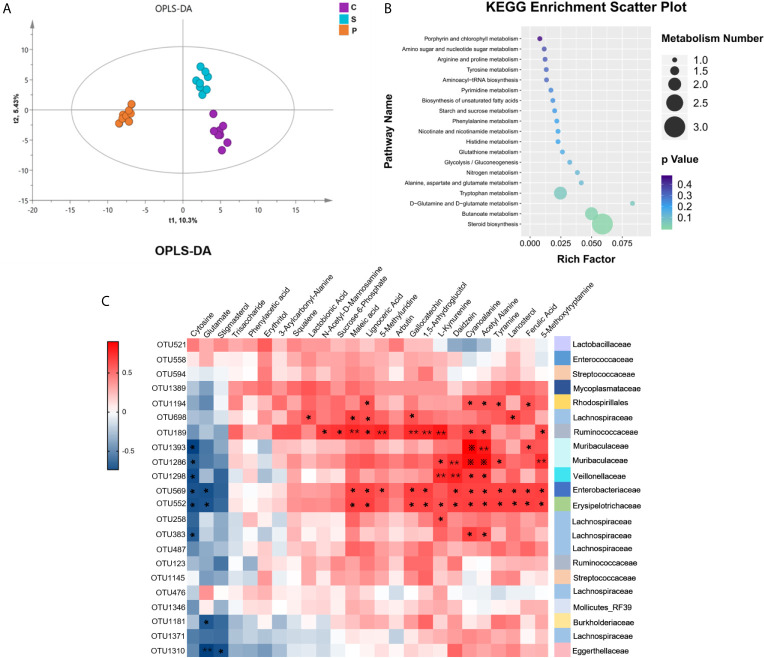
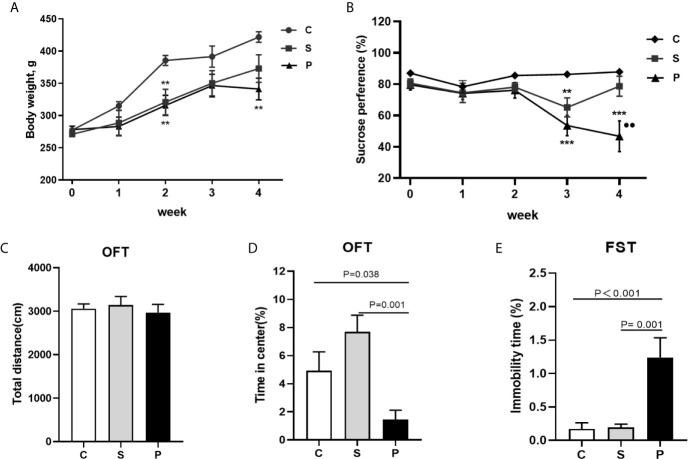
After the PSD rat model was successfully established, gut microbiome combined with fecal metabolome approach were performed to identify potentially PSD-related gut microbes and their functional metabolites. Then, correlations between behavior indices and altered gut microbes, as well as correlations between altered gut microbial operational taxonomic units (OTUs) with differential metabolites in PSD rats were explored. Enrichment analysis was also conducted to uncover the crucial metabolic pathways related to PSD.
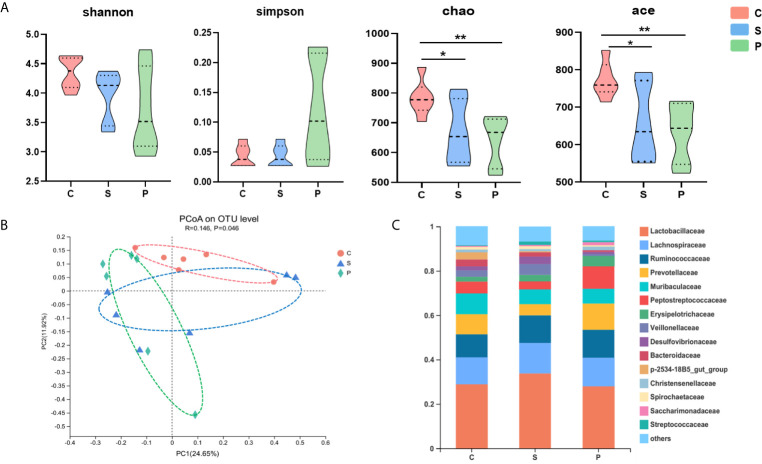
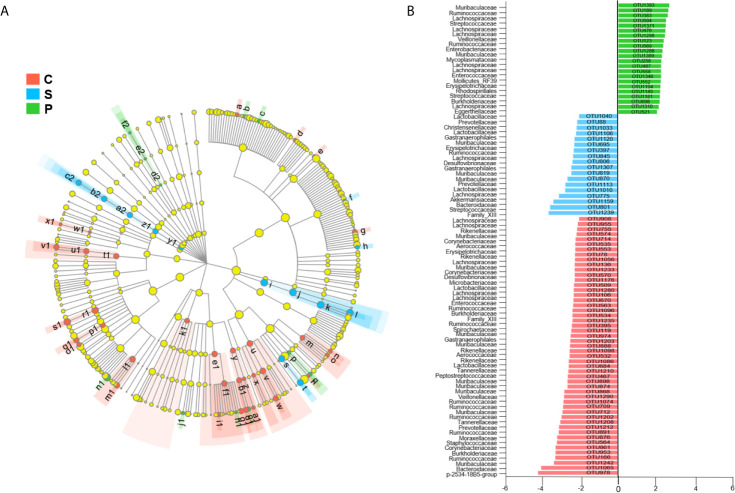
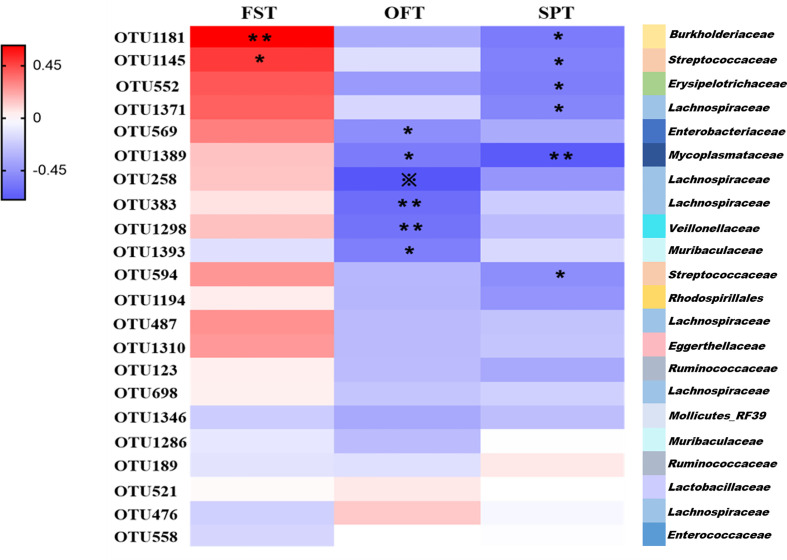
Although there were some alterations in the microbiome and metabolism of the control and stroke rats, we found that the microbial and metabolic phenotypes of PSD rats were significantly different. The microbial composition of PSD showed a decreased species richness indices, characterized by 22 depleted OTUs mainly belonging to phylum , genus and . In addition, PSD was associated with disturbances of fecal metabolomics, among them Glutamate, Maleic acid, 5-Methyluridine, Gallocatechin, 1,5-Anhydroglucitol, L-Kynurenine, Daidzein, Cyanoalanine, Acetyl Alanine and 5-Methoxytryptamine were significantly related to disturbed gut microbiome (P ≤ 0.01). Disordered fecal metabolomics in PSD rats mainly assigned to lipid, amino acid, carbohydrate and nucleotide metabolism. The steroid biosynthesis was particularly enriched in PSD.
Our findings suggest that gut microbiome may participate in the development of PSD, the mechanism may be related to the regulation of lipid metabolism.
卒中后抑郁(PSD)的发病机制在很大程度上尚不清楚。越来越多的证据表明,肠道微生物群通过肠-脑轴参与脑疾病的发生。在这里,我们旨在确定控制组、卒中组和 PSD 大鼠中微生物组成和功能是否以及如何发生改变。
成功建立 PSD 大鼠模型后,采用肠道微生物组联合粪便代谢组学方法,鉴定潜在的 PSD 相关肠道微生物及其功能代谢物。然后,探索行为指标与改变的肠道微生物之间的相关性,以及 PSD 大鼠改变的肠道微生物操作分类单元(OTU)与差异代谢物之间的相关性。还进行了富集分析,以揭示与 PSD 相关的关键代谢途径。
尽管控制组和卒中组的微生物组和代谢组存在一些改变,但我们发现 PSD 大鼠的微生物和代谢表型明显不同。PSD 的微生物组成表现出物种丰富度指数降低,其特征是 22 个耗竭的 OTU 主要属于门 、属 和 。此外,PSD 与粪便代谢组学紊乱有关,其中谷氨酸、马来酸、5-甲基尿嘧啶、没食子儿茶素、1,5-脱水葡萄糖醇、L-犬尿氨酸、大豆苷、氰丙氨酸、乙酰丙氨酸和 5-甲氧基色胺与紊乱的肠道微生物群显著相关(P ≤ 0.01)。PSD 大鼠粪便代谢组学紊乱主要分配到脂质、氨基酸、碳水化合物和核苷酸代谢。类固醇生物合成在 PSD 中特别丰富。
我们的研究结果表明,肠道微生物群可能参与 PSD 的发生,其机制可能与脂质代谢的调节有关。