School of Health and Related Research (ScHARR), University of Sheffield, Sheffield, United Kingdom.
Sheffield Teaching Hospitals NHS Foundation Trust, Sheffield, United Kingdom.
PLoS One. 2021 May 10;16(5):e0251362. doi: 10.1371/journal.pone.0251362. eCollection 2021.
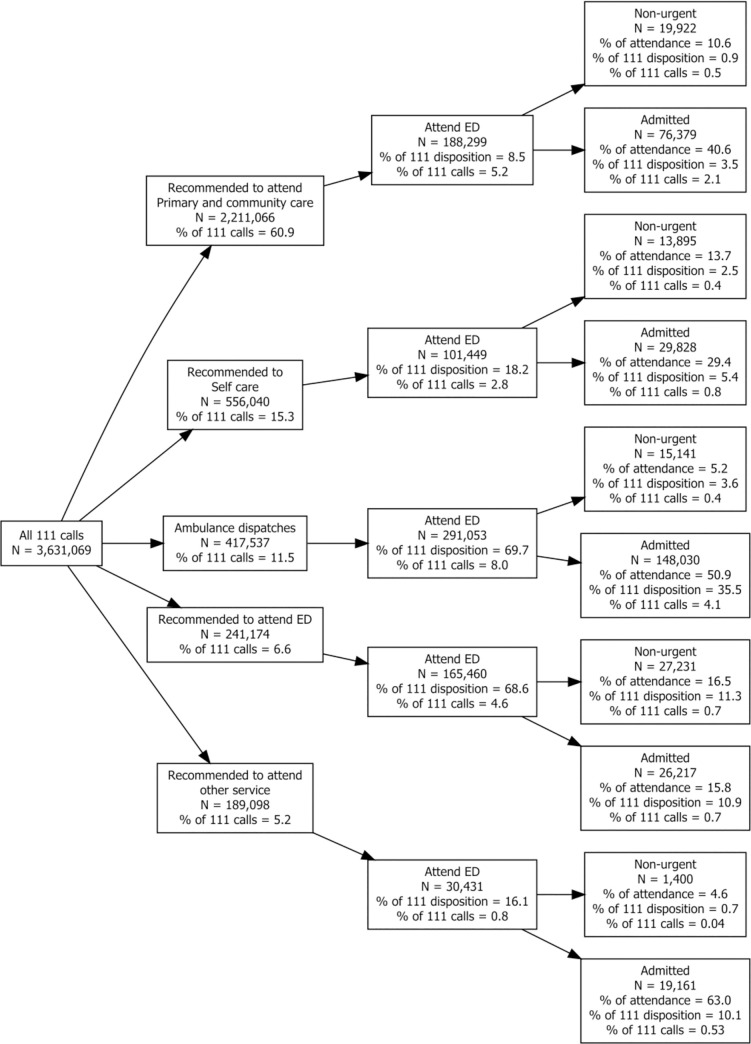
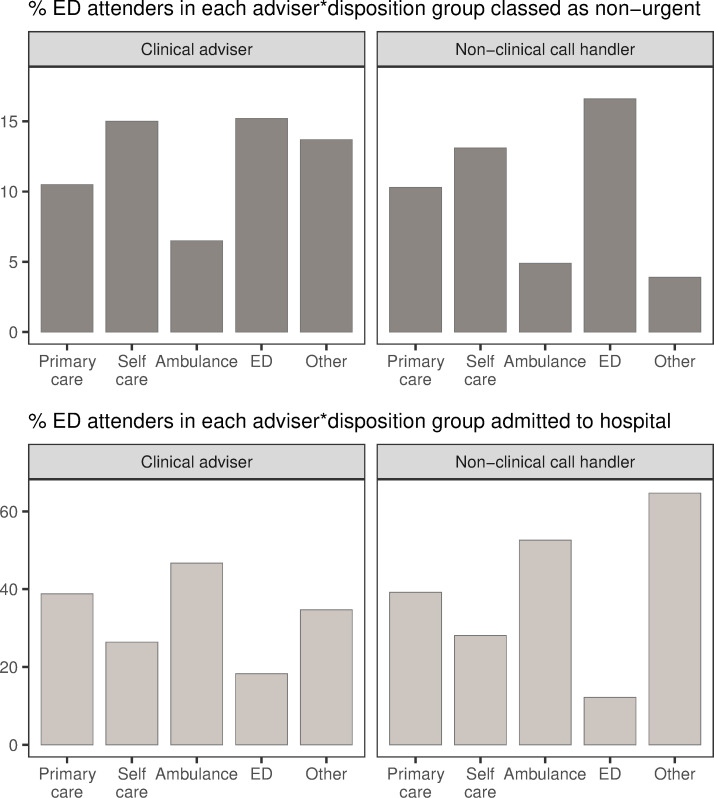
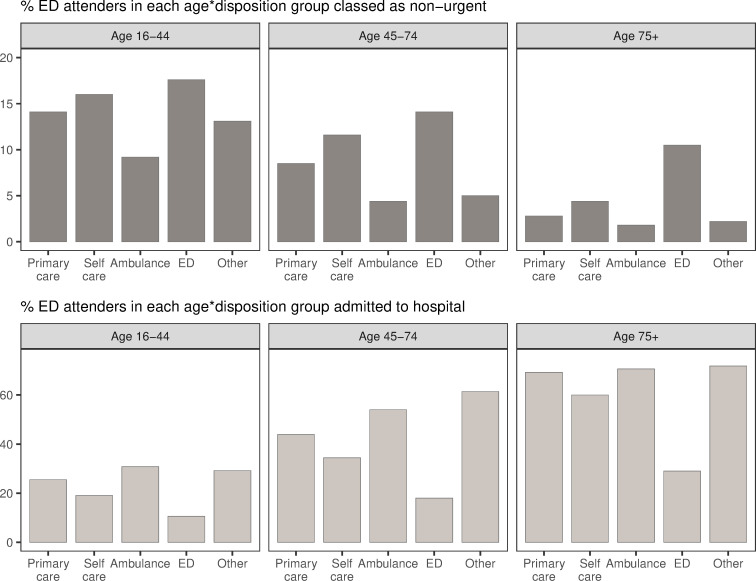
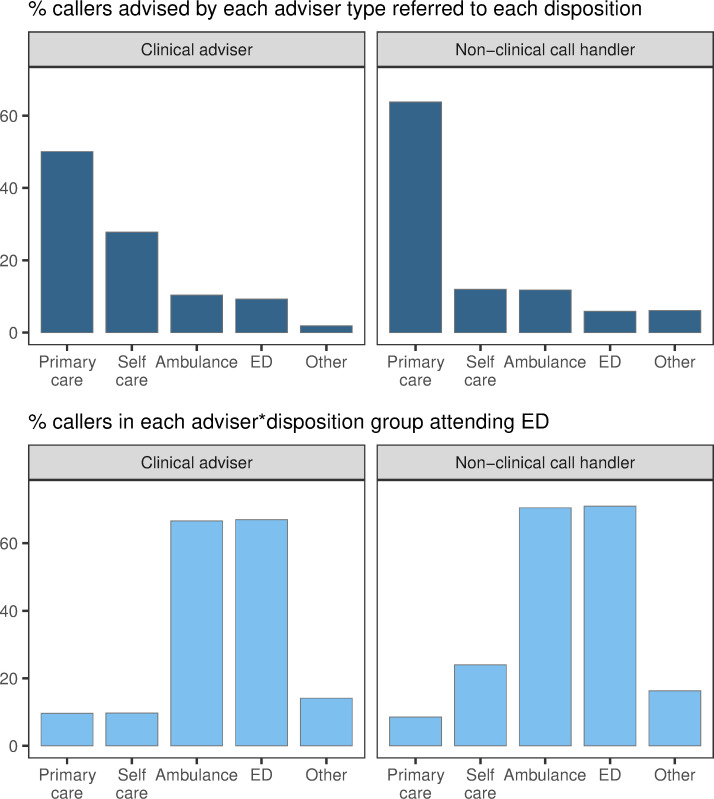
The NHS 111 telephone advice and triage service is a vital part of the management of urgent and emergency care (UEC) services in England. Demand for NHS 111 advice has increased since its introduction in 2013, and the service is of particular importance in light of the current pandemic and resulting increased demand for emergency care. Currently, little is known about the effectiveness of NHS 111 in terms of the appropriateness of the advice given, or about the compliance of patients with that advice. We aimed to address this issue by analysing a large linked routine dataset of all NHS 111 calls (n = 3,631,069) and subsequent emergency department (ED) attendances made in the Yorkshire & Humber region from March 2013-March 2017. We found that many patients do not comply with advice, with 11% (n = 289,748) of patients attending ED when they are advised to self-care or seek primary care. We also found that a considerable number of these patients are further classed as urgent (88%, n = 255,931) and a substantial minority (37%, 106,207) are subsequently admitted to hospital. Further, many patients who are sent an ambulance or told to attend ED are classed as non-urgent upon attending ED (9%, n = 42,372). This research suggests that the level at which NHS 111 is currently triaging results in many hundreds of thousands of mis-triaged cases annually. Additionally, patients frequently do not comply with the advice they receive. This has implications for understanding the accuracy and efficiency of triaging systems.
NHS111 电话咨询和分诊服务是英国紧急和急救护理(UEC)服务管理的重要组成部分。自 2013 年推出以来,对 NHS111 咨询的需求有所增加,而鉴于当前的大流行和对紧急护理需求的增加,该服务尤为重要。目前,人们对 NHS111 在提供建议的适当性方面的有效性以及患者对该建议的遵守情况知之甚少。我们旨在通过分析 2013 年 3 月至 2017 年 3 月在约克郡和亨伯地区所有 NHS111 电话咨询(n=3,631,069)和随后的急诊就诊(ED)的大量链接常规数据集来解决这个问题。我们发现,许多患者不遵守建议,有 11%(n=289,748)的患者在被建议自我护理或寻求初级保健时到 ED 就诊。我们还发现,相当数量的患者进一步被归类为紧急(88%,n=255,931),相当一部分(37%,106,207)随后被收治住院。此外,许多被派往救护车或被告知到 ED 就诊的患者在到 ED 就诊时被归类为非紧急(9%,n=42,372)。这项研究表明,NHS111 目前分诊的水平导致每年有数十万例分诊错误。此外,患者经常不遵守他们收到的建议。这对了解分诊系统的准确性和效率有影响。