Vizeshfar Fatemeh, Momennasab Marzieh, Yektatalab Shahrzad, Iman Mohamad Taghi
Department of Nursing, School of Nursing and Midwifery, Community Based Psychiatric Care Research Center, Shiraz University of Medical Sciences, P.O.Box:713451359, Shiraz, Iran.
Department of Nursing, School of Nursing and Midwifery, Shiraz University of Medical Sciences, Zand St, Namazi Sq., Shiraz, Postal Code: 7193613119, Iran.
BMC Public Health. 2021 May 10;21(1):889. doi: 10.1186/s12889-021-10878-7.
Health volunteers act as the link between the society and the healthcare system and are a symbol of people's participation in the health maintenance and promotion. Despite the important role of health volunteers in the health system, it seems that they experience several problems. The aim of this study was empowering health volunteers through an action research.
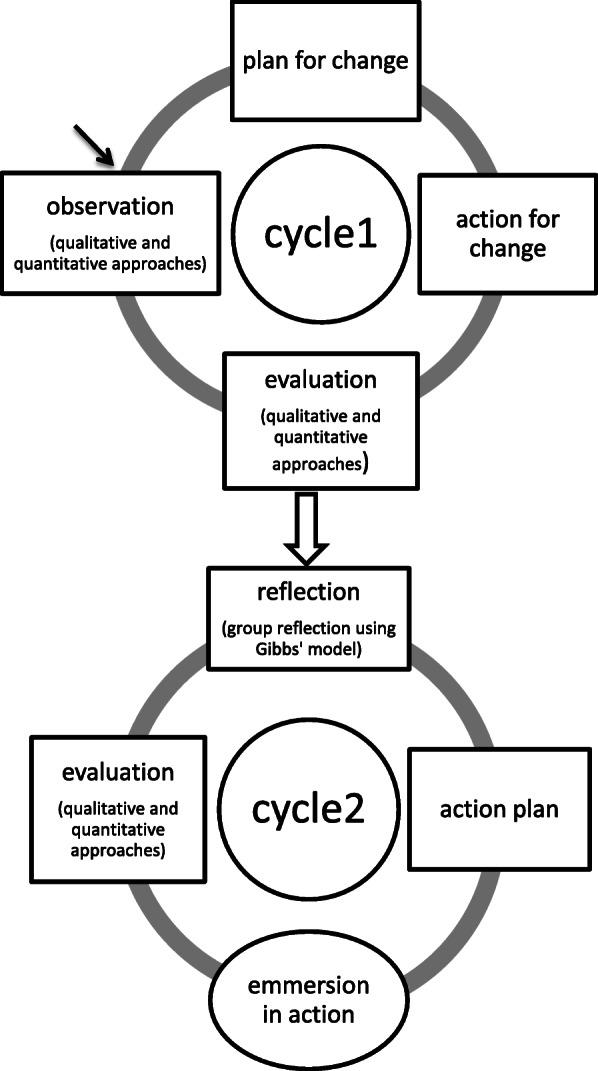
This participatory action research was conducted through two continuous cycles of reflection and acting for change over 20 months, in a comprehensive health center in Southern of Fars province in Iran. Participants included 25 health volunteers; two instructors and an academic researcher as facilitator. In the first cycle the participants discovered the challenges of health volunteers, prioritized them, designed an action plan, and implemented it. At the end of this cycle, evaluation was done with the participants' cooperation. The second cycle began with reflecting on the results of the first cycle and then after designing and implementing second action plan, final evaluation was done.
Qualitative content analysis in the first phase led to the emergence of four categories, including role confusion, inadequate volunteer training, deficits in attracting and keeping volunteers, and being unfamiliar to the public. After the implementation of the action plan the participants learned through reflection and immersing in action. Finally, quantitative and qualitative data showed improvement of knowledge and performance, satisfaction, effectiveness of programs and improvement in volunteer's competence.
Clarification of volunteers' roles, supporting volunteers to improve their knowledge and skills with coherent planning based on their educational needs, are appropriate management plans to attract and retain volunteers. By presenting their services to the society, they will be empowered and motivated to continue.
健康志愿者是社会与医疗保健系统之间的纽带,是人们参与健康维护和促进的象征。尽管健康志愿者在卫生系统中发挥着重要作用,但他们似乎面临着一些问题。本研究的目的是通过行动研究增强健康志愿者的能力。
这项参与式行动研究在伊朗法尔斯省南部的一个综合健康中心进行,为期20个月,通过两个持续的反思和行动循环以实现变革。参与者包括25名健康志愿者、两名指导员和一名作为促进者的学术研究人员。在第一个循环中,参与者发现了健康志愿者面临的挑战,对其进行了优先级排序,设计了一个行动计划并予以实施。在这个循环结束时,在参与者的配合下进行了评估。第二个循环从反思第一个循环的结果开始,然后在设计和实施第二个行动计划之后进行了最终评估。
第一阶段的定性内容分析产生了四类问题,包括角色混乱、志愿者培训不足、吸引和留住志愿者方面的缺陷以及不为公众所熟知。在实施行动计划后,参与者通过反思和投入行动进行学习。最后,定量和定性数据表明,知识和表现、满意度、项目有效性以及志愿者能力都有所提高。
明确志愿者的角色,根据他们教育需求进行连贯规划,支持志愿者提高知识和技能,是吸引和留住志愿者的适当管理计划。通过向社会提供服务,他们将获得能力并受到激励继续下去。