Division of Biopharmaceutics and Pharmacokinetics, Xiangya School of Pharmaceutical Sciences, Central South University, Tongzipo road 172, Changsha, 410000, China.
Neurology department, The First affiliated Xiangya hospital, Central South University, Changsha, China.
J Nanobiotechnology. 2021 May 11;19(1):134. doi: 10.1186/s12951-021-00877-6.
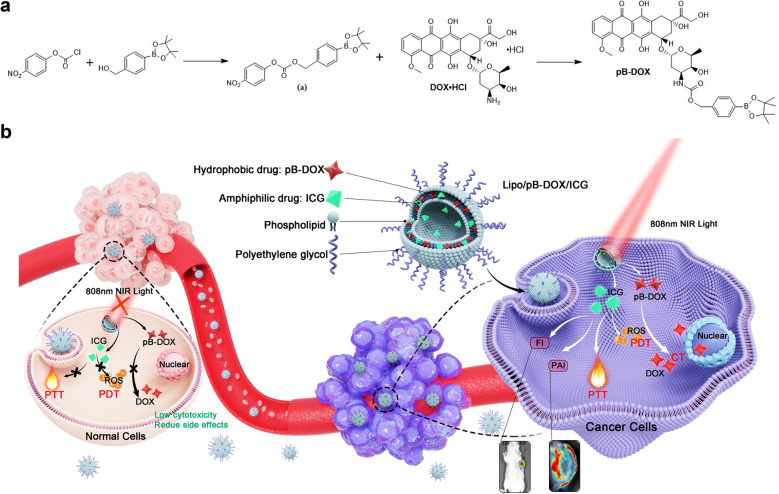
Reactive oxygen species (ROS)-responsive drug delivery systems (DDSs) are potential tools to minimize the side effects and substantially enhance the therapeutic efficacy of chemotherapy. However, it is challenging to achieve spatially and temporally controllable and accurate drug release in tumor sites based on ROS-responsive DDSs. To solve this problem, we designed a nanosystem combined photodynamic therapy (PDT) and ROS-responsive chemotherapy.
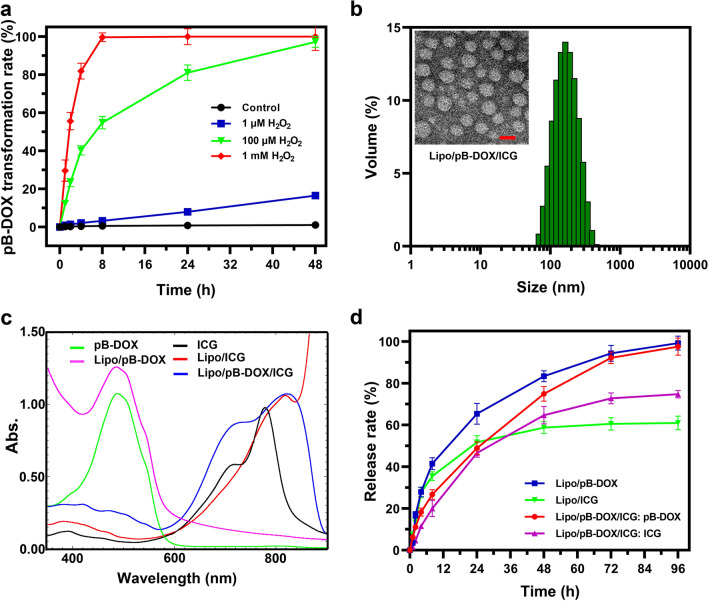
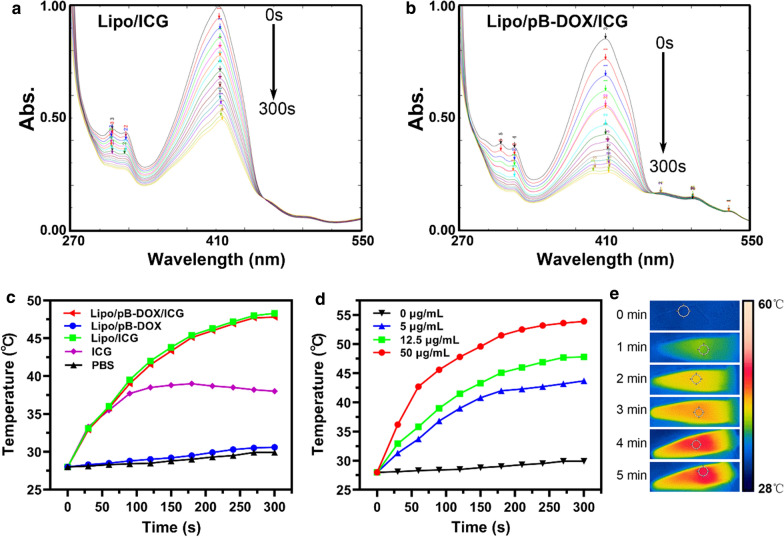
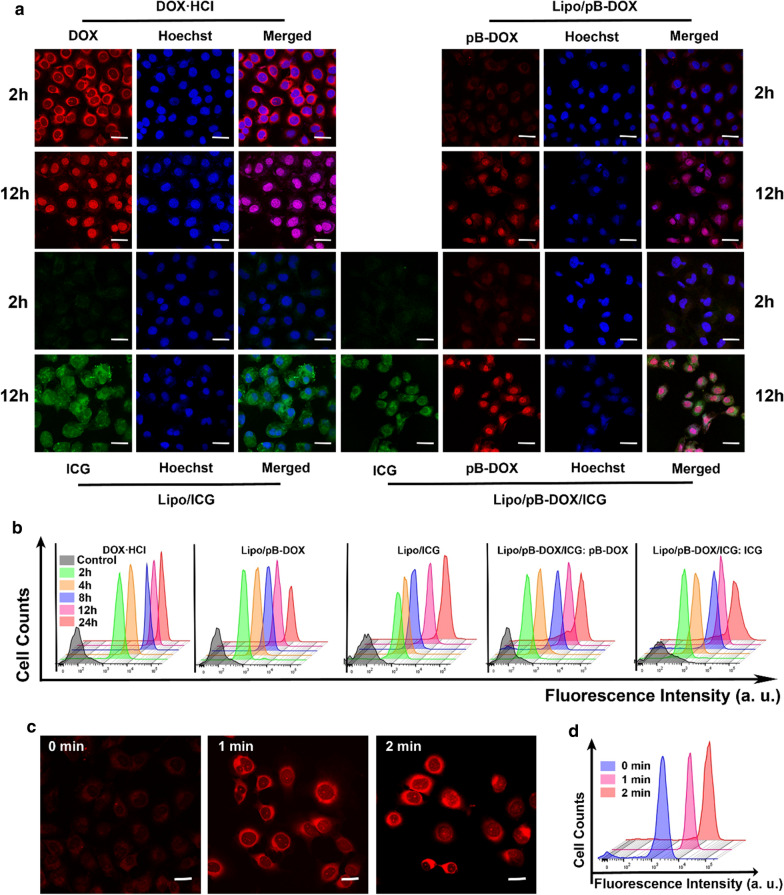
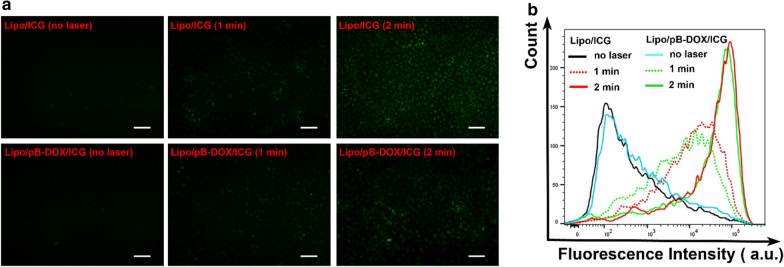
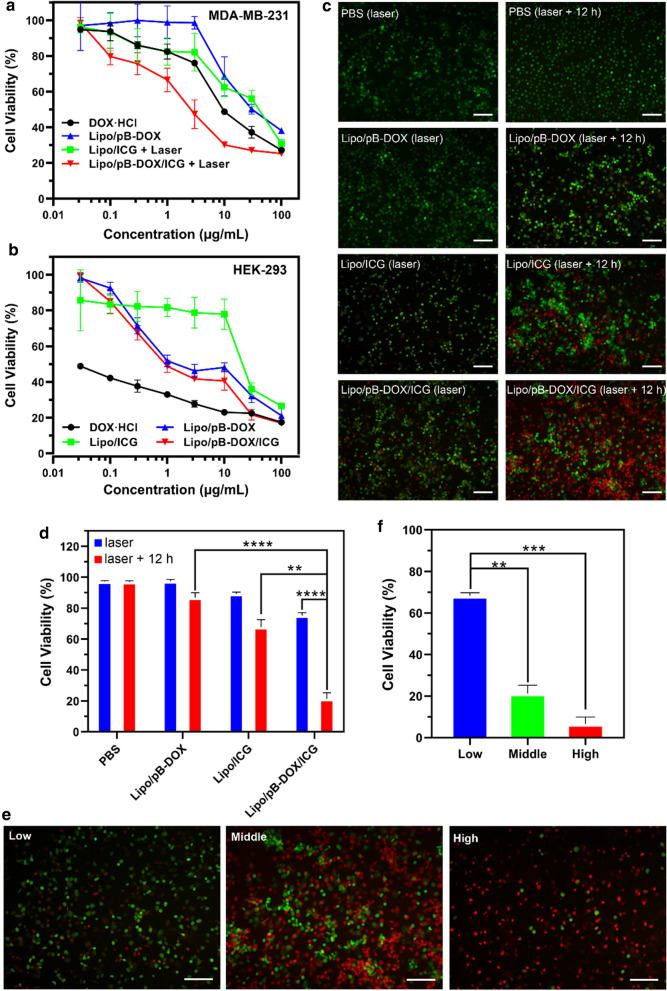
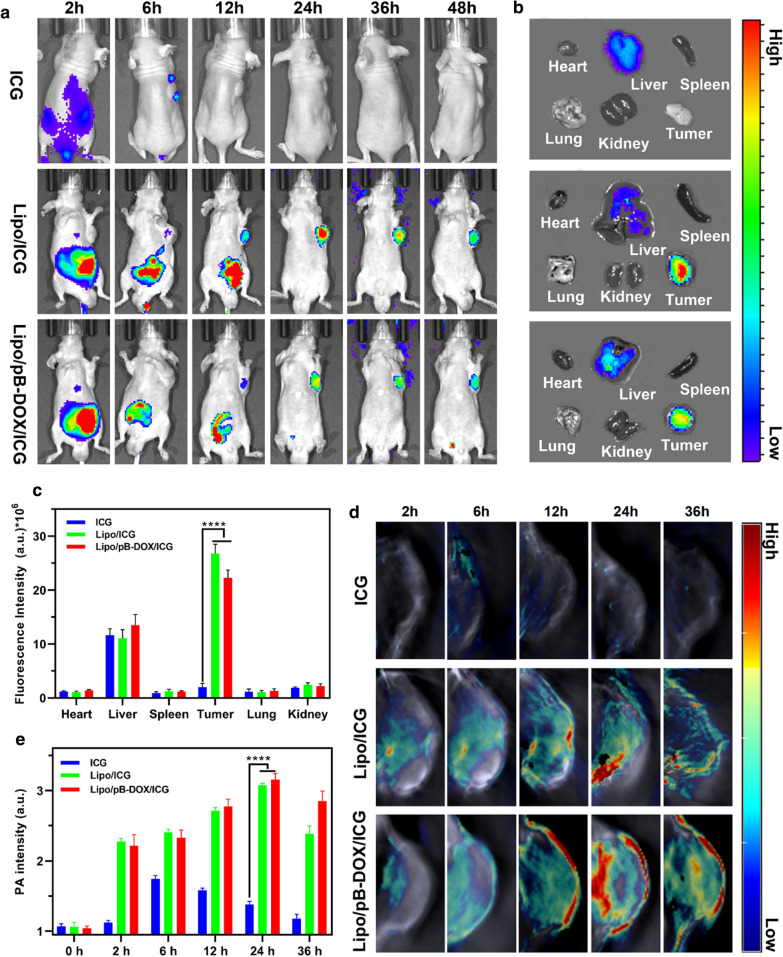
Indocyanine green (ICG), an ROS trigger and photosensitizer, and pB-DOX, a ROS-responsive prodrug of doxorubicin (DOX), were coencapsulated in polyethylene glycol modified liposomes (Lipo/pB-DOX/ICG) to construct a combination therapy nanosystem. The safety of nanosystem was assessed on normal HEK-293 cells, and the cellular uptake, intracellular ROS production capacity, target cell toxicity, and combined treatment effect were estimated on human breast cancer cells MDA-MB-231. In vivo biodistribution, biosafety assessment, and combination therapy effects were investigated based on MDA-MB-231 subcutaneous tumor model.
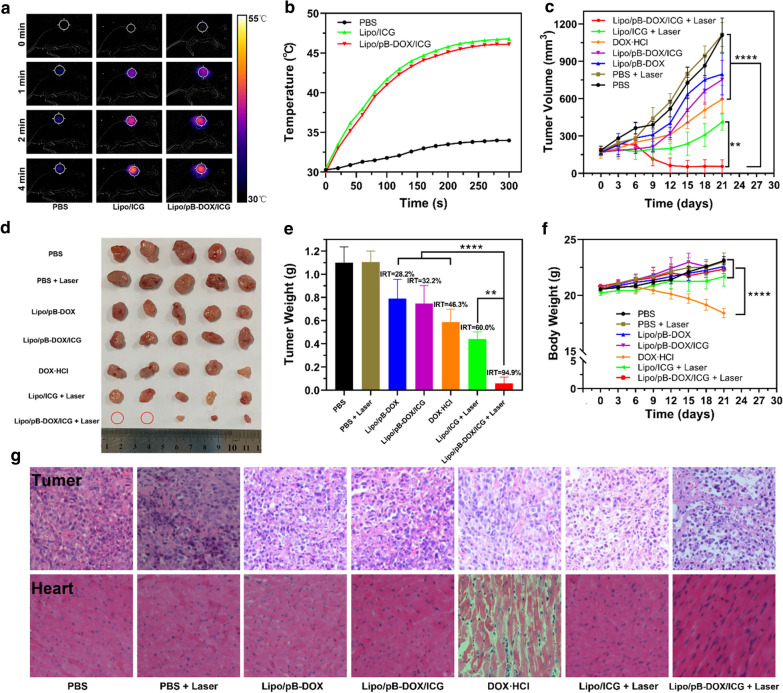
Compared with DOX·HCl, Lipo/pB-DOX/ICG showed higher safety on normal cells. The toxicity of target cells of Lipo/pB-DOX/ICG was much higher than that of DOX·HCl, Lipo/pB-DOX, and Lipo/ICG. After endocytosis by MDA-MB-231 cells, Lipo/pB-DOX/ICG produced a large amount of ROS for PDT by laser irradiation, and pB-DOX was converted to DOX by ROS for chemotherapy. The cell inhibition rate of combination therapy reached up to 93.5 %. After the tail vein injection (DOX equivalent of 3.0 mg/kg, ICG of 3.5 mg/kg) in mice bearing MDA-MB-231 tumors, Lipo/pB-DOX/ICG continuously accumulated at the tumor site and reached the peak at 24 h post injection. Under irradiation at this time point, the tumors in Lipo/pB-DOX/ICG group almost disappeared with 94.9 % tumor growth inhibition, while those in the control groups were only partially inhibited. Negligible cardiotoxicity and no treatment-induced side effects were observed.
Lipo/pB-DOX/ICG is a novel tool for on-demand drug release at tumor site and also a promising candidate for controllable and accurate combinatorial tumor therapy.
活性氧(ROS)响应型药物递送系统(DDS)是一种潜在的工具,可以最大限度地减少化疗的副作用,并显著提高治疗效果。然而,基于 ROS 响应型 DDS 在肿瘤部位实现空间和时间上可控和精确的药物释放仍然具有挑战性。为了解决这个问题,我们设计了一种结合光动力疗法(PDT)和 ROS 响应型化疗的纳米系统。
将吲哚菁绿(ICG),一种 ROS 触发剂和光敏剂,以及阿霉素(DOX)的 ROS 响应前药 pB-DOX,共同包封在聚乙二醇修饰的脂质体(Lipo/pB-DOX/ICG)中,构建一种联合治疗的纳米系统。在正常 HEK-293 细胞上评估纳米系统的安全性,并在人乳腺癌细胞 MDA-MB-231 上评估细胞摄取、细胞内 ROS 产生能力、靶细胞毒性和联合治疗效果。基于 MDA-MB-231 皮下肿瘤模型,研究了纳米系统的体内分布、生物安全性评估和联合治疗效果。
与 DOX·HCl 相比,Lipo/pB-DOX/ICG 在正常细胞上具有更高的安全性。靶细胞的毒性比 DOX·HCl、Lipo/pB-DOX 和 Lipo/ICG 高得多。在 MDA-MB-231 细胞内被内吞后,Lipo/pB-DOX/ICG 通过激光照射产生大量 ROS 进行 PDT,并通过 ROS 将 pB-DOX 转化为 DOX 进行化疗。联合治疗的细胞抑制率高达 93.5%。在荷 MDA-MB-231 肿瘤小鼠尾静脉注射(DOX 当量 3.0 mg/kg,ICG 3.5 mg/kg)后,Lipo/pB-DOX/ICG 持续在肿瘤部位积累,并在注射后 24 小时达到峰值。此时进行照射,Lipo/pB-DOX/ICG 组的肿瘤几乎完全消失,肿瘤生长抑制率达到 94.9%,而对照组仅部分抑制。未观察到明显的心脏毒性和治疗引起的副作用。
Lipo/pB-DOX/ICG 是一种在肿瘤部位按需释放药物的新型工具,也是一种可控和精确的组合肿瘤治疗的有前途的候选药物。