National Cancer Institute; National Institutes of Health, Laboratory of Immune Cell Biology, Bethesda, MD, USA.
National Cancer Institute; National Institutes of Health, Laboratory of Genitourinary Cancer Pathogenesis, Bethesda, MD, USA.
Nat Commun. 2021 May 11;12(1):2666. doi: 10.1038/s41467-021-23004-3.
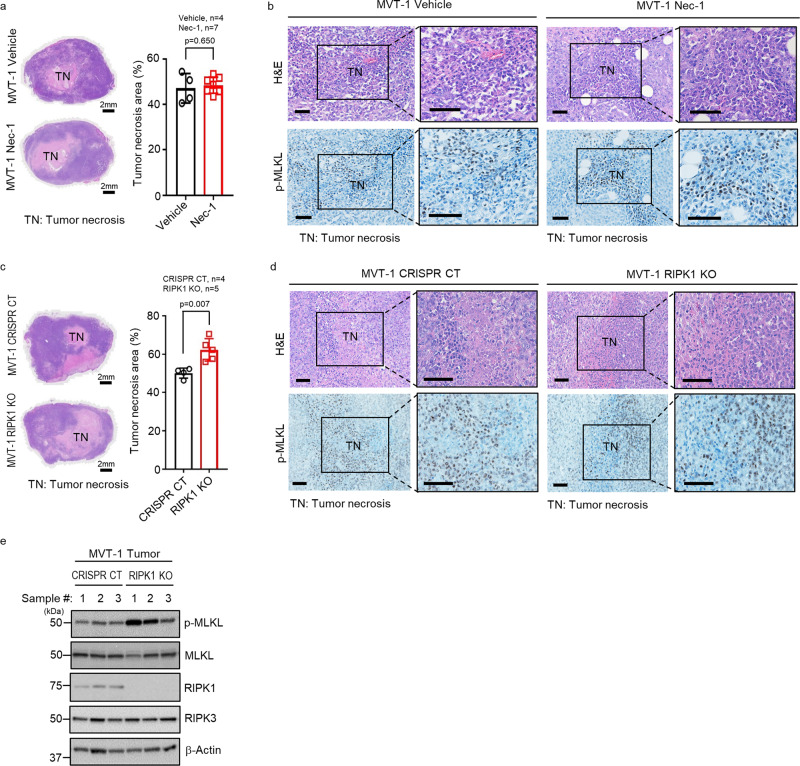
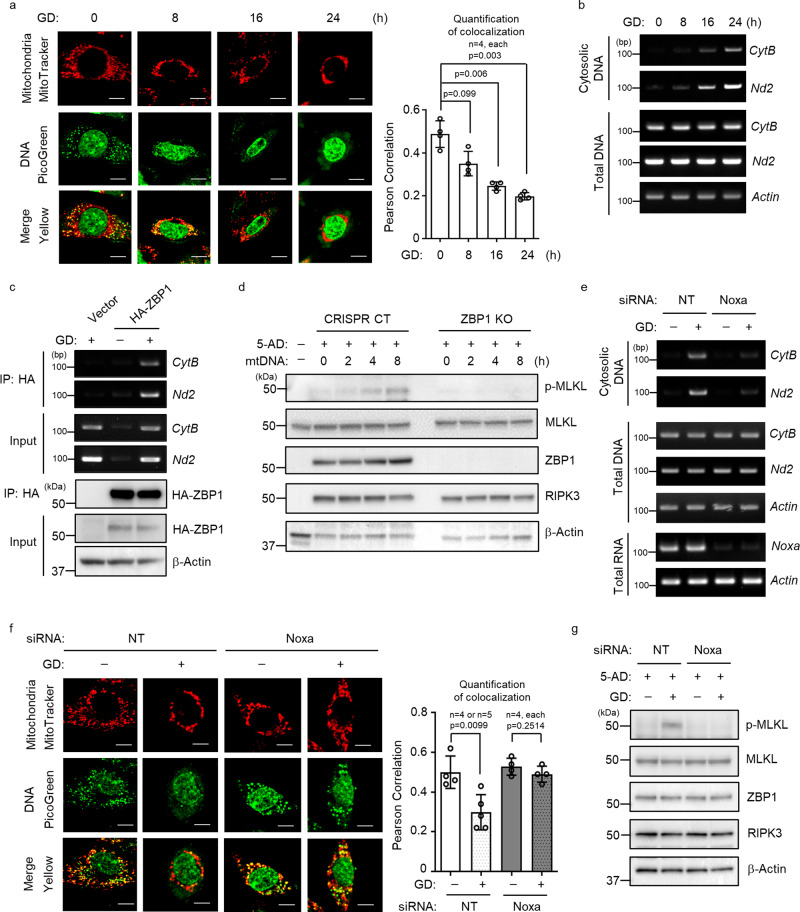
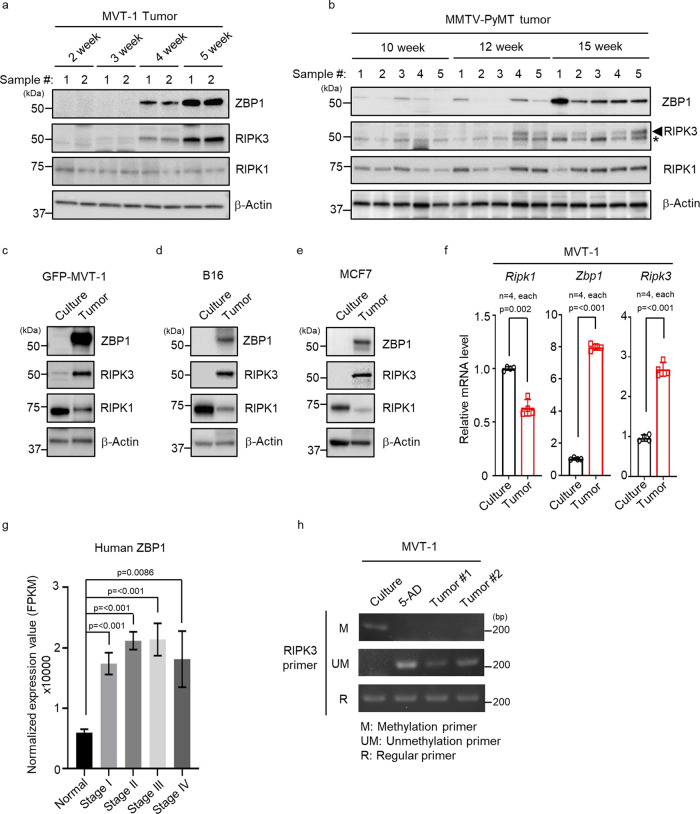
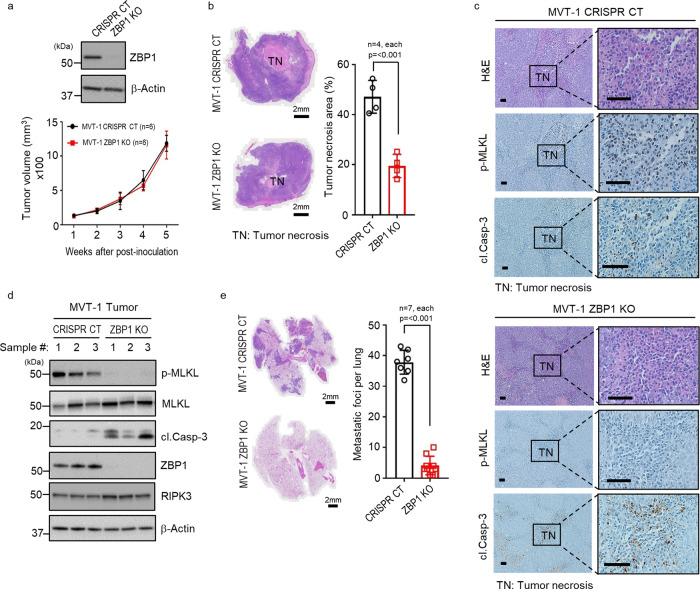
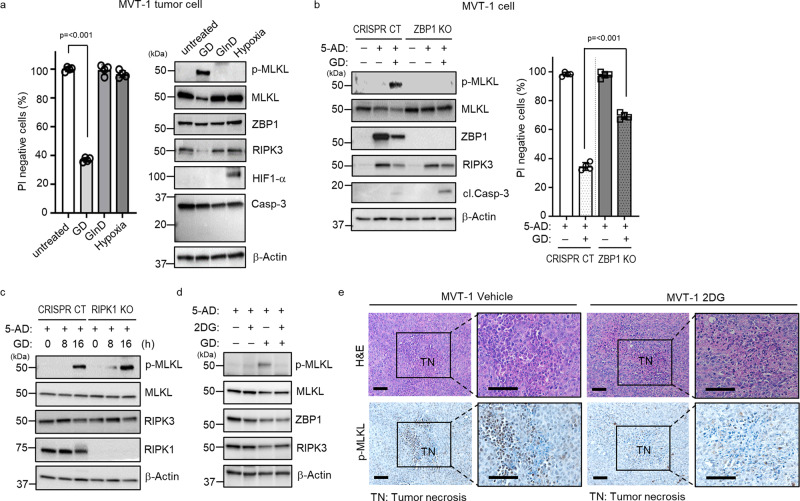
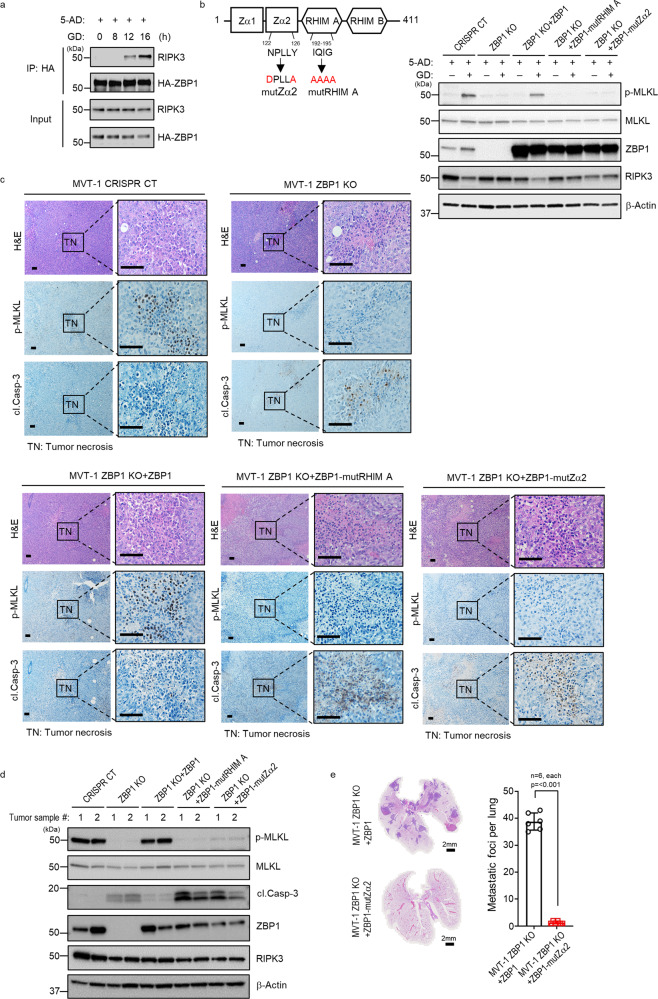
Tumor necrosis happens commonly in advanced solid tumors. We reported that necroptosis plays a major role in tumor necrosis. Although several key necroptosis regulators including receptor interacting protein kinase 1 (RIPK1) have been identified, the regulation of tumor necroptosis during tumor development remains elusive. Here, we report that Z-DNA-binding protein 1 (ZBP1), not RIPK1, mediates tumor necroptosis during tumor development in preclinical cancer models. We found that ZBP1 expression is dramatically elevated in necrotic tumors. Importantly, ZBP1, not RIPK1, deletion blocks tumor necroptosis during tumor development and inhibits metastasis. We showed that glucose deprivation triggers ZBP1-depedent necroptosis in tumor cells. Glucose deprivation causes mitochondrial DNA (mtDNA) release to the cytoplasm and the binding of mtDNA to ZBP1 to activate MLKL in a BCL-2 family protein, NOXA-dependent manner. Therefore, our study reveals ZBP1 as the key regulator of tumor necroptosis and provides a potential drug target for controlling tumor metastasis.
肿瘤坏死在晚期实体瘤中很常见。我们报告称,细胞坏死性凋亡在肿瘤坏死中起主要作用。尽管已经鉴定出几种关键的细胞坏死性凋亡调节剂,包括受体相互作用蛋白激酶 1(RIPK1),但肿瘤发展过程中肿瘤坏死的调节仍不清楚。在这里,我们报告 Z-DNA 结合蛋白 1(ZBP1),而不是 RIPK1,在临床前癌症模型中的肿瘤发展过程中介导肿瘤坏死性凋亡。我们发现 ZBP1 在坏死性肿瘤中的表达显著升高。重要的是,ZBP1 缺失而非 RIPK1 缺失可阻断肿瘤发展过程中的肿瘤坏死性凋亡并抑制转移。我们表明,葡萄糖剥夺会触发肿瘤细胞中依赖于 ZBP1 的坏死性凋亡。葡萄糖剥夺导致线粒体 DNA(mtDNA)释放到细胞质中,并使 mtDNA 与 ZBP1 结合,以 BCL-2 家族蛋白、NOXA 依赖性方式激活 MLKL。因此,我们的研究揭示了 ZBP1 是肿瘤坏死性凋亡的关键调节剂,并为控制肿瘤转移提供了一个潜在的药物靶点。