Institute of Environmental Assessment & Water Research (IDAEA), CSIC, Barcelona, Spain.
Catalan Institute for Water Research (ICRA), Emili Grahit 101, 17003 Girona, Spain; Universitat de Girona, Plaça de Sant Domènec 3, 17004 Girona, Spain.
Sci Total Environ. 2021 Sep 15;787:147463. doi: 10.1016/j.scitotenv.2021.147463. Epub 2021 May 7.
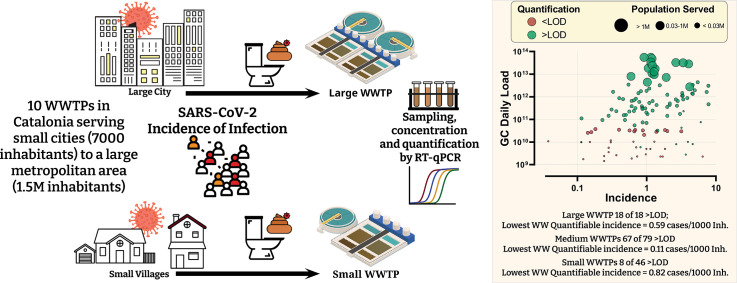
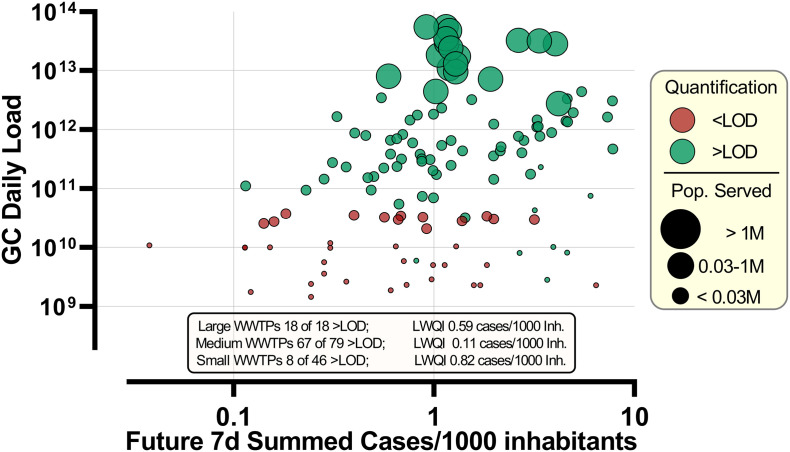
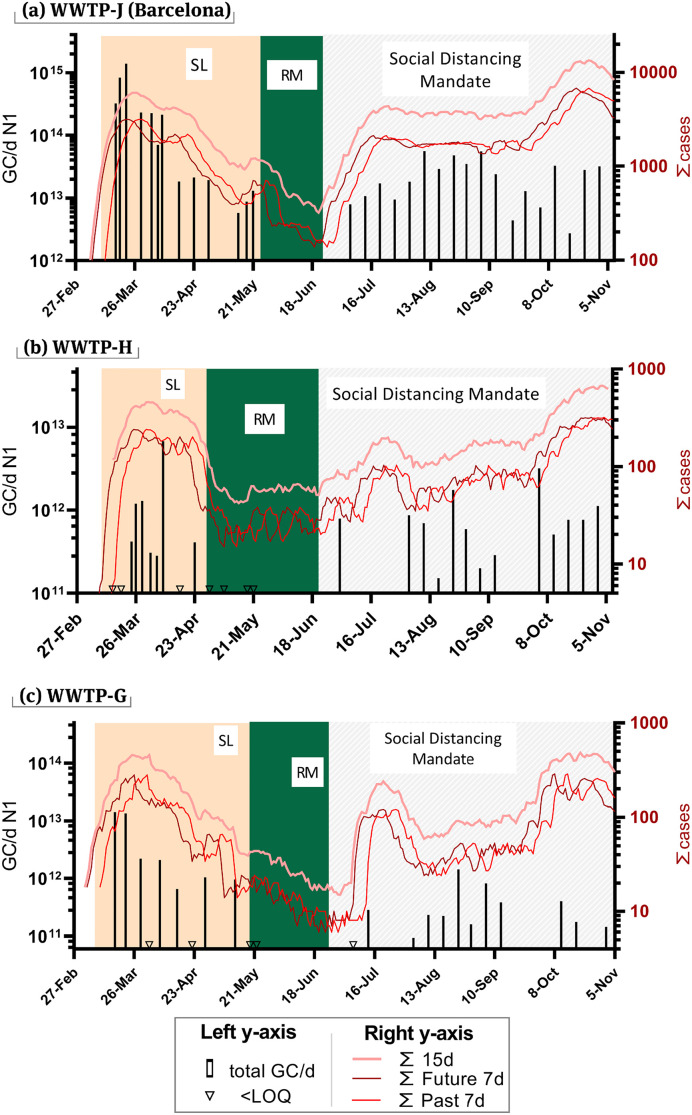
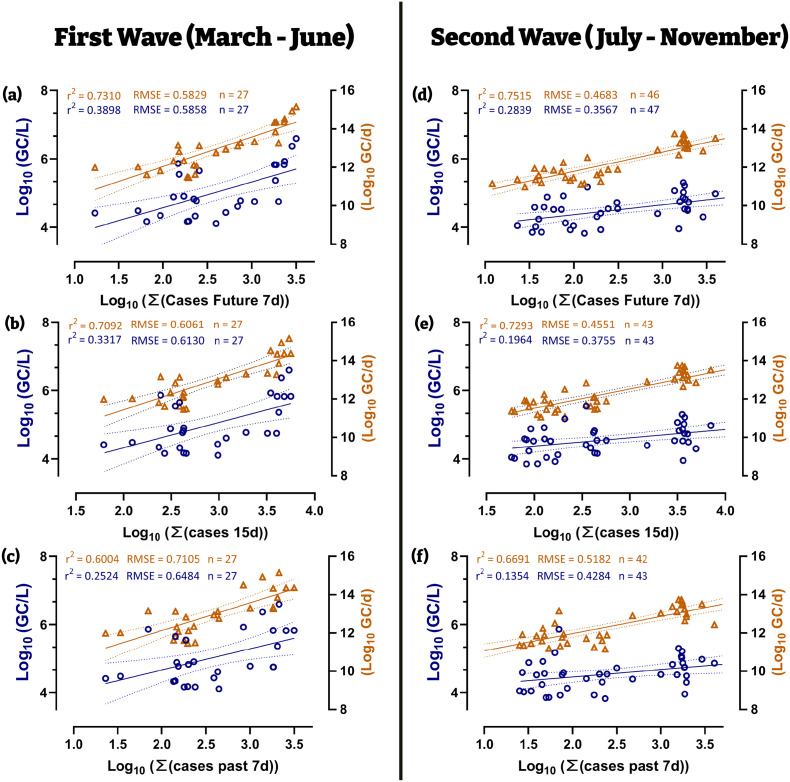
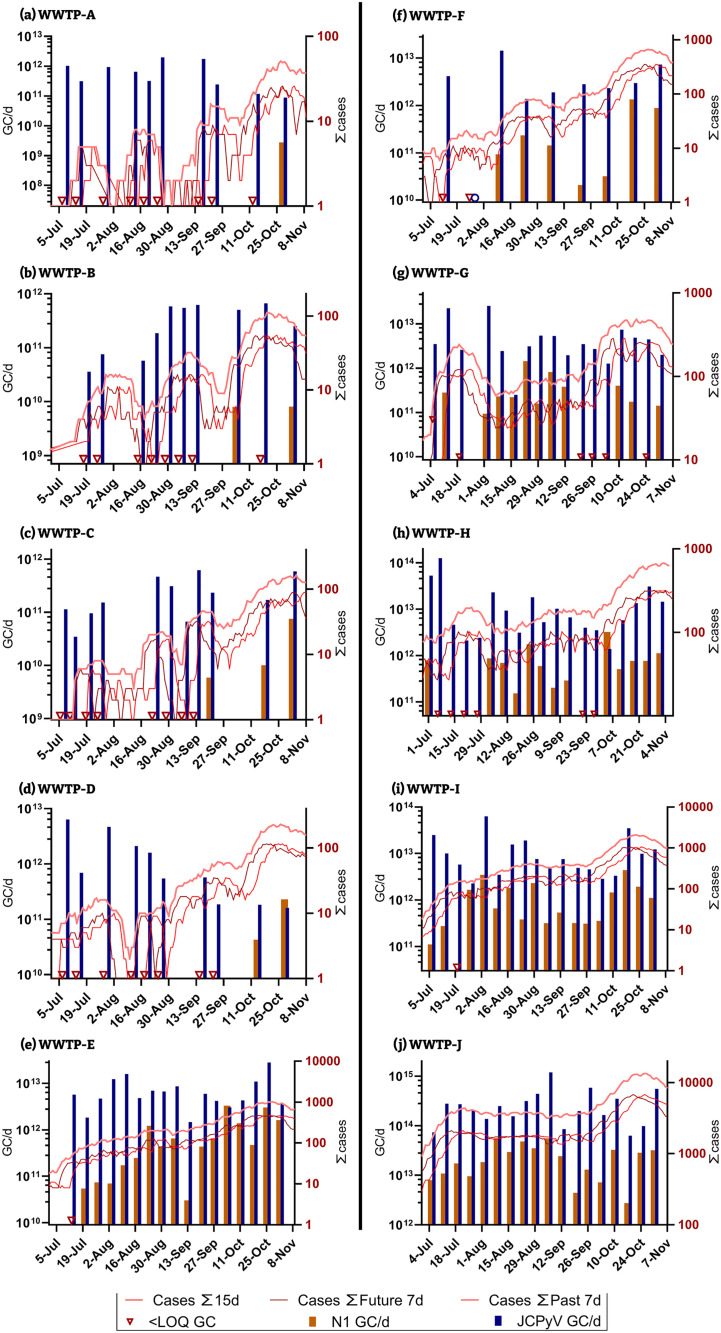
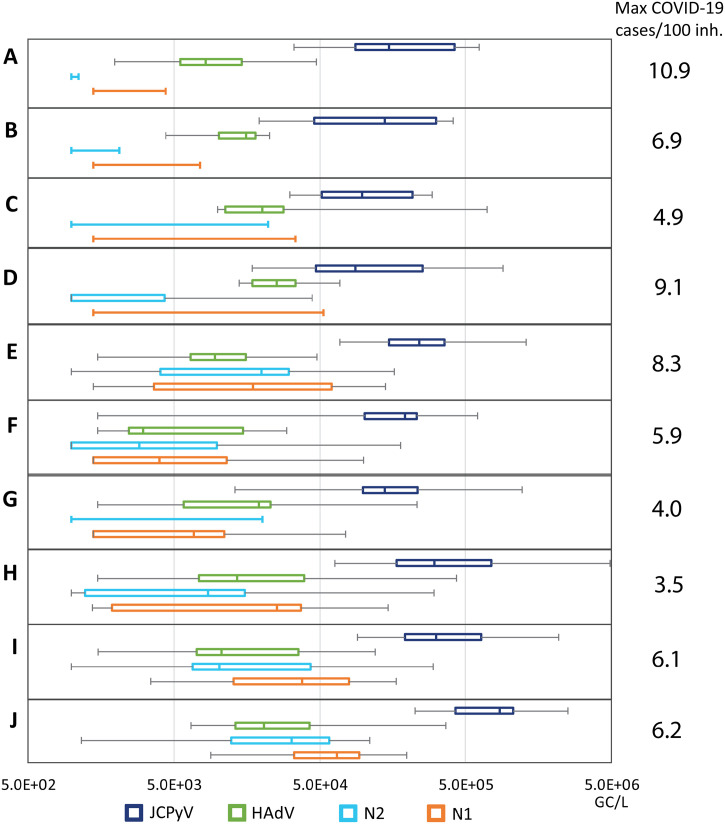
Wastewater based epidemiology was employed to track the spread of SARS-CoV-2 within the sewershed areas of 10 wastewater treatment plants (WWTPs) in Catalonia, Spain. A total of 185 WWTPs inflow samples were collected over the period consisting of both the first wave (mid-March to June) and the second wave (July to November). Concentrations of SARS-CoV-2 RNA (N1 and N2 assays) were quantified in these wastewaters as well as those of Human adenoviruses (HAdV) and JC polyomavirus (JCPyV), as indicators of human faecal contamination. SARS-CoV-2 N gene daily loads strongly correlated with the number of cases diagnosed one week after sampling i.e. wastewater levels were a good predictor of cases to be diagnosed in the immediate future. The conditions present at small WWTPs relative to larger WWTPs influence the ability to follow the pandemic. Small WWTPs (<24,000 inhabitants) had lower median loads of SARS-CoV-2 despite similar incidence of infection within the municipalities served by the different WWTP (but not lower loads of HAdV and JCPyV). The lowest incidence resulting in quantifiable SARS-CoV-2 concentration in wastewater differed between WWTP sizes, being 0.11 and 0.82 cases/1000 inhabitants for the large and small sized WWTP respectively.
采用污水流行病学方法追踪了西班牙加泰罗尼亚地区 10 个污水处理厂(WWTP)污水流域范围内 SARS-CoV-2 的传播情况。在第一波(3 月中旬至 6 月)和第二波(7 月至 11 月)期间共采集了 185 个 WWTP 进水样本。对这些废水中 SARS-CoV-2 RNA(N1 和 N2 检测)以及人腺病毒(HAdV)和 JC 多瘤病毒(JCPyV)浓度进行了定量检测,作为人类粪便污染的指示物。SARS-CoV-2 N 基因的日负荷量与采样后一周内确诊病例数密切相关,即废水水平是预测近期内要诊断的病例的良好指标。相对于较大的 WWTP,小型 WWTP 的条件会影响对疫情的跟踪能力。尽管不同 WWTP 服务的市政区内的感染发生率相似,但小型 WWTP(<24000 居民)的 SARS-CoV-2 中位数负荷较低(但 HAdV 和 JCPyV 的负荷并没有降低)。导致废水中可定量 SARS-CoV-2 浓度的最低发病率在 WWTP 规模之间有所不同,大型和小型 WWTP 分别为 0.11 和 0.82 例/1000 居民。