Low Dorrain Yanwen, Hejndorf Sophia, Tharmabalan Rachel Thomas, Poppema Sibrandes, Pettersson Sven
Lee Kong Chian School of Medicine, Nanyang Technological University, Singapore, Singapore.
Department of Odontology, Karolinska Institutet, Solna, Sweden.
Front Microbiol. 2021 Apr 29;12:659465. doi: 10.3389/fmicb.2021.659465. eCollection 2021.
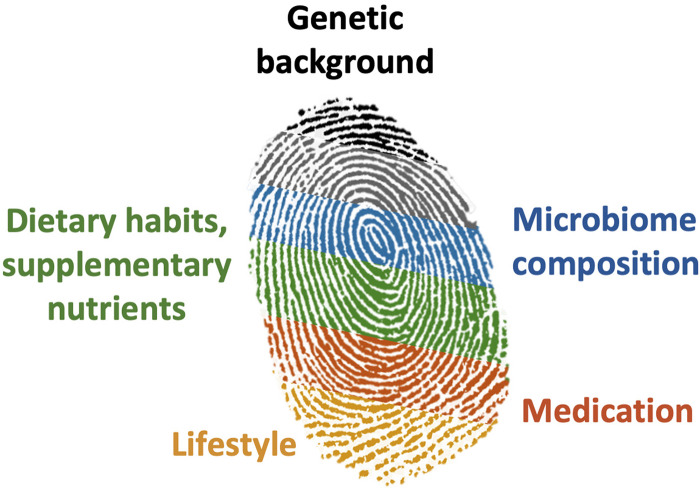
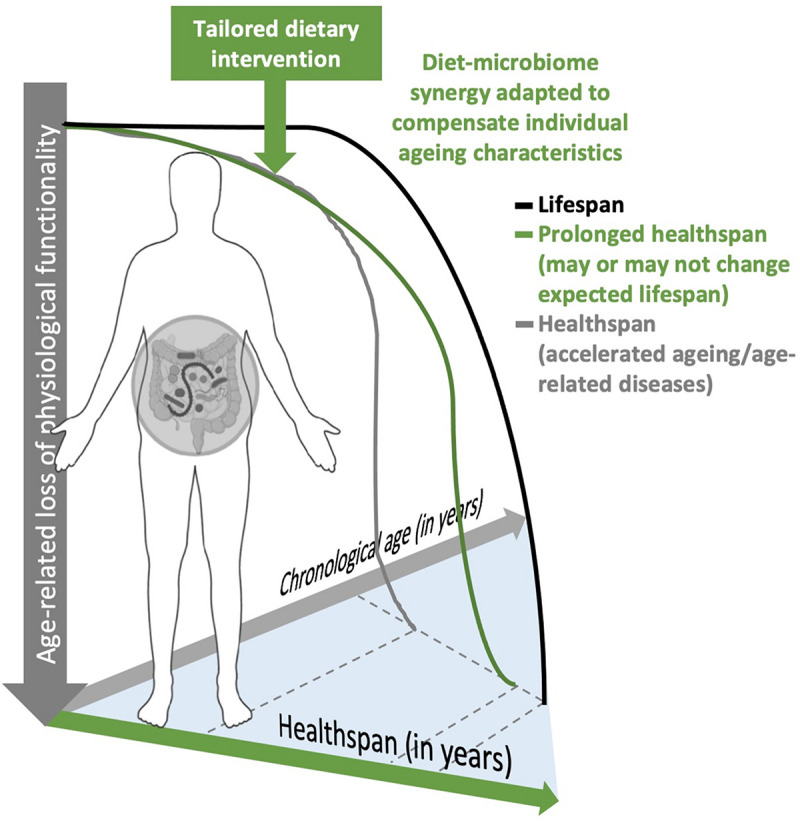
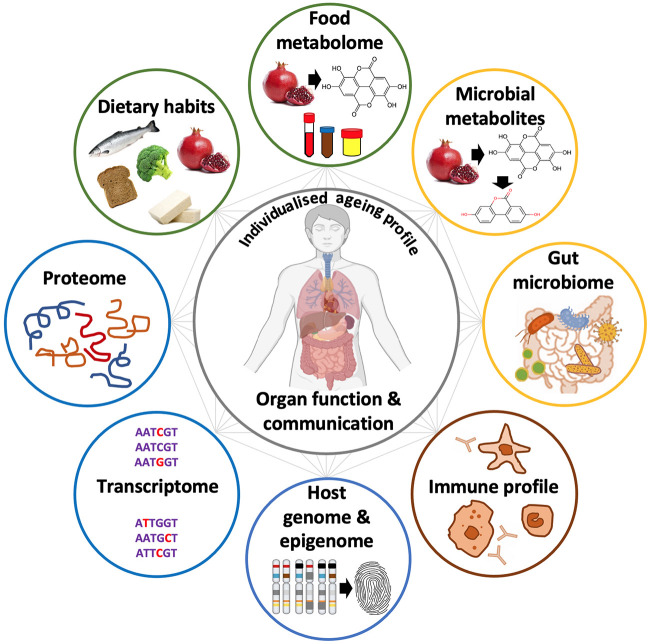
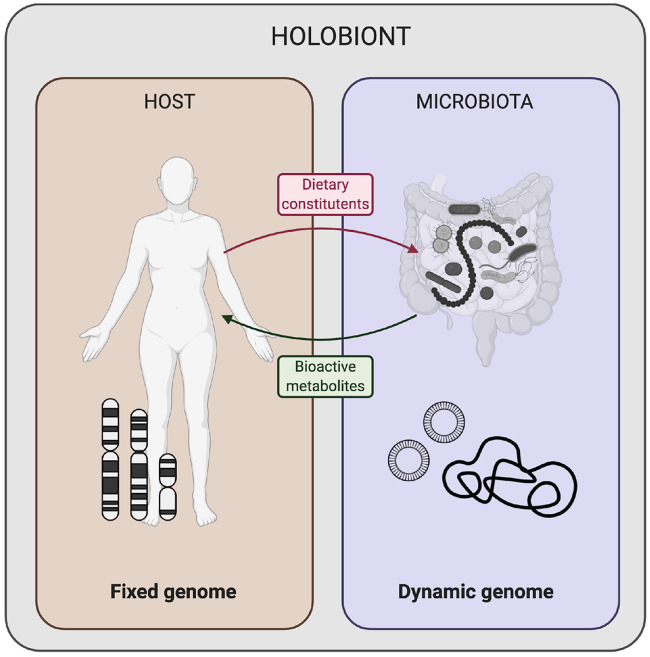
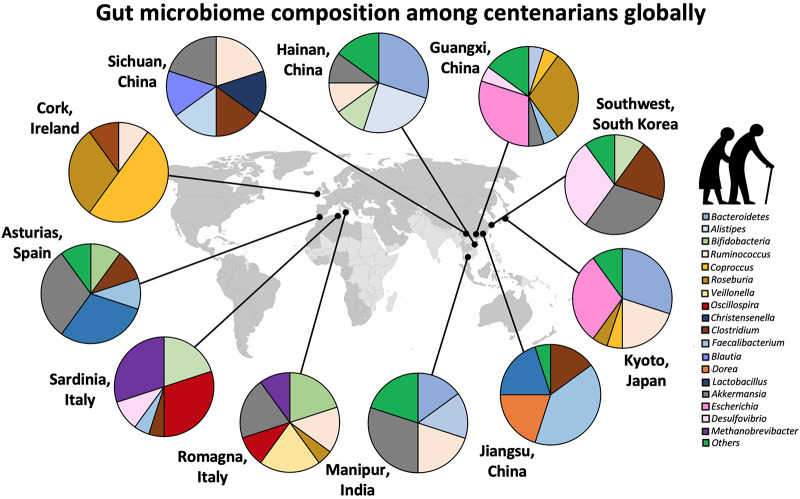
In the last 150 years, we have seen a significant increase in average life expectancy, associated with a shift from infectious to non-communicable diseases. The rising incidence of these diseases, for which age is often the largest risk factor, highlights the need for contemporary societies to improve healthy ageing for their growing silver generations. As ageing is an inevitable, non-reversing and highly individualised process, we need to better understand how non-genetic factors like diet choices and commensal gut microbes can modulate the biology of ageing. In this review, we discuss how geographical and ethnic variations influence habitual dietary patterns, nutrient structure, and gut microbial profiles with potential impact on the human healthspan. Several gut microbial genera have been associated with healthy elderly populations but are highly variable across populations. It seems unlikely that a universal pro-longevity gut microbiome exists. Rather, the optimal microbiome appears to be conditional on the microbial functionality acting on regional- and ethnicity-specific trends driven by cultural food context. We also highlight dietary and microbial factors that have been observed to elicit individual and clustered biological responses. Finally, we identify next generation avenues to modify otherwise fixed host functions and the individual ageing trajectory by manipulating the malleable gut microbiome with regionally adapted, personalised food intervention regimens targeted at prolonging human healthspan.
在过去的150年里,我们发现平均预期寿命显著增加,这与疾病模式从传染病向非传染性疾病的转变有关。这些疾病的发病率不断上升,而年龄往往是最大的风险因素,这凸显了当代社会需要为不断增加的老年人群改善健康老龄化状况。由于衰老是一个不可避免、不可逆转且高度个体化的过程,我们需要更好地了解饮食选择和共生肠道微生物等非遗传因素如何调节衰老生物学。在这篇综述中,我们讨论了地理和种族差异如何影响习惯性饮食模式、营养结构和肠道微生物谱,进而对人类健康寿命产生潜在影响。一些肠道微生物属与健康的老年人群有关,但在不同人群中差异很大。似乎不存在普遍的促长寿肠道微生物群。相反,最佳微生物群似乎取决于微生物功能,这种功能受文化饮食背景驱动的区域和种族特定趋势的影响。我们还强调了已观察到能引发个体和群体生物学反应的饮食和微生物因素。最后,我们确定了通过采用针对延长人类健康寿命的区域适应性、个性化食物干预方案来操纵可塑的肠道微生物群,从而改变原本固定的宿主功能和个体衰老轨迹的下一代研究途径。