Mohanty Swati Sucharita, Mohanty Prafulla Kumar
Cytogenetics Laboratory, P.G. Department of Zoology, Utkal University, Bhubaneswar, 751004, Odisha, India.
Genes Dis. 2019 Sep 10;8(2):117-123. doi: 10.1016/j.gendis.2019.09.006. eCollection 2021 Mar.
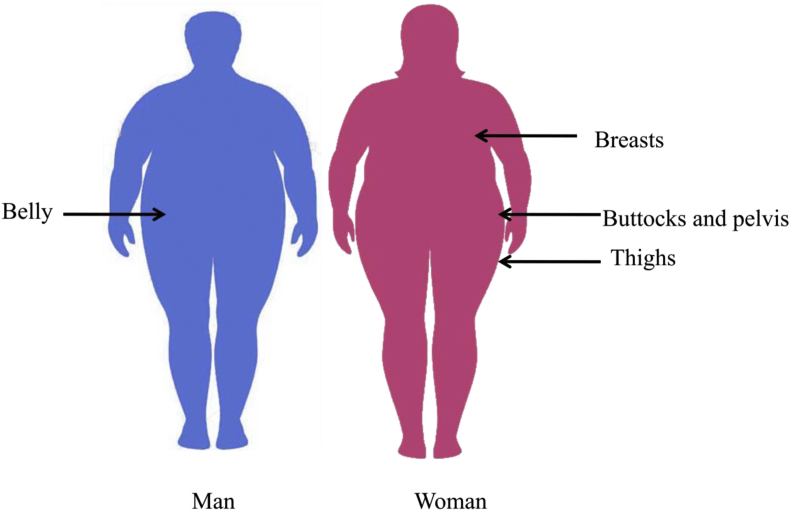
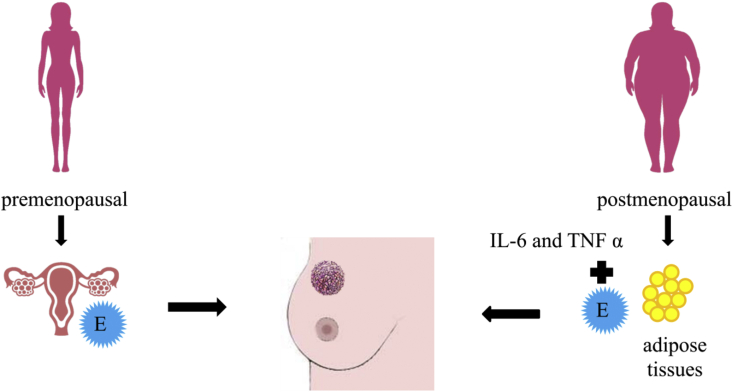
Breast cancer is the second highest prevalent cancer globally after lung cancer with 2.09 million cases during 2018. Adults about 1.9 billion were overweight and over 650 million out of these were obese during 2016. There is a significant relationship between breast cancer risk and obesity. Premature menopause and premenopausal obesity diminish the risk whereas postmenopausal obesity amplifies the risk, because adipose tissue acts as the major reservoir for estrogen biosynthesis after menopause. Lofty estrogen levels in serum along with enhanced peripheral site production of estrogen have been viewed as major reasons of developing breast cancer in overweight postmenopausal women. This review explains body fat as a peripheral site for estrogen biosynthesis, estrogen exposure affecting body fat distribution, and the mechanism of estrogen production from body fats.
乳腺癌是全球第二大常见癌症,仅次于肺癌,2018年有209万例病例。2016年,约19亿成年人超重,其中超过6.5亿人肥胖。乳腺癌风险与肥胖之间存在显著关系。过早绝经和绝经前肥胖会降低风险,而绝经后肥胖会增加风险,因为脂肪组织是绝经后雌激素生物合成的主要储存库。血清中高雌激素水平以及外周部位雌激素生成增加被视为超重绝经后女性患乳腺癌的主要原因。本综述解释了身体脂肪作为雌激素生物合成的外周部位、雌激素暴露对身体脂肪分布的影响以及身体脂肪产生雌激素的机制。