
研究3D打印的用于大骨缺损的解剖学设计支架的结构和材料组成的影响。
Investigating the Influence of Architecture and Material Composition of 3D Printed Anatomical Design Scaffolds for Large Bone Defects.
作者信息
Daskalakis Evangelos, Liu Fengyuan, Huang Boyang, Acar Anil A, Cooper Glen, Weightman Andrew, Blunn Gordon, Koç Bahattin, Bartolo Paulo
机构信息
School of Mechanical, Aerospace and Civil Engineering, University of Manchester, Manchester, M13 9PL, United Kingdom.
Faculty of Engineering and Natural Sciences, Sabanci University, Orhanli-Tuzla, Istanbul, 34956, Turkey.
出版信息
Int J Bioprint. 2021 Feb 24;7(2):268. doi: 10.18063/ijb.v7i2.268. eCollection 2021.
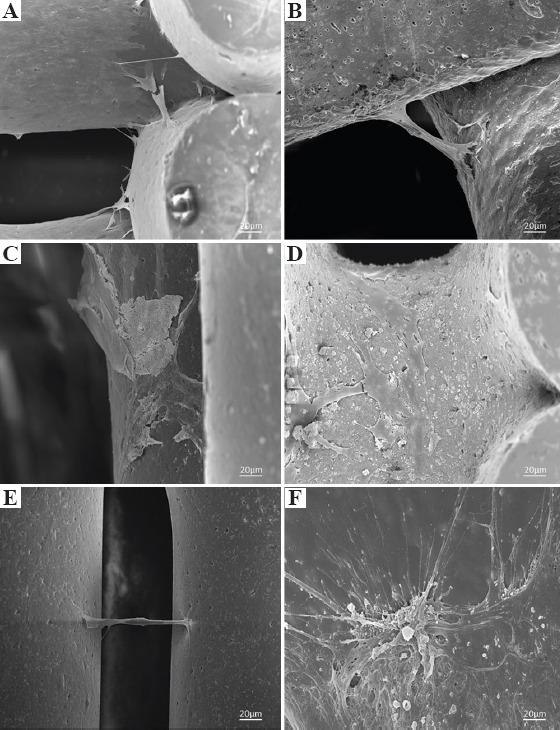
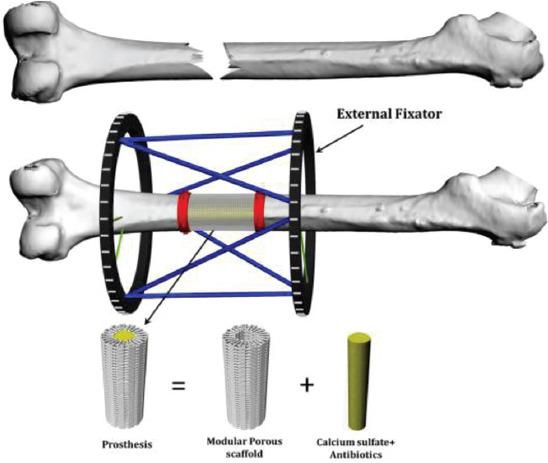
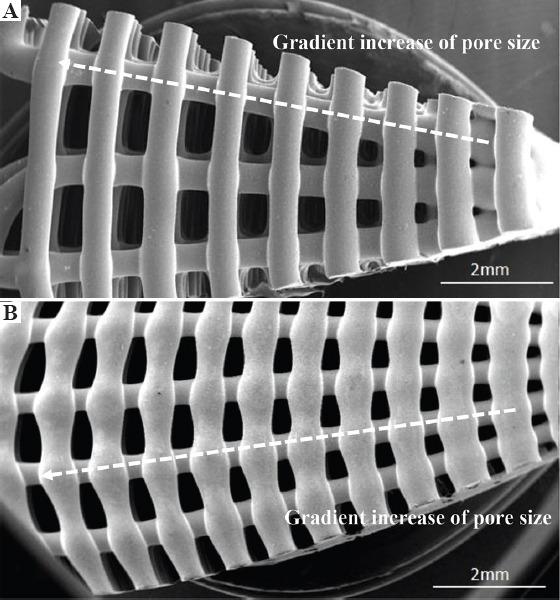
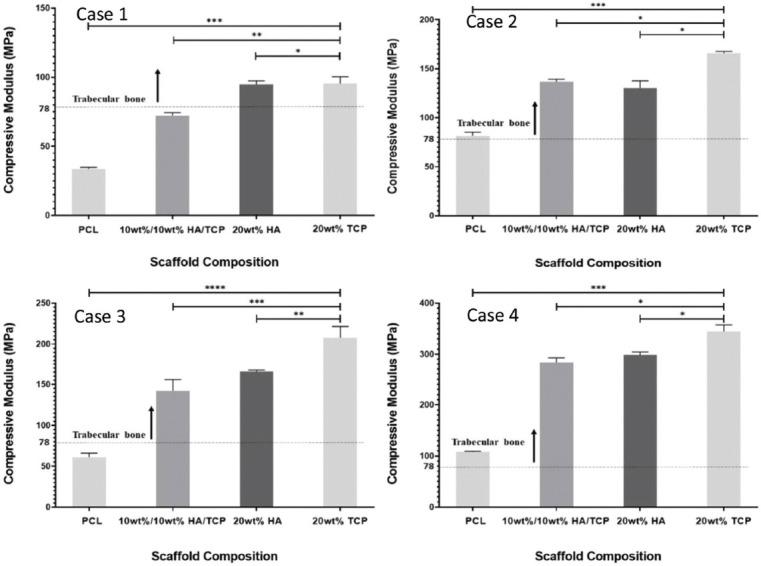
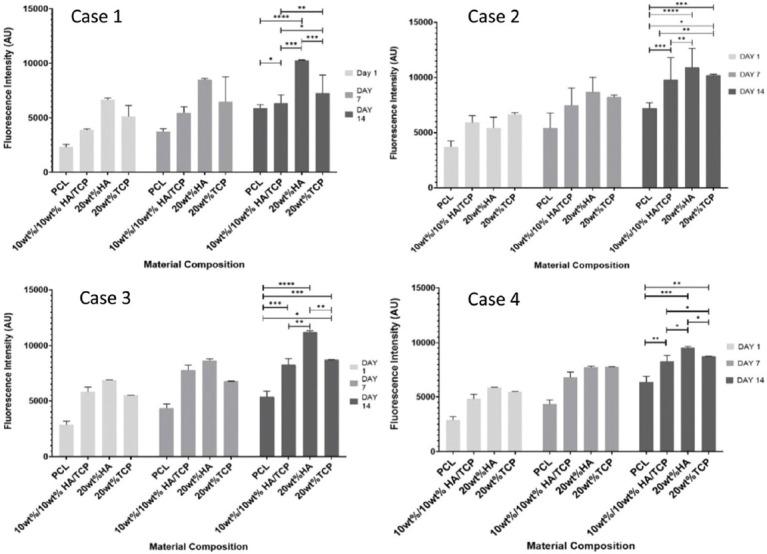
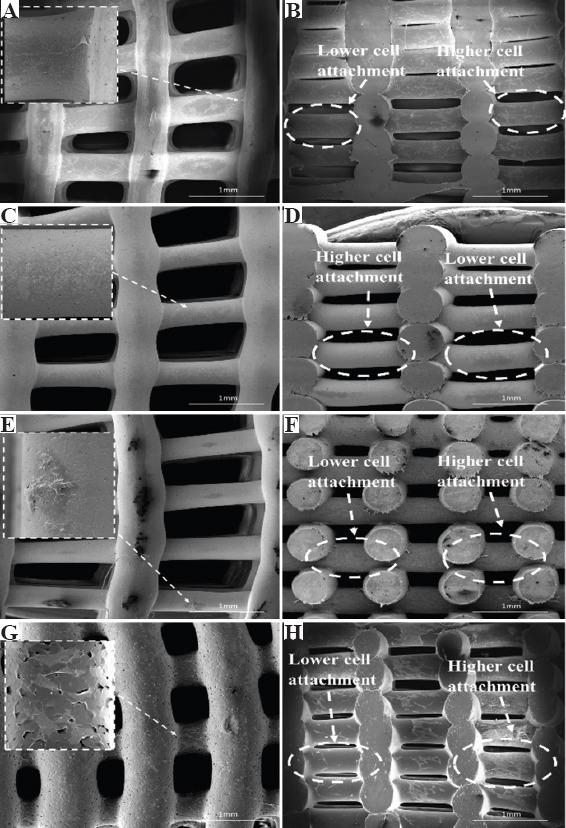
There is a significant unmet clinical need to prevent amputations due to large bone loss injuries. We are addressing this problem by developing a novel, cost-effective osseointegrated prosthetic solution based on the use of modular pieces, bone bricks, made with biocompatible and biodegradable materials that fit together in a Lego-like way to form the prosthesis. This paper investigates the anatomical designed bone bricks with different architectures, pore size gradients, and material compositions. Polymer and polymer-composite 3D printed bone bricks are extensively morphological, mechanical, and biological characterized. Composite bone bricks were produced by mixing polycaprolactone (PCL) with different levels of hydroxyapatite (HA) and β-tri-calcium phosphate (TCP). Results allowed to establish a correlation between bone bricks architecture and material composition and bone bricks performance. Reinforced bone bricks showed improved mechanical and biological results. Best mechanical properties were obtained with PCL/TCP bone bricks with 38 double zig-zag filaments and 14 spiral-like pattern filaments, while the best biological results were obtained with PCL/HA bone bricks based on 25 double zig-zag filaments and 14 spiral-like pattern filaments.
预防因大面积骨质流失损伤导致的截肢存在重大未满足的临床需求。我们正在通过开发一种新颖、具有成本效益的骨整合假体解决方案来解决这一问题,该解决方案基于使用模块化部件——骨砖,这些骨砖由生物相容性和可生物降解材料制成,以类似乐高积木的方式拼接在一起形成假体。本文研究了具有不同结构、孔径梯度和材料成分的按解剖学设计的骨砖。对聚合物和聚合物复合材料3D打印骨砖进行了广泛的形态学、力学和生物学表征。复合骨砖是通过将聚己内酯(PCL)与不同含量的羟基磷灰石(HA)和β-磷酸三钙(TCP)混合制成的。结果建立了骨砖结构与材料成分以及骨砖性能之间的相关性。增强型骨砖显示出更好的力学和生物学结果。具有38条双之字形细丝和14条螺旋状细丝图案的PCL/TCP骨砖获得了最佳力学性能,而基于25条双之字形细丝和14条螺旋状细丝图案的PCL/HA骨砖获得了最佳生物学结果。
 Zotero 插件