Department of Chemical Engineering, School for Engineering of Matter, Transport, and Energy, Arizona State University, Tempe, AZ, United States of America.
University Institute of Biochemistry and Biotechnology, PMAS-Arid Agriculture University Rawalpindi, Rawalpindi, Pakistan.
PLoS One. 2021 May 17;16(5):e0251640. doi: 10.1371/journal.pone.0251640. eCollection 2021.
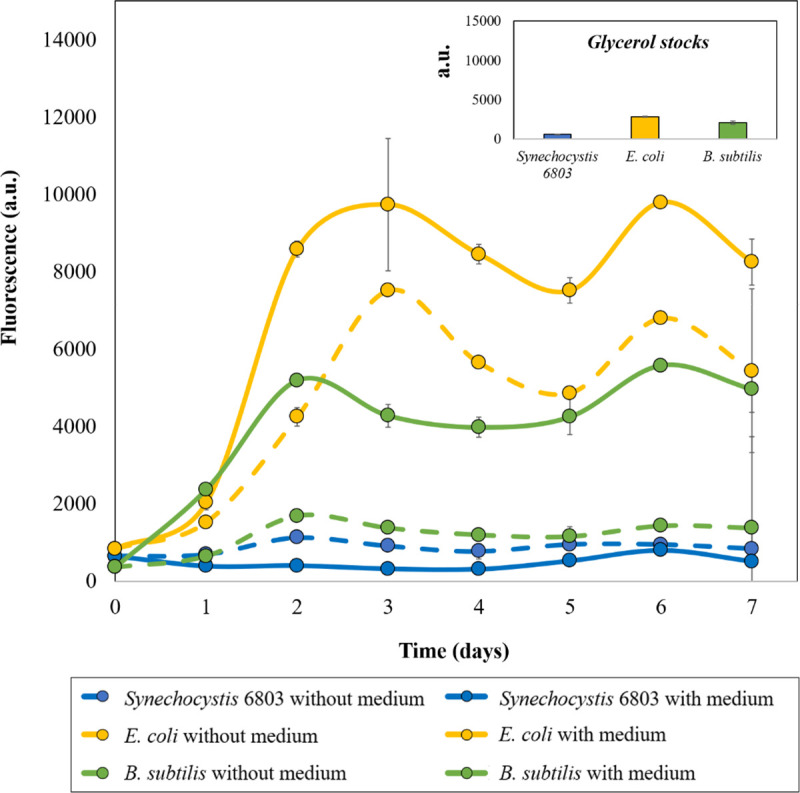
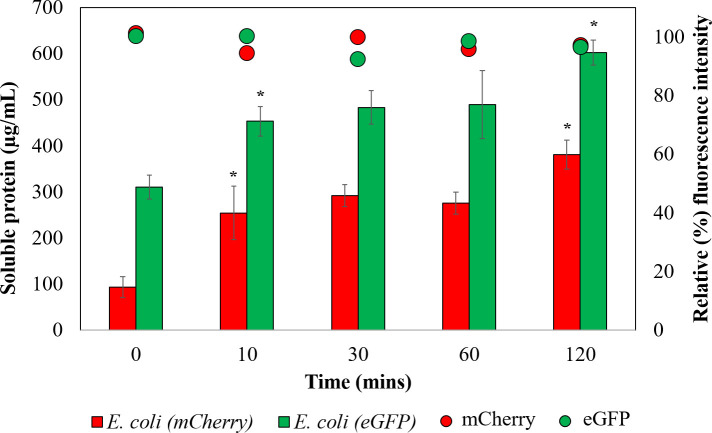
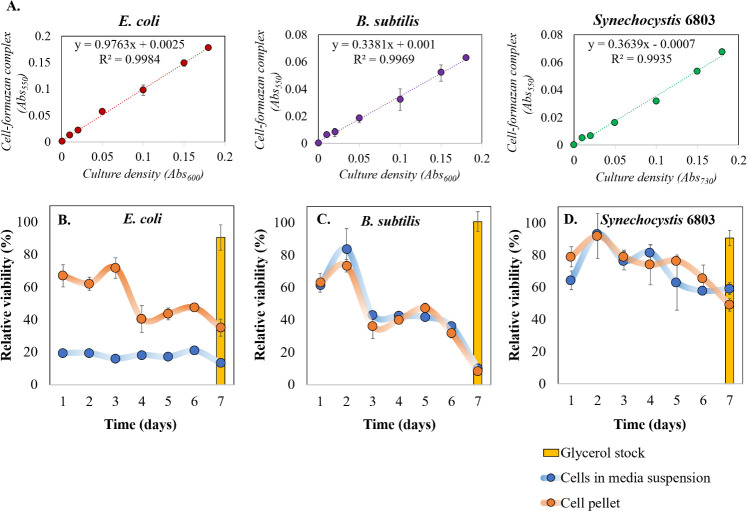
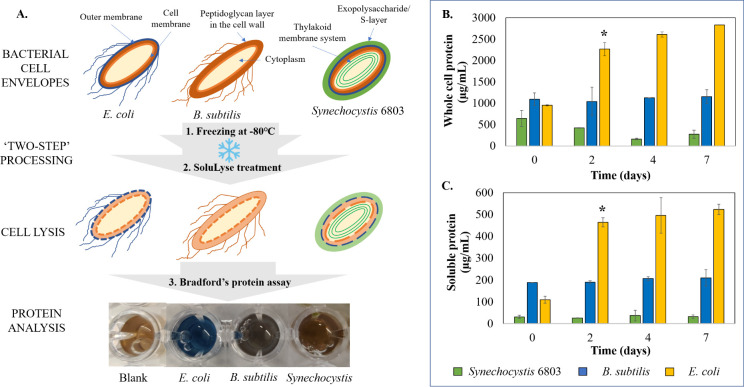
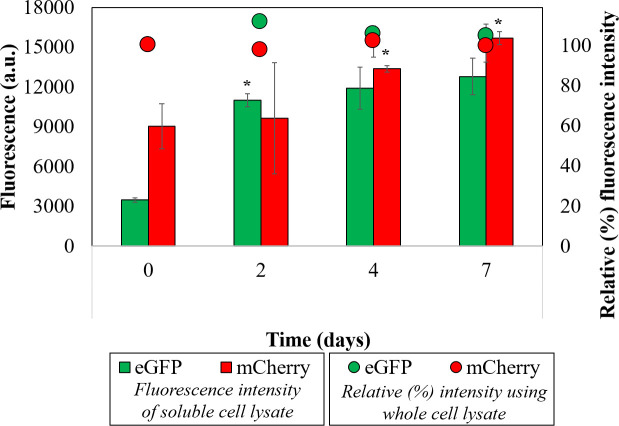
Ultra-low temperature (ULT) storage of microbial biomass is routinely practiced in biological laboratories. However, there is very little insight regarding the effects of biomass storage at ULT and the structure of the cell envelope, on cell viability. Eventually, these aspects influence bacterial cell lysis which is one of the critical steps for biomolecular extraction, especially protein extraction. Therefore, we studied the effects of ULT-storage (-80°C) on three different bacterial platforms: Escherichia coli, Bacillus subtilis and the cyanobacterium Synechocystis sp. PCC 6803. By using a propidium iodide assay and a modified MTT assay we determined the impact of ULT storage on cellular viability. Subsequently, the protein extraction efficiency was determined by analyzing the amount of protein released following the storage. The results successfully established that longer the ULT-storage time lower is the cell viability and larger is the protein extraction efficiency. Interestingly, E. coli and B. subtilis exhibited significant reduction in cell viability over Synechocystis 6803. This indicates that the cell membrane structure and composition may play a major role on cell viability in ULT storage. Interestingly, E. coli exhibited concomitant increase in cell lysis efficiency resulting in a 4.5-fold increase (from 109 μg/ml of protein on day 0 to 464 μg/ml of protein on day 2) in the extracted protein titer following ULT storage. Furthermore, our investigations confirmed that the protein function, tested through the extraction of fluorescent proteins from cells stored at ULT, remained unaltered. These results established the plausibility of using ULT storage to improve protein extraction efficiency. Towards this, the impact of shorter ULT storage time was investigated to make the strategy more time efficient to be adopted into protocols. Interestingly, E. coli transformants expressing mCherry yielded 2.7-fold increase (93 μg/mL to 254 μg/mL) after 10 mins, while 4-fold increase (380 μg/mL) after 120 mins of ULT storage in the extracted soluble protein. We thereby substantiate that: (1) the storage time of bacterial cells in -80°C affect cell viability and can alter protein extraction efficiency; and (2) exercising a simple ULT-storage prior to bacterial cell lysis can improve the desired protein yield without impacting its function.
超低温(ULT)储存微生物生物量在生物实验室中是常规操作。然而,关于生物量在 ULT 下储存以及细胞包膜结构对细胞活力的影响,人们知之甚少。最终,这些方面会影响细菌细胞裂解,而细胞裂解是生物分子提取(尤其是蛋白质提取)的关键步骤之一。因此,我们研究了超低温储存(-80°C)对三种不同细菌平台的影响:大肠杆菌、枯草芽孢杆菌和蓝藻集胞藻 PCC 6803。我们使用碘化丙啶测定法和改良 MTT 测定法来确定 ULT 储存对细胞活力的影响。随后,通过分析储存后释放的蛋白质量来确定蛋白质提取效率。结果成功地表明,ULT 储存时间越长,细胞活力越低,蛋白质提取效率越高。有趣的是,与集胞藻 6803 相比,大肠杆菌和枯草芽孢杆菌的细胞活力显著降低。这表明细胞膜结构和组成可能在 ULT 储存中对细胞活力起着重要作用。有趣的是,大肠杆菌表现出细胞裂解效率的同时增加,导致 ULT 储存后提取的蛋白质滴度增加了 4.5 倍(从第 0 天的 109μg/ml 蛋白增加到第 2 天的 464μg/ml 蛋白)。此外,我们的研究证实,通过从超低温储存的细胞中提取荧光蛋白来测试蛋白质功能,其功能保持不变。这些结果证实了使用 ULT 储存来提高蛋白质提取效率的可行性。为此,我们研究了更短的 ULT 储存时间的影响,以使该策略更高效,更便于纳入方案。有趣的是,表达 mCherry 的大肠杆菌转化体在 ULT 储存 10 分钟后,提取的可溶性蛋白中增加了 2.7 倍(从 93μg/mL 增加到 254μg/mL),而在 ULT 储存 120 分钟后增加了 4 倍(380μg/mL)。因此,我们证实:(1)细菌细胞在-80°C 下的储存时间会影响细胞活力,并可能改变蛋白质提取效率;(2)在细菌细胞裂解前进行简单的 ULT 储存可以提高所需蛋白质的产量,而不会影响其功能。