MRC Oxford Institute for Radiation Oncology, Department of Oncology, University of Oxford, Old Road Campus Research Building, Oxford OX3 7DQ, U.K.
Biochem Soc Trans. 2021 Jun 30;49(3):1251-1263. doi: 10.1042/BST20200861.
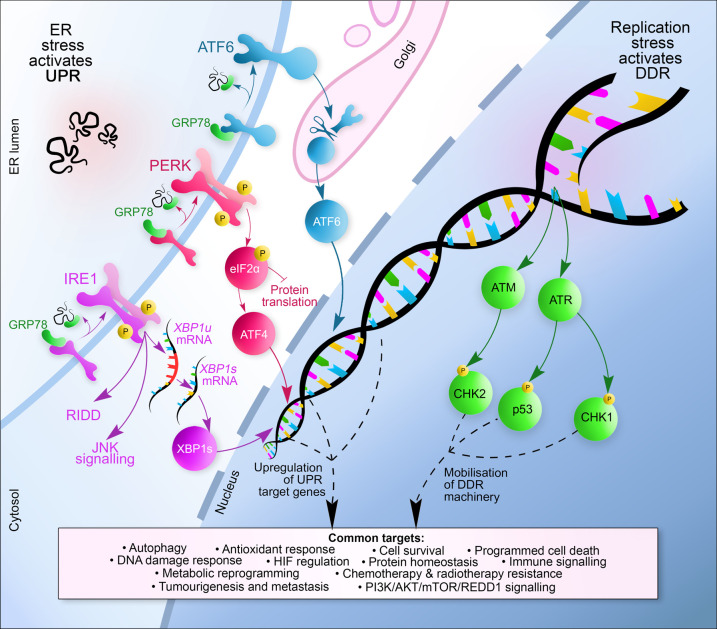
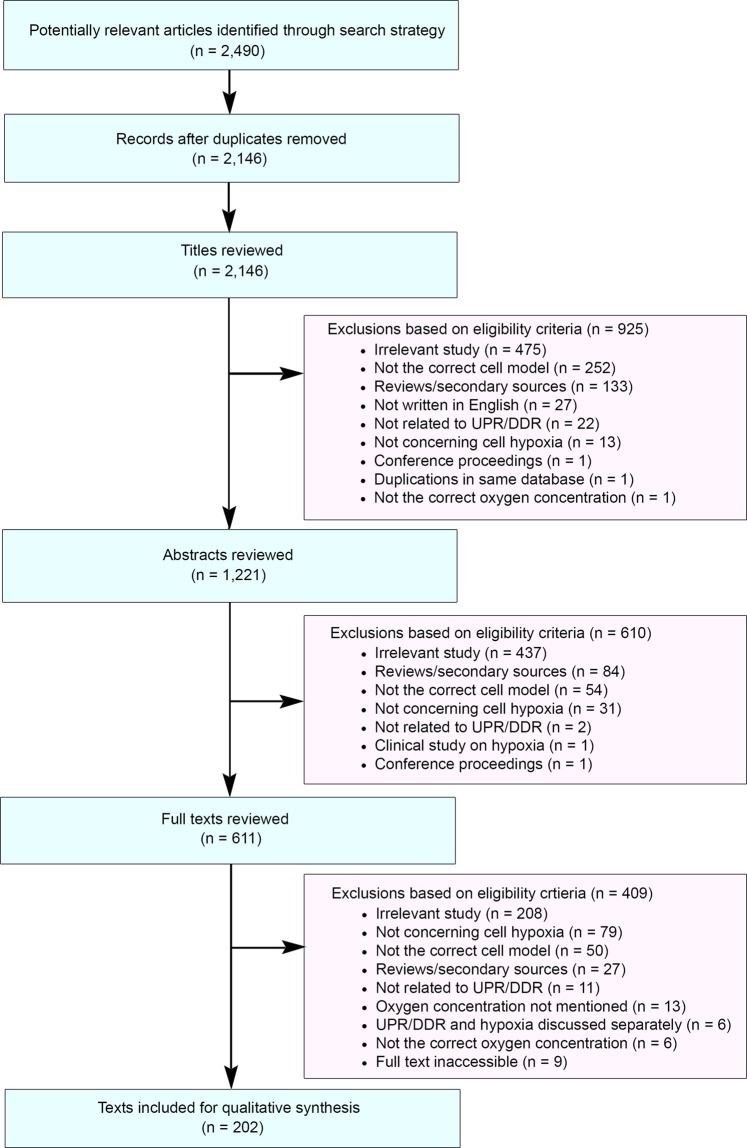
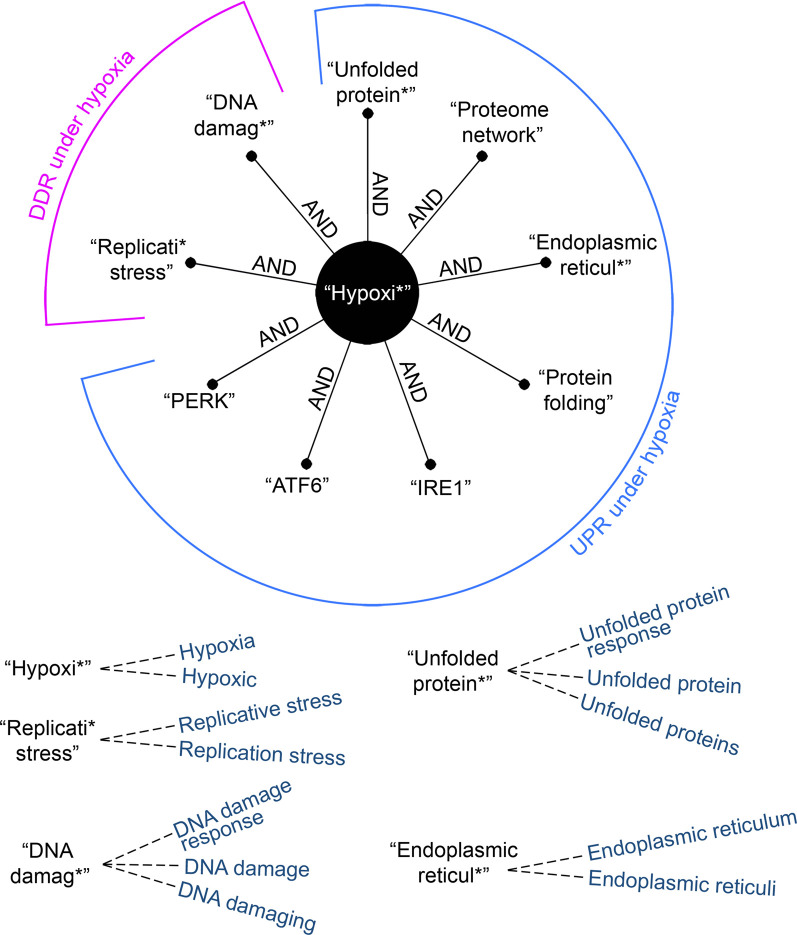
Hypoxia is a feature of most solid tumours and predicts for poor prognosis. In radiobiological hypoxia (<0.1% O2) cells become up to three times more resistant to radiation. The biological response to radiobiological hypoxia is one of few physiologically relevant stresses that activates both the unfolded protein and DNA damage responses (UPR and DDR). Links between these pathways have been identified in studies carried out in normoxia. Based in part on these previous studies and recent work from our laboratory, we hypothesised that the biological response to hypoxia likely includes overlap between the DDR and UPR. While inhibition of the DDR is a recognised strategy for improving radiation response, the possibility of achieving this through targeting the UPR has not been realised. We carried out a systematic review to identify links between the DDR and UPR, in human cell lines exposed to <2% O2. Following PRISMA guidance, literature from January 2010 to October 2020 were retrieved via Ovid MEDLINE and evaluated. A total of 202 studies were included. LAMP3, ULK1, TRIB3, CHOP, NOXA, NORAD, SIAH1/2, DYRK2, HIPK2, CREB, NUPR1, JMJD2B, NRF2, GSK-3B, GADD45a, GADD45b, STAU1, C-SRC, HK2, CAV1, CypB, CLU, IGFBP-3 and SP1 were highlighted as potential links between the hypoxic DDR and UPR. Overall, we identified very few studies which demonstrate a molecular link between the DDR and UPR in hypoxia, however, it is clear that many of the molecules highlighted warrant further investigation under radiobiological hypoxia as these may include novel therapeutic targets to improve radiotherapy response.
缺氧是大多数实体瘤的特征,并预示着预后不良。在放射生物学缺氧(<0.1% O2)下,细胞对辐射的抵抗力增加了多达三倍。生物对放射生物学缺氧的反应是少数几种激活未折叠蛋白和 DNA 损伤反应(UPR 和 DDR)的与生理相关的应激之一。在常氧条件下进行的研究中已经确定了这些途径之间的联系。部分基于这些先前的研究和我们实验室最近的工作,我们假设缺氧的生物学反应可能包括 DDR 和 UPR 之间的重叠。虽然抑制 DDR 是提高辐射反应的一种公认策略,但通过靶向 UPR 实现这一目标尚未实现。我们进行了一项系统评价,以确定在暴露于<2% O2 的人类细胞系中 DDR 和 UPR 之间的联系。根据 PRISMA 指南,通过 Ovid MEDLINE 检索并评估了 2010 年 1 月至 2020 年 10 月的文献。共纳入了 202 项研究。LAMP3、ULK1、TRIB3、CHOP、NOXA、NORAD、SIAH1/2、DYRK2、HIPK2、CREB、NUPR1、JMJD2B、NRF2、GSK-3B、GADD45a、GADD45b、STAU1、C-SRC、HK2、CAV1、CypB、CLU、IGFBP-3 和 SP1 被强调为缺氧 DDR 和 UPR 之间的潜在联系。总体而言,我们发现很少有研究表明 DDR 和 UPR 之间在缺氧条件下存在分子联系,但是,很明显,许多突出的分子值得在放射生物学缺氧下进一步研究,因为这些分子可能包括改善放射治疗反应的新的治疗靶点。