Beijing Nuclear Magnetic Resonance Center, College of Chemistry and Molecular Engineering, and School of Life Sciences, Peking University, Beijing, China.
Department of Molecular Genetics, University of Toronto, Toronto, ON, Canada.
Mol Biol Evol. 2021 Sep 27;38(10):4135-4148. doi: 10.1093/molbev/msab136.
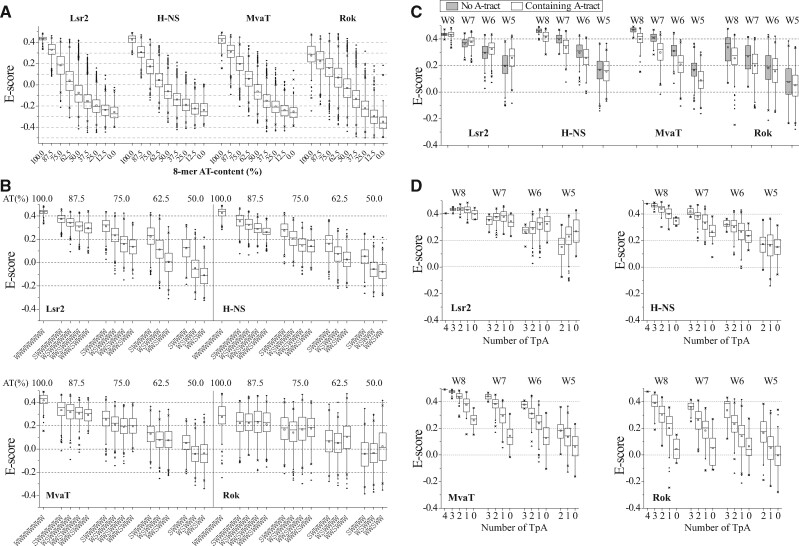
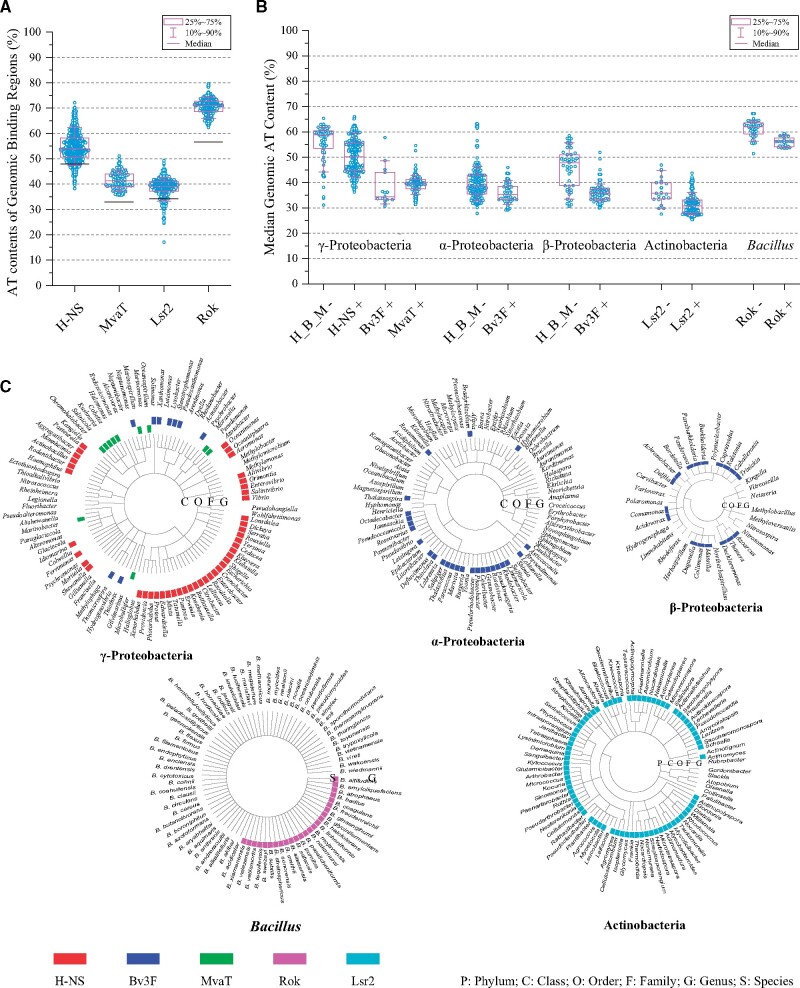
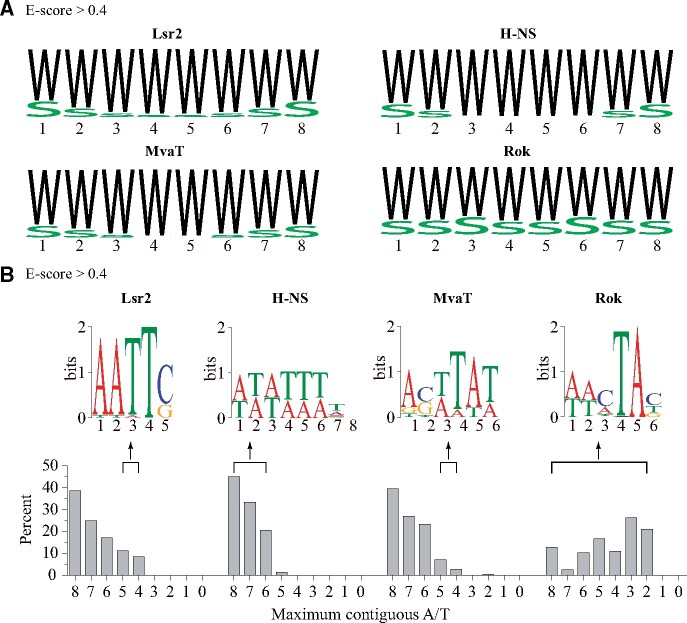
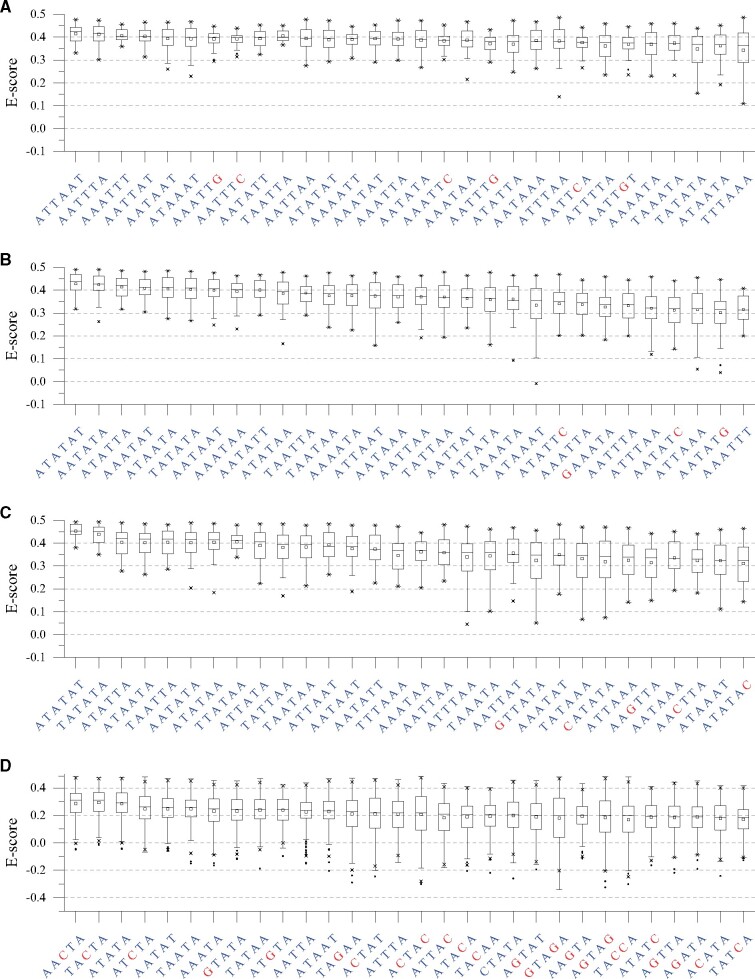
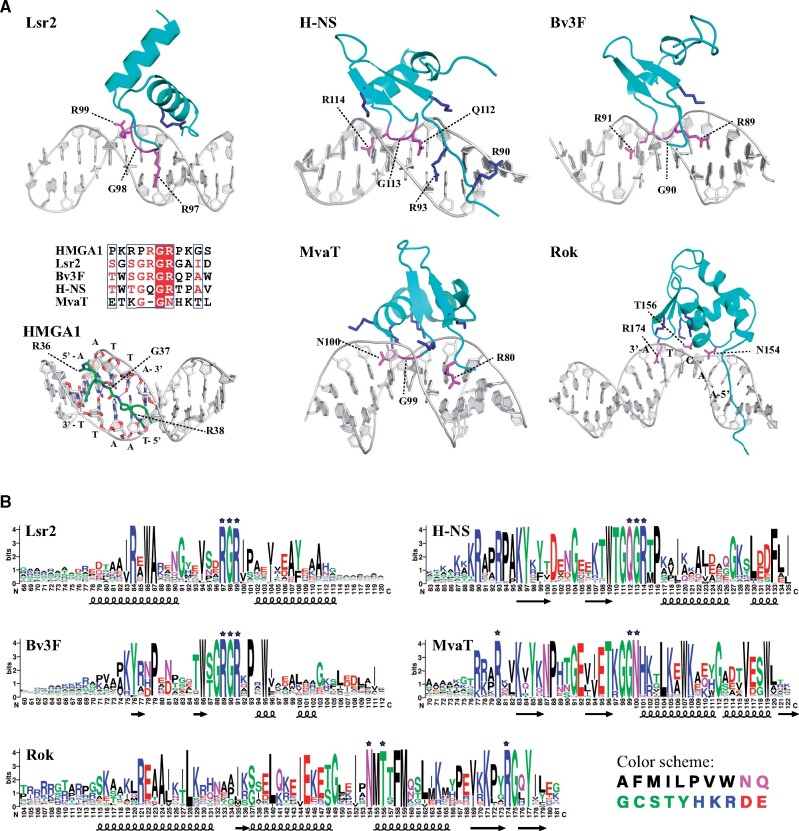
Horizontal gene transfer (HGT) is a major driving force for bacterial evolution. To avoid the deleterious effects due to the unregulated expression of newly acquired foreign genes, bacteria have evolved specific proteins named xenogeneic silencers to recognize foreign DNA sequences and suppress their transcription. As there is considerable diversity in genomic base compositions among bacteria, how xenogeneic silencers distinguish self- from nonself DNA in different bacteria remains poorly understood. This review summarizes the progress in studying the DNA binding preferences and the underlying molecular mechanisms of known xenogeneic silencer families, represented by H-NS of Escherichia coli, Lsr2 of Mycobacterium, MvaT of Pseudomonas, and Rok of Bacillus. Comparative analyses of the published data indicate that the differences in DNA recognition mechanisms enable these xenogeneic silencers to have clear characteristics in DNA sequence preferences, which are further correlated with different host genomic features. These correlations provide insights into the mechanisms of how these xenogeneic silencers selectively target foreign DNA in different genomic backgrounds. Furthermore, it is revealed that the genomic AT contents of bacterial species with the same xenogeneic silencer family proteins are distributed in a limited range and are generally lower than those species without any known xenogeneic silencers in the same phylum/class/genus, indicating that xenogeneic silencers have multifaceted roles on bacterial genome evolution. In addition to regulating horizontal gene transfer, xenogeneic silencers also act as a selective force against the GC to AT mutational bias found in bacterial genomes and help the host genomic AT contents maintained at relatively low levels.
水平基因转移 (HGT) 是细菌进化的主要驱动力。为了避免新获得的外源基因不受调控表达所带来的有害影响,细菌进化出了特定的蛋白质,称为异源沉默子,用于识别外源 DNA 序列并抑制其转录。由于不同细菌的基因组碱基组成存在相当大的差异,异源沉默子如何在不同的细菌中区分自身和非自身 DNA 仍然知之甚少。本文综述了研究已知异源沉默子家族(以大肠杆菌的 H-NS、分枝杆菌的 Lsr2、假单胞菌的 MvaT 和芽孢杆菌的 Rok 为代表)的 DNA 结合偏好和潜在分子机制的进展。对已发表数据的比较分析表明,DNA 识别机制的差异使这些异源沉默子在外源 DNA 序列偏好方面具有明显的特征,这与不同宿主基因组特征进一步相关。这些相关性为理解这些异源沉默子如何在不同的基因组背景下选择性地靶向外源 DNA 提供了线索。此外,还揭示了具有相同异源沉默子家族蛋白的细菌物种的基因组 AT 含量分布在有限的范围内,并且通常低于同一门/类/属中没有任何已知异源沉默子的物种,这表明异源沉默子在细菌基因组进化中具有多方面的作用。除了调节水平基因转移外,异源沉默子还作为一种针对细菌基因组中 GC 向 AT 突变偏倚的选择压力,有助于宿主基因组的 AT 含量维持在相对较低的水平。