
深入的人类视网膜转录组分析揭示了糖尿病性视网膜病变的分子机制。
In-depth transcriptomic analysis of human retina reveals molecular mechanisms underlying diabetic retinopathy.
机构信息
Global Computational Biology & Digital Sciences, Boehringer Ingelheim Pharma GmbH & Co. KG, Biberach an der Riß, Germany.
Global Computational Biology & Digital Sciences, Boehringer Ingelheim RCV GmbH & Co. KG, Vienna, Austria.
出版信息
Sci Rep. 2021 May 18;11(1):10494. doi: 10.1038/s41598-021-88698-3.
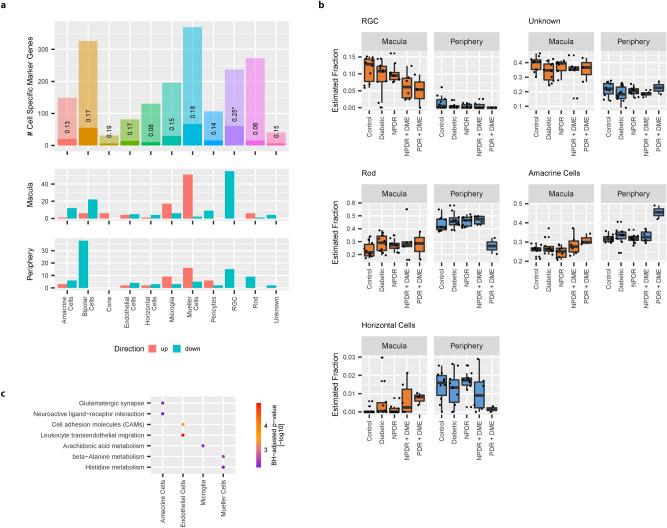
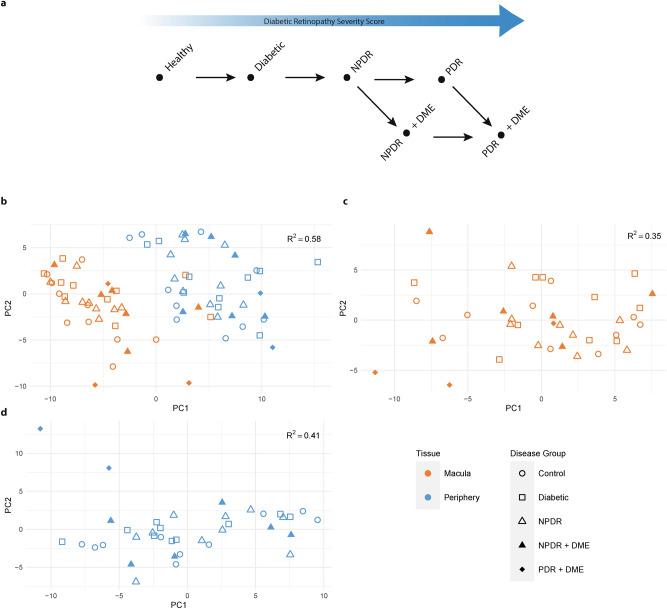
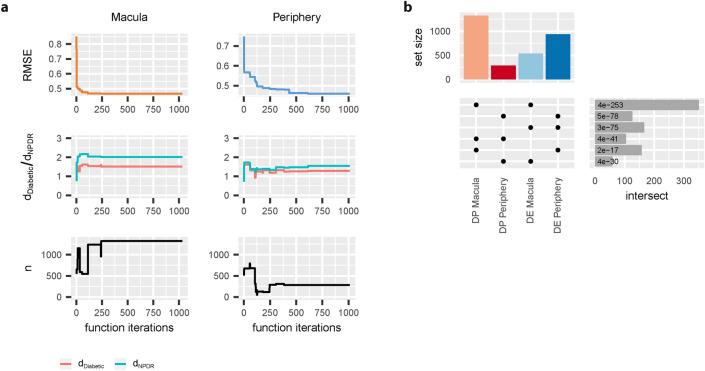
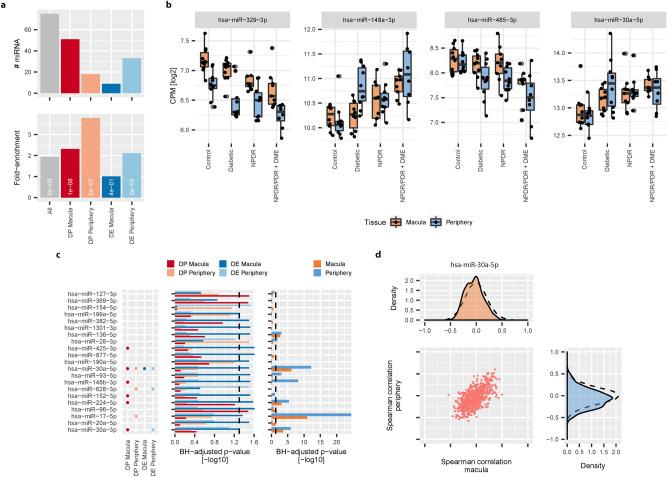
Diabetic Retinopathy (DR) is among the major global causes for vision loss. With the rise in diabetes prevalence, an increase in DR incidence is expected. Current understanding of both the molecular etiology and pathways involved in the initiation and progression of DR is limited. Via RNA-Sequencing, we analyzed mRNA and miRNA expression profiles of 80 human post-mortem retinal samples from 43 patients diagnosed with various stages of DR. We found differentially expressed transcripts to be predominantly associated with late stage DR and pathways such as hippo and gap junction signaling. A multivariate regression model identified transcripts with progressive changes throughout disease stages, which in turn displayed significant overlap with sphingolipid and cGMP-PKG signaling. Combined analysis of miRNA and mRNA expression further uncovered disease-relevant miRNA/mRNA associations as potential mechanisms of post-transcriptional regulation. Finally, integrating human retinal single cell RNA-Sequencing data revealed a continuous loss of retinal ganglion cells, and Müller cell mediated changes in histidine and β-alanine signaling. While previously considered primarily a vascular disease, attention in DR has shifted to additional mechanisms and cell-types. Our findings offer an unprecedented and unbiased insight into molecular pathways and cell-specific changes in the development of DR, and provide potential avenues for future therapeutic intervention.
糖尿病视网膜病变 (DR) 是全球主要的致盲原因之一。随着糖尿病患病率的上升,预计 DR 的发病率将会增加。目前对 DR 发生和发展中涉及的分子病因和途径的了解有限。通过 RNA 测序,我们分析了 80 个来自 43 名被诊断为不同阶段 DR 的患者的人死后视网膜样本的 mRNA 和 miRNA 表达谱。我们发现差异表达的转录物主要与晚期 DR 以及 hippo 和间隙连接信号等途径相关。多元回归模型确定了在整个疾病阶段发生渐进性变化的转录物,这些转录物与鞘脂和 cGMP-PKG 信号转导显著重叠。miRNA 和 mRNA 表达的联合分析进一步揭示了与疾病相关的 miRNA/mRNA 关联,这可能是转录后调控的潜在机制。最后,整合人视网膜单细胞 RNA 测序数据揭示了视网膜神经节细胞的连续丢失,以及组氨酸和β-丙氨酸信号的 Müller 细胞介导的变化。虽然 DR 以前主要被认为是一种血管疾病,但人们对其的关注已经转移到其他机制和细胞类型上。我们的研究结果提供了对 DR 发展中分子途径和细胞特异性变化的前所未有的、无偏见的见解,并为未来的治疗干预提供了潜在途径。


 Zotero 插件