Li Xinlu, Dong XiaoJing, Zhang Wen, Shi Zhizhou, Liu Zhongjian, Sa Yalian, Li Li, Ni Ninghua, Mei Yan
Faculty of Life Science and Technology, Kunming University of Science and Technology, Kunming, China.
Department of Ophthalmology, The Affiliated Hospital of Kunming University of Science and Technology, Kunming, China.
Front Cell Dev Biol. 2024 Dec 11;12:1500474. doi: 10.3389/fcell.2024.1500474. eCollection 2024.
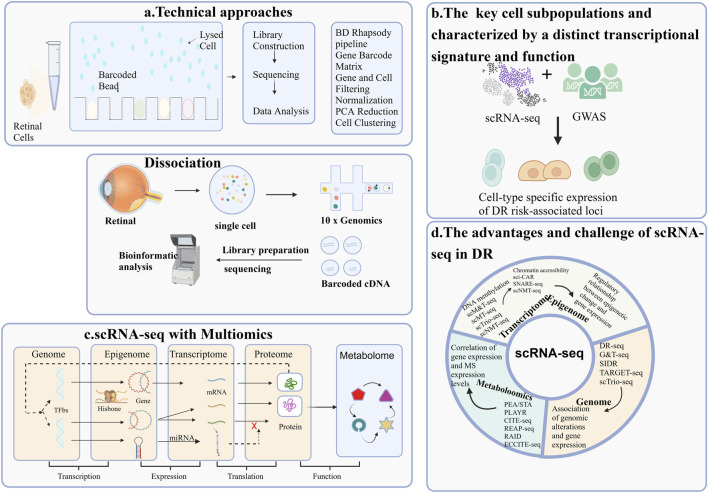
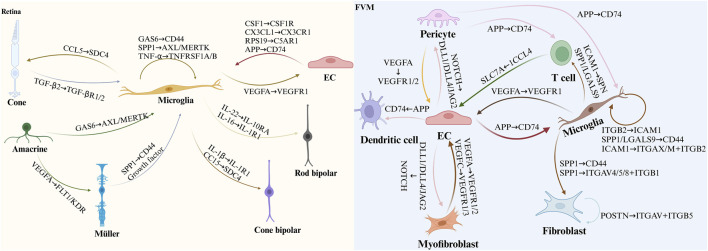
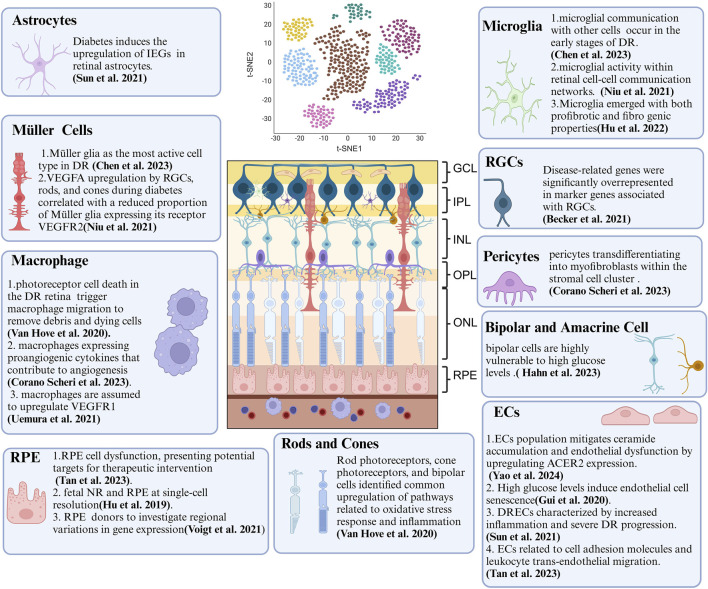
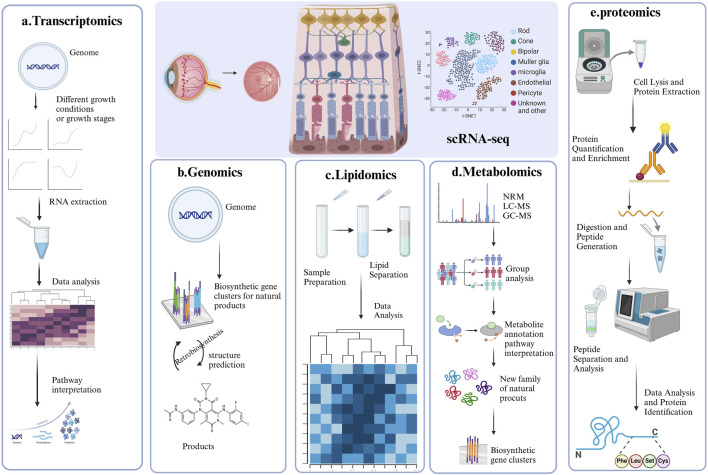
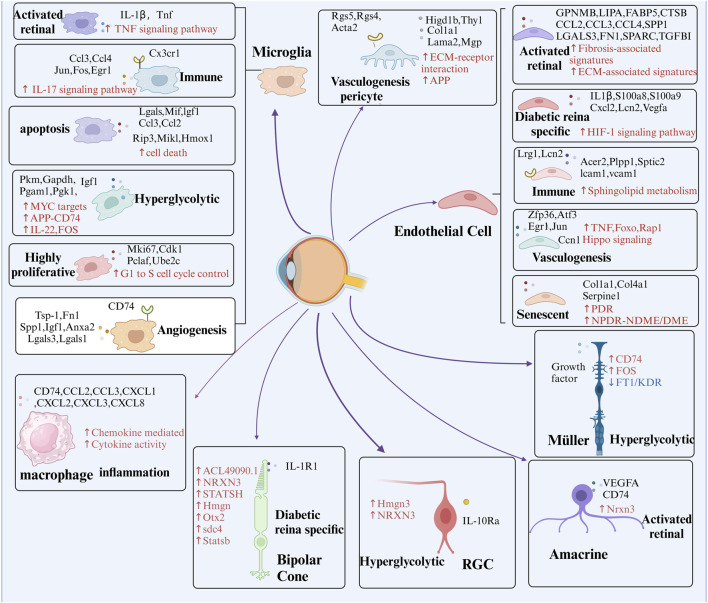
Diabetic retinopathy (DR) is a leading global cause of vision impairment, with its prevalence increasing alongside the rising rates of diabetes mellitus (DM). Despite the retina's complex structure, the underlying pathology of DR remains incompletely understood. Single-cell RNA sequencing (scRNA-seq) and recent advancements in multi-omics analyses have revolutionized molecular profiling, enabling high-throughput analysis and comprehensive characterization of complex biological systems. This review highlights the significant contributions of scRNA-seq, in conjunction with other multi-omics technologies, to DR research. Integrated scRNA-seq and transcriptomic analyses have revealed novel insights into DR pathogenesis, including alternative transcription start site events, fluctuations in cell populations, altered gene expression profiles, and critical signaling pathways within retinal cells. Furthermore, by integrating scRNA-seq with genetic association studies and multi-omics analyses, researchers have identified novel biomarkers, susceptibility genes, and potential therapeutic targets for DR, emphasizing the importance of specific retinal cell types in disease progression. The integration of scRNA-seq with metabolomics has also been instrumental in identifying specific metabolites and dysregulated pathways associated with DR. It is highly conceivable that the continued synergy between scRNA-seq and other multi-omics approaches will accelerate the discovery of underlying mechanisms and the development of novel therapeutic interventions for DR.
糖尿病视网膜病变(DR)是全球视力损害的主要原因,其患病率随着糖尿病(DM)发病率的上升而增加。尽管视网膜结构复杂,但DR的潜在病理机制仍未完全了解。单细胞RNA测序(scRNA-seq)和多组学分析的最新进展彻底改变了分子图谱分析,能够对复杂生物系统进行高通量分析和全面表征。本综述强调了scRNA-seq与其他多组学技术相结合对DR研究的重大贡献。整合的scRNA-seq和转录组分析揭示了DR发病机制的新见解,包括可变转录起始位点事件、细胞群体波动、基因表达谱改变以及视网膜细胞内的关键信号通路。此外,通过将scRNA-seq与遗传关联研究和多组学分析相结合,研究人员已经确定了DR的新型生物标志物、易感基因和潜在治疗靶点,强调了特定视网膜细胞类型在疾病进展中的重要性。scRNA-seq与代谢组学的整合也有助于识别与DR相关的特定代谢物和失调途径。可以高度设想,scRNA-seq与其他多组学方法之间的持续协同作用将加速DR潜在机制的发现和新型治疗干预措施的开发。