State Key Laboratory of Pollution Control and Resources Reuse, College of Environmental Science and Engineering, Tongji University, Shanghai, China; Ministry of Education Key Laboratory of Yangtze River Water Environment, Tongji University, Shanghai, China; Shanghai Institute of Pollution Control and Ecological Security, Shanghai, China.
Department of Earth and Environmental Studies, Montclair State University, Montclair, NJ, USA.
Chemosphere. 2021 Oct;281:130728. doi: 10.1016/j.chemosphere.2021.130728. Epub 2021 Apr 30.
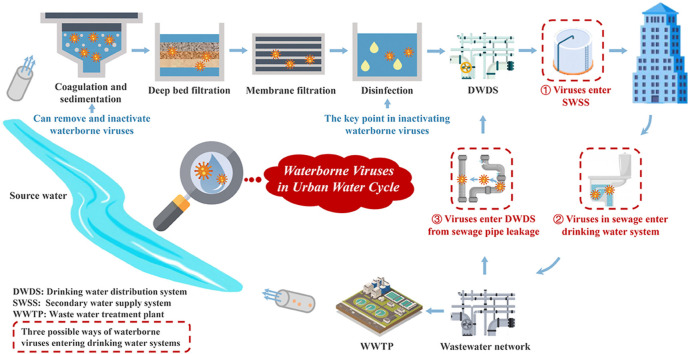
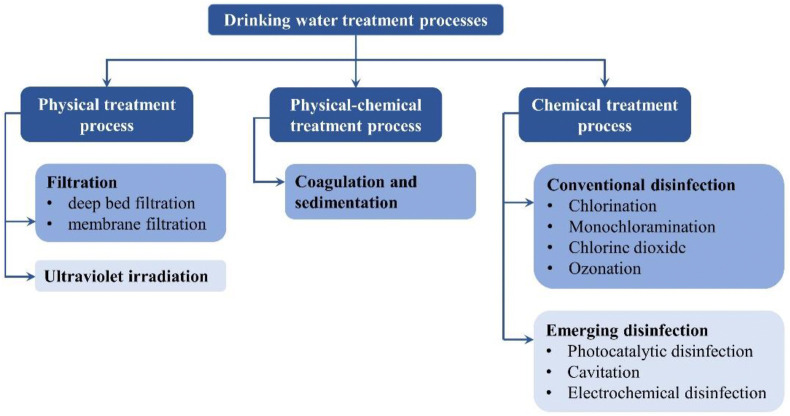
As the coronavirus disease 2019 continues to spread globally, its culprit, the severe acute respiratory syndrome coronavirus 2 has been brought under scrutiny. In addition to inhalation transmission, the possible fecal-oral viral transmission via water/wastewater has also been brought under the spotlight, necessitating a timely global review on the current knowledge about waterborne viruses in drinking water treatment system - the very barrier that intercepts waterborne pathogens to terminal water users. In this article we reviewed the occurrence, concentration methods, and control strategies, also, treatment performance on waterborne viruses during drinking water treatment were summarized. Additionally, we emphasized the potential of applying the quantitative microbial risk assessment to guide drinking water treatment to mitigate the viral exposure risks, especially when the unregulated novel viral pathogens are of concern. This review paves road for better control of viruses at drinking water treatment plants to protect public health.
随着 2019 年冠状病毒病在全球范围内继续传播,其罪魁祸首——严重急性呼吸系统综合症冠状病毒 2 已受到密切关注。除了吸入传播之外,病毒也可能通过水/废水经粪-口途径传播,这也引起了人们对饮用水处理系统中水中病毒的关注,因为饮用水处理系统是拦截水中病原体到达终端用水者的最后一道防线。在本文中,我们回顾了水中病毒在饮用水处理过程中的发生、浓缩方法和控制策略,以及处理性能。此外,我们强调了应用定量微生物风险评估来指导饮用水处理以降低病毒暴露风险的潜力,特别是在新型不受监管的病毒病原体受到关注时。本综述为更好地控制饮用水处理厂的病毒,保护公众健康铺平了道路。