Semenza Jan C, Rocklöv Joacim, Ebi Kristie L
Heidelberg Institute of Global Health, University of Heidelberg, 69120, Heidelberg, Germany.
Section of Sustainable Health, Department of Public Health and Clinical Medicine, Umeå University, 901 87, Umeå, Sweden.
Infect Dis Ther. 2022 Aug;11(4):1371-1390. doi: 10.1007/s40121-022-00647-3. Epub 2022 May 19.
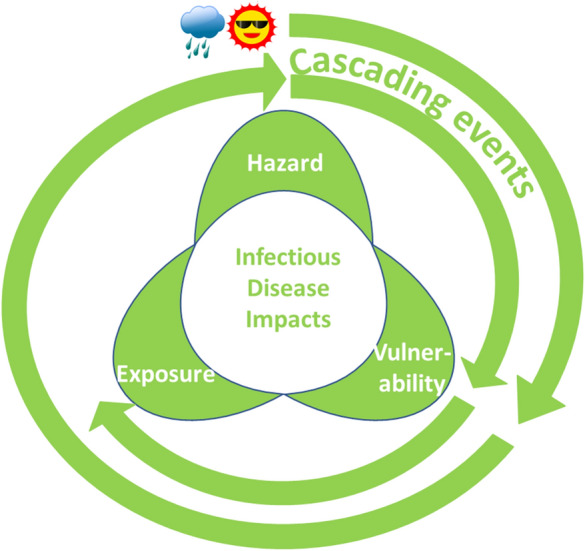
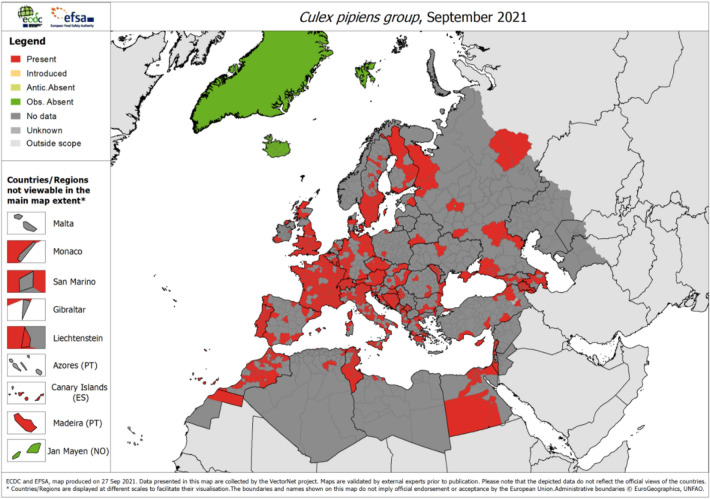
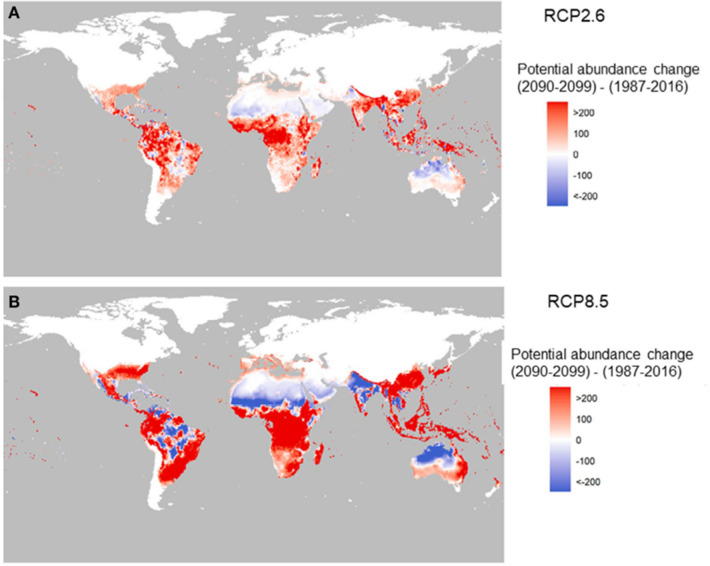
Climate change is adversely affecting the burden of infectious disease throughout the world, which is a health security threat. Climate-sensitive infectious disease includes vector-borne diseases such as malaria, whose transmission potential is expected to increase because of enhanced climatic suitability for the mosquito vector in Asia, sub-Saharan Africa, and South America. Climatic suitability for the mosquitoes that can carry dengue, Zika, and chikungunya is also likely to increase, facilitating further increases in the geographic range and longer transmission seasons, and raising concern for expansion of these diseases into temperate zones, particularly under higher greenhouse gas emission scenarios. Early spring temperatures in 2018 seem to have contributed to the early onset and extensive West Nile virus outbreak in Europe, a pathogen expected to expand further beyond its current distribution, due to a warming climate. As for tick-borne diseases, climate change is projected to continue to contribute to the spread of Lyme disease and tick-borne encephalitis, particularly in North America and Europe. Schistosomiasis is a water-borne disease and public health concern in Africa, Latin America, the Middle East, and Southeast Asia; climate change is anticipated to change its distribution, with both expansions and contractions expected. Other water-borne diseases that cause diarrheal diseases have declined significantly over the last decades owing to socioeconomic development and public health measures but changes in climate can reverse some of these positive developments. Weather and climate events, population movement, land use changes, urbanization, global trade, and other drivers can catalyze a succession of secondary events that can lead to a range of health impacts, including infectious disease outbreaks. These cascading risk pathways of causally connected events can result in large-scale outbreaks and affect society at large. We review climatic and other cascading drivers of infectious disease with projections under different climate change scenarios. Supplementary file1 (MP4 328467 KB).
气候变化正在对全球传染病负担产生不利影响,这是一种卫生安全威胁。对气候敏感的传染病包括疟疾等媒介传播疾病,由于亚洲、撒哈拉以南非洲和南美洲的气候条件对蚊媒更加适宜,预计其传播潜力将会增加。携带登革热、寨卡病毒和基孔肯雅病毒的蚊子的气候适宜性也可能增加,这将促使这些疾病的地理分布范围进一步扩大,传播季节延长,引发人们对这些疾病向温带地区扩散的担忧,尤其是在温室气体排放较高的情景下。2018年早春的气温似乎导致了欧洲西尼罗河病毒的提前爆发和广泛传播,由于气候变暖,这种病原体预计将在目前的分布范围之外进一步扩散。至于蜱传疾病,预计气候变化将继续促使莱姆病和蜱传脑炎传播,尤其是在北美和欧洲。血吸虫病是一种在非洲、拉丁美洲、中东和东南亚引发公共卫生问题的水传播疾病;预计气候变化将改变其分布范围,既有扩大也有收缩。过去几十年,由于社会经济发展和公共卫生措施,其他导致腹泻病的水传播疾病显著减少,但气候变化可能会扭转其中一些积极进展。天气和气候事件、人口流动、土地利用变化、城市化、全球贸易及其他驱动因素,可能引发一系列次生事件,进而导致一系列健康影响,包括传染病爆发。这些因果相连事件的级联风险路径可能导致大规模疫情爆发,对整个社会产生影响。我们回顾了传染病的气候及其他级联驱动因素,并对不同气候变化情景下的情况进行了预测。补充文件1(MP4 328467 KB)