Department of Experimental and Clinical Physiology, Laboratory of Centre for Preclinical Research, Medical University of Warsaw, Banacha 1b, 02-097, Warsaw, Poland.
Curr Hypertens Rep. 2021 May 20;23(5):31. doi: 10.1007/s11906-021-01144-7.
Based on the available data, it can be assumed that microbiota is an integral part of the human body. The most heavily colonized area of the human body is the gut, with bacterial accumulation ranging from 10-10 cells/g in the upper intestine to 10-10 cells/g in the colon. However, colonization of the gut is not the same throughout, as it was shown that there are differences between the composition of the microbiota in the intestine lumen and in the proximity of the mucus layer.
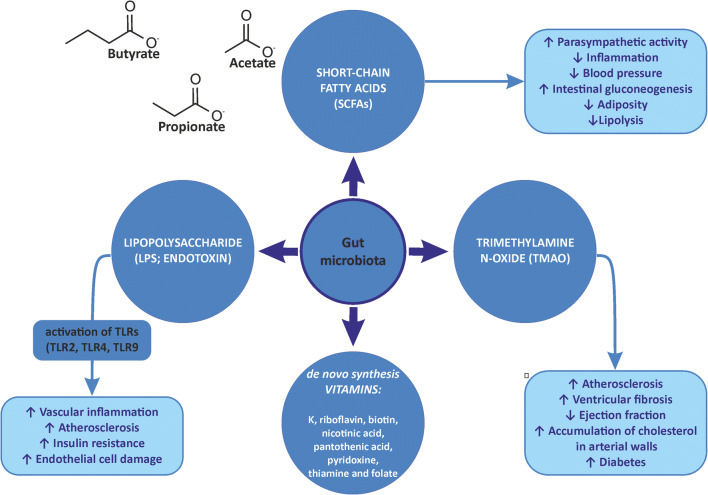
Gut microbiota gradient can be differentially regulated by factors such as obesity and chronic stress. In particular, a high fat diet influences the gut microbial composition. It was also found that chronic stress may cause the development of obesity and thus change the organization of the intestinal barrier. Recent research has shown the significant effect of intestinal microflora on cardiovascular function. Enhanced absorption of bacterial fragments, such as lipopolysaccharide (LPS), promotes the onset of "metabolic endotoxemia," which could activate toll-like receptors, which mediates an inflammatory response and in severe cases could cause cardiovascular diseases. It is presumed that the intestinal microbiota, and especially its metabolites (LPS and trimethylamine N-oxide (TMAO)), may play an important role in the pathogenesis of arterial hypertension, atherosclerosis, and heart failure. This review focuses on how gut microbiota can change the morphological and functional activity of the cardiovascular system in the course of obesity and in conditions of chronic stress.
根据现有数据,可以假设微生物群是人体的一个组成部分。人体中细菌定植最严重的区域是肠道,在上消化道中细菌积累量为 10-10 个细胞/g,在结肠中为 10-10 个细胞/g。然而,肠道的定植并不完全相同,因为已经表明肠道腔和黏液层附近的微生物群落组成存在差异。
肥胖和慢性应激等因素可以调节肠道微生物群的梯度。特别是高脂肪饮食会影响肠道微生物组成。此外,研究还发现慢性应激可能导致肥胖的发展,从而改变肠道屏障的结构。最近的研究表明,肠道微生物群对心血管功能有显著影响。细菌片段(如脂多糖[LPS])的吸收增强会促进“代谢性内毒素血症”的发生,从而激活 Toll 样受体,介导炎症反应,在严重的情况下会导致心血管疾病。据推测,肠道微生物群及其代谢产物(LPS 和三甲胺 N-氧化物[TMAO])可能在动脉高血压、动脉粥样硬化和心力衰竭的发病机制中起重要作用。本综述重点讨论了肠道微生物群如何在肥胖过程中和慢性应激条件下改变心血管系统的形态和功能活动。