Department of Nutrition, Institute of Basic Medical Sciences, Faculty of Medicine, University of Oslo, 0317 Oslo, Norway.
Nutrients. 2021 Jan 3;13(1):144. doi: 10.3390/nu13010144.
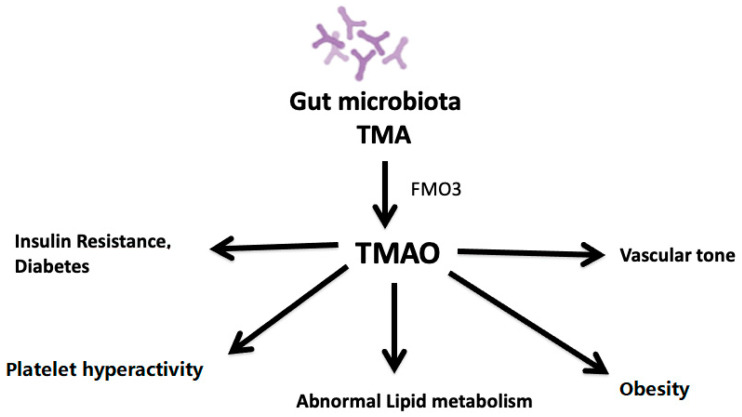
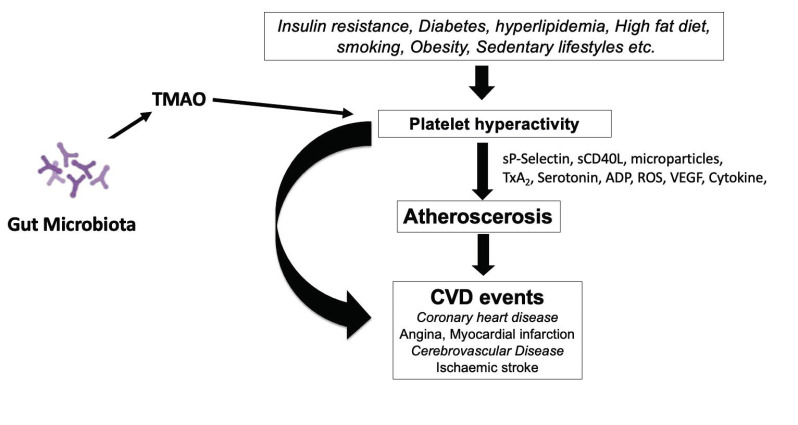
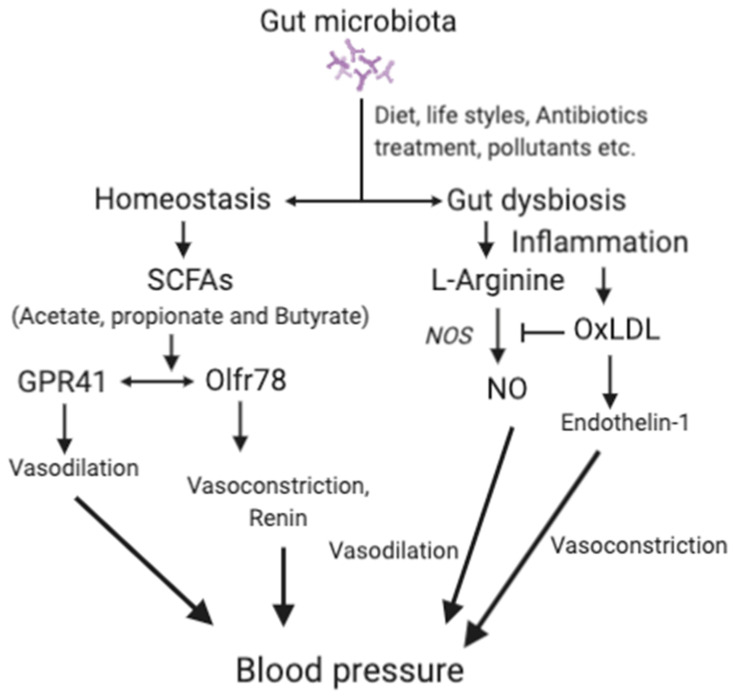
Emerging data have demonstrated a strong association between the gut microbiota and the development of cardiovascular disease (CVD) risk factors such as atherosclerosis, inflammation, obesity, insulin resistance, platelet hyperactivity, and plasma lipid abnormalities. Several studies in humans and animal models have demonstrated an association between gut microbial metabolites such as trimethylamine--oxide (TMAO), short-chain fatty acids, and bile acid metabolites (amino acid breakdown products) with CVD. Human blood platelets are a critical contributor to the hemostatic process. Besides, these blood cells play a crucial role in developing atherosclerosis and, finally, contribute to cardiac events. Since the TMAO, and other metabolites of the gut microbiota, are asociated with platelet hyperactivity, lipid disorders, and oxidative stress, the diet-gut microbiota interactions have become an important research area in the cardiovascular field. The gut microbiota and their metabolites may be targeted for the therapeutic benefit of CVD from a clinical perspective. This review's main aim is to highlight the complex interactions between microbiota, their metabolites, and several CVD risk factors.
新兴数据表明,肠道微生物群与心血管疾病(CVD)风险因素的发展之间存在很强的关联,如动脉粥样硬化、炎症、肥胖、胰岛素抵抗、血小板活性过高和血浆脂质异常。人类和动物模型的几项研究表明,肠道微生物代谢产物(如三甲胺氧化物[TMAO]、短链脂肪酸和胆汁酸代谢物[氨基酸分解产物])与 CVD 之间存在关联。人类血小板是止血过程的关键贡献者。此外,这些血细胞在动脉粥样硬化的发展中起着至关重要的作用,最终导致心脏事件。由于 TMAO 和肠道微生物群的其他代谢产物与血小板活性过高、脂质紊乱和氧化应激有关,因此饮食-肠道微生物群相互作用已成为心血管领域的一个重要研究领域。从临床角度来看,肠道微生物群及其代谢产物可能成为治疗 CVD 的目标。本综述的主要目的是强调微生物群、其代谢产物和几种 CVD 风险因素之间的复杂相互作用。