Department of Orthopaedics, The Second Affiliated Hospital of Fujian Medical University, Quanzhou, Fujian, China.
Department of Ultrasound, The Second Affiliated Hospital of Fujian Medical University, Quanzhou, Fujian, China.
BMC Cancer. 2021 May 21;21(1):581. doi: 10.1186/s12885-021-08328-z.
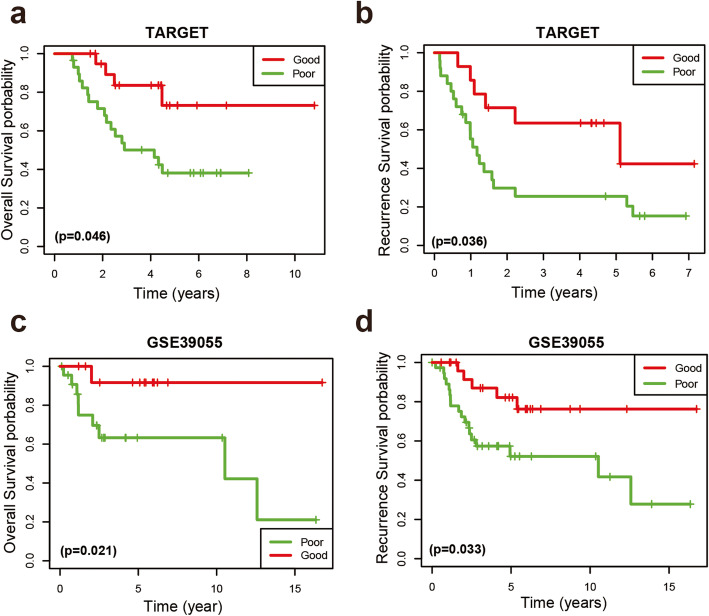
Genome-wide expression profiles have been shown to predict the response to chemotherapy. The purpose of this study was to develop a novel predictive signature for chemotherapy in patients with osteosarcoma.
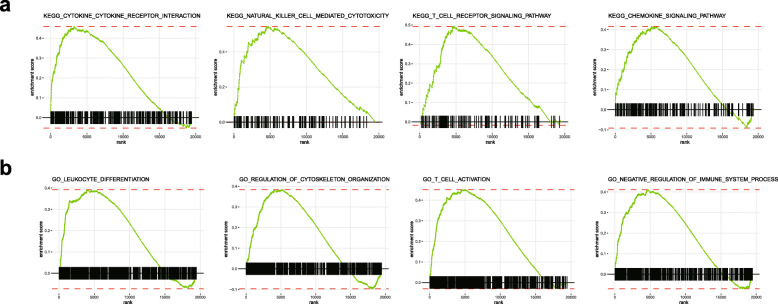
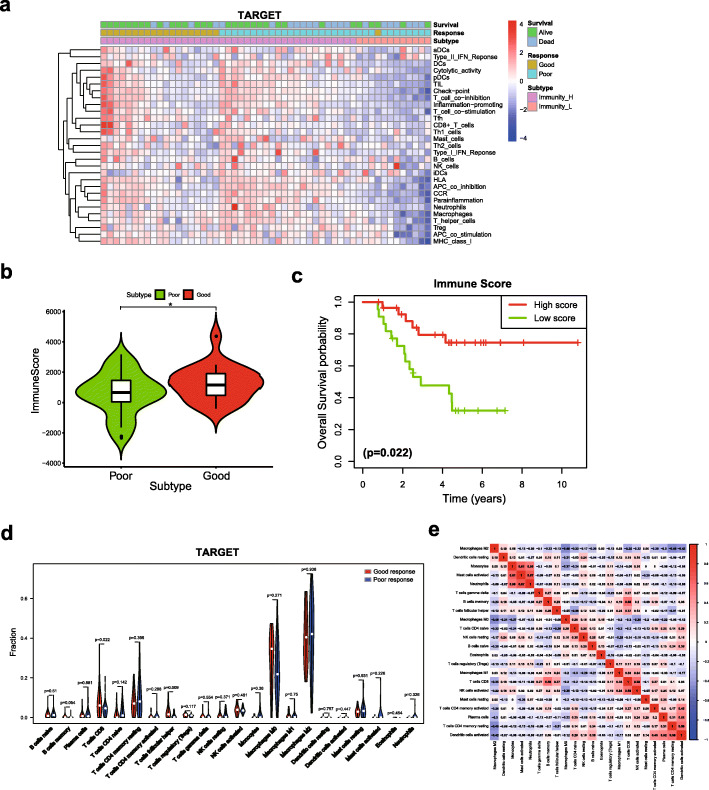
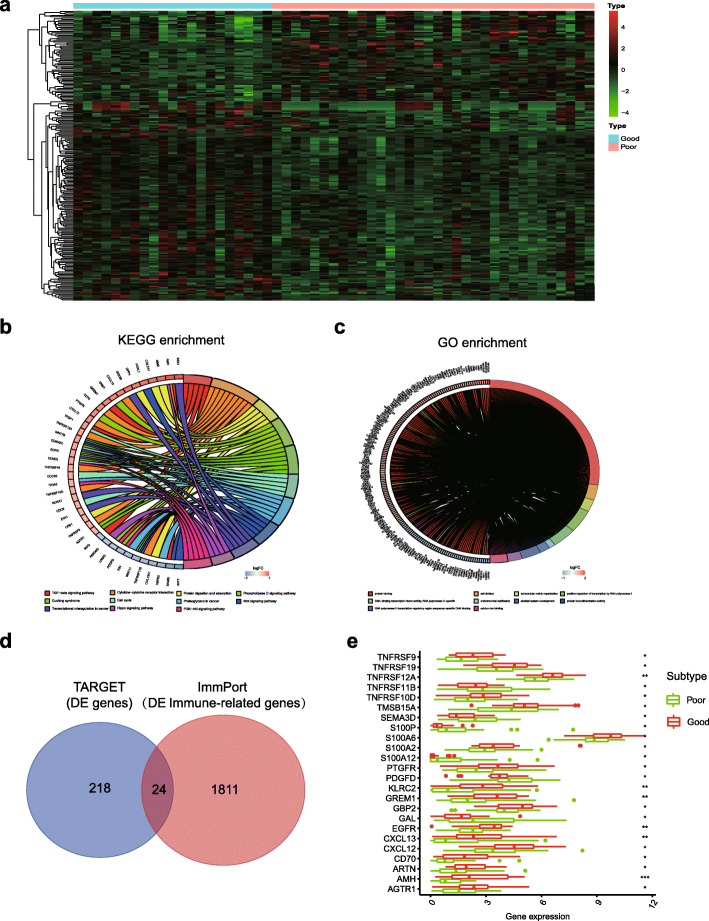
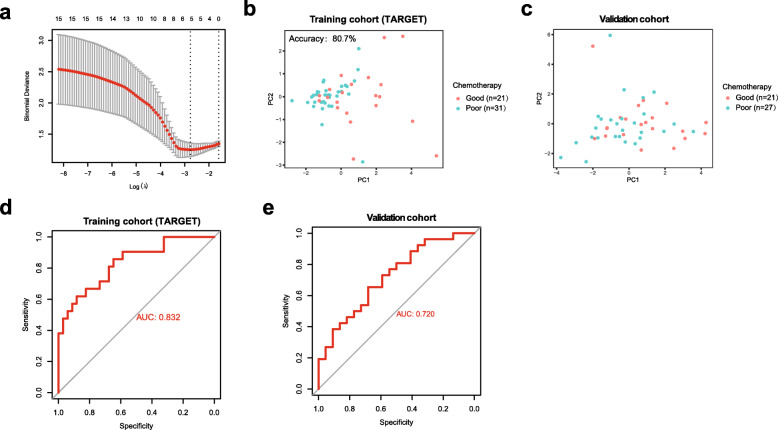
We analysed the relevance of immune cell infiltration and gene expression profiles of the tumor samples of good responders with those of poor responders from the TARGET and GEO databases. Immune cell infiltration was evaluated using a single-sample gene set enrichment analysis (ssGSEA) and the CIBERSORT algorithm between good and poor chemotherapy responders. Differentially expressed genes were identified based on the chemotherapy response. LASSO regression and binary logistic regression analyses were applied to select the differentially expressed immune-related genes (IRGs) and developed a predictive signature in the training cohort. A receiver operating characteristic (ROC) curve analysis was employed to assess and validate the predictive accuracy of the predictive signature in the validation cohort.
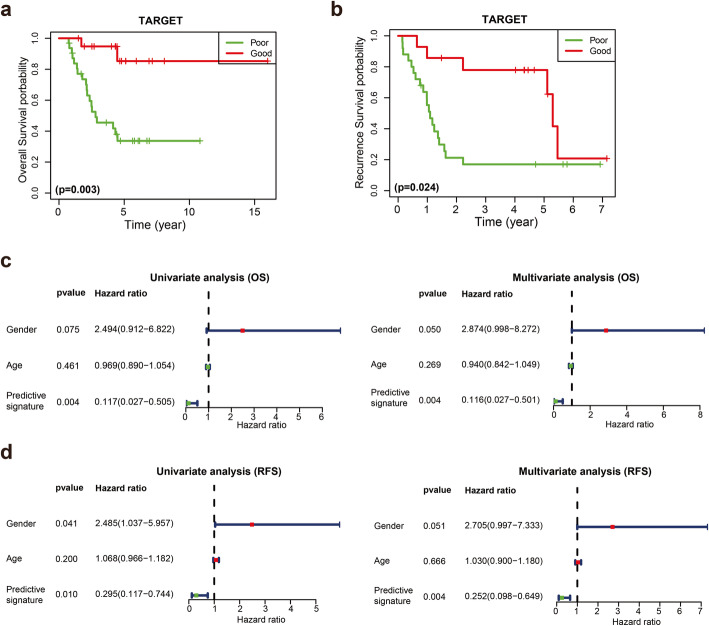
The analysis of immune infiltration showed a positive relationship between high-level immune infiltration and good responders, and T follicular helper cells and CD8 T cells were significantly more abundant in good responders with osteosarcoma. Two hundred eighteen differentially expressed genes were detected between good and poor responders, and a five IRGs panel comprising TNFRSF9, CD70, EGFR, PDGFD and S100A6 was determined to show predictive power for the chemotherapy response. A chemotherapy-associated predictive signature was developed based on these five IRGs. The accuracy of the predictive signature was 0.832 for the training cohort and 0.720 for the validation cohort according to ROC analysis.
The novel predictive signature constructed with five IRGs can be effectively utilized to predict chemotherapy responsiveness and help improve the efficacy of chemotherapy in patients with osteosarcoma.
全基因组表达谱已被证明可预测化疗反应。本研究旨在为骨肉瘤患者开发一种新的化疗预测标志物。
我们分析了 TARGET 和 GEO 数据库中对化疗反应良好的患者与反应不佳的患者的肿瘤样本中免疫细胞浸润和基因表达谱的相关性。使用单样本基因集富集分析(ssGSEA)和 CIBERSORT 算法评估免疫细胞浸润,在化疗反应良好和反应不佳的患者之间。基于化疗反应鉴定差异表达基因。应用 LASSO 回归和二元逻辑回归分析筛选差异表达的免疫相关基因(IRGs),并在训练队列中建立预测标志。通过受试者工作特征(ROC)曲线分析评估和验证验证队列中预测标志的预测准确性。
免疫浸润分析表明,高水平的免疫浸润与化疗反应良好呈正相关,T 滤泡辅助细胞和 CD8 T 细胞在骨肉瘤化疗反应良好的患者中更为丰富。在化疗反应良好和反应不佳的患者之间检测到 218 个差异表达基因,确定了由 TNFRSF9、CD70、EGFR、PDGFD 和 S100A6 组成的五个 IRGs 面板具有预测化疗反应的能力。基于这五个 IRGs 建立了一个化疗相关的预测标志。根据 ROC 分析,该预测标志在训练队列中的准确性为 0.832,在验证队列中的准确性为 0.720。
构建的由五个 IRGs 组成的新型预测标志可有效用于预测化疗反应性,有助于提高骨肉瘤患者化疗的疗效。