Department of Pharmacognosy, Faculty of Pharmacy, University of Pécs, H-7624, Rókus u. 2., Pécs, Hungary.
Institute of Pharmacognosy, Faculty of Pharmacy, Semmelweis University, H-1085 Üllői út 26, Budapest, Hungary.
BMC Complement Med Ther. 2021 May 22;21(1):148. doi: 10.1186/s12906-021-03319-w.
The essential oils possess both antimicrobial and anti-inflammatory effects, therefore they can provide an effective treatment against infections. Essential oils are widely used as supportive ingredients in many diseases, especially in the acute and chronic diseases of the respiratory tract. Neuroinflammation is responsible for several diseases of the central nervous system. Some plant-derived bioactive molecules have been shown to have role in attenuating neuroinflammation by regulating microglia, the immune cells of the CNS.
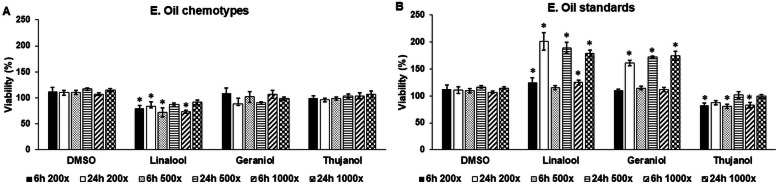
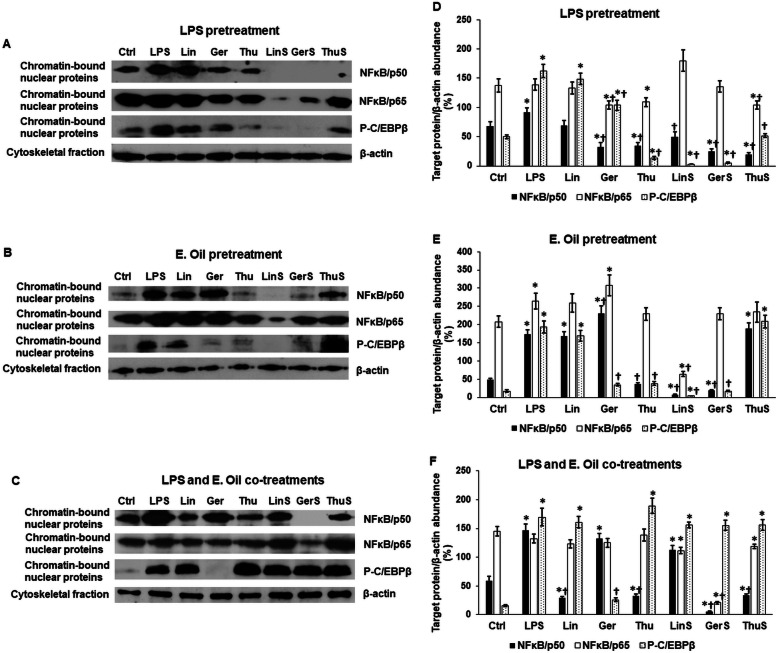
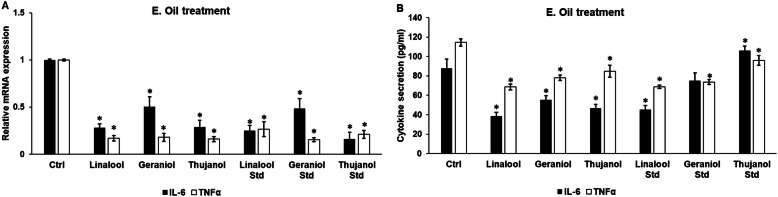
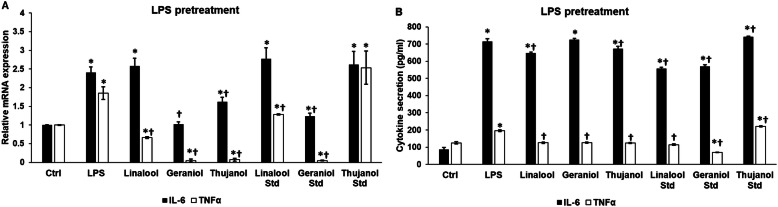
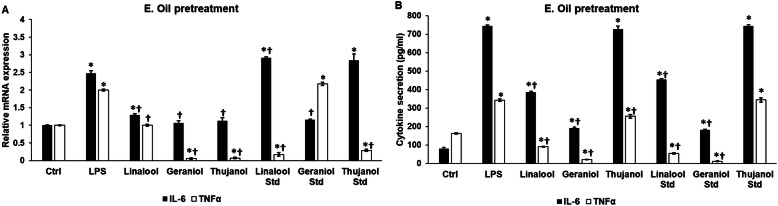
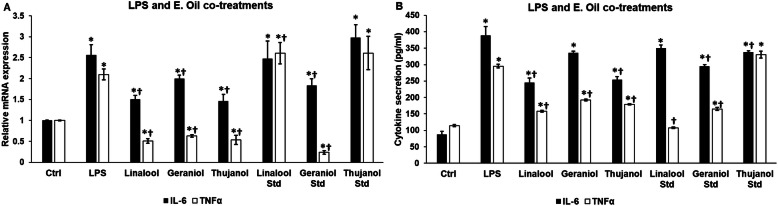
In this study, the anti-inflammatory effect of three chemotypes of thyme essential oil and their main compounds (geraniol, thujanol and linalool) were examined on lipopolysaccharide-induced BV-2 microglia. Three different experimental setups were used, LPS pretreatment, essential oil pretreatment and co-treatments of LPS and essential oils in order to determine whether essential oils are able to prevent inflammation and can decrease it. The concentrations of the secreted tumour necrosis factor α (TNFα) and interleukin-6 (IL-6) proinflammatory cytokines were measured and we analysed by Western blot the activity of the cell signalling pathways, NF-κB and CCAAT-enhancer binding protein β (C/EBPβ) regulating TNFα and IL-6 proinflammatory cytokine expressions in BV-2 cells.
Our results showed definite alterations in the effects of essential oil chemotypes and their main compounds at the different experimental setups. Considering the changes of IL-6 and TNFα secretions the best reduction of inflammatory cytokines could be reached by the pretreatment with the essential oils. In addition, the main compounds exerted better effects than essential oil chemotypes in case of LPS pretreatment. At the essential oil pretreatment experiment, the effect of linalool and geraniol was outstanding but there was no major difference between the actions of chemotypes and standards. Main compounds could be seen to have large inhibitory effects on certain cell signalling components related to the activation of the expression of proinflammatory cytokines.
Thyme essential oils are good candidates to use in prevention of neuroinflammation and related neurodegeneration, but the exact ratio of the components has to be selected carefully.
精油具有抗菌和抗炎作用,因此可有效治疗感染。精油被广泛用作许多疾病的辅助成分,尤其是在呼吸道的急性和慢性疾病中。神经炎症是中枢神经系统多种疾病的原因。一些植物来源的生物活性分子已被证明通过调节中枢神经系统的免疫细胞小胶质细胞在减轻神经炎症方面具有作用。
在这项研究中,研究了三种百里香精油化学型及其主要化合物(香叶醇、松油醇和芳樟醇)对脂多糖诱导的 BV-2 小胶质细胞的抗炎作用。使用了三种不同的实验方案,即 LPS 预处理、精油预处理以及 LPS 和精油的共同处理,以确定精油是否能够预防炎症并减轻炎症。测量了分泌的肿瘤坏死因子 α(TNFα)和白细胞介素 6(IL-6)促炎细胞因子的浓度,并通过 Western blot 分析了调节 TNFα 和 IL-6 促炎细胞因子表达的细胞信号通路 NF-κB 和 CCAAT 增强子结合蛋白 β(C/EBPβ)的活性在 BV-2 细胞中。
我们的结果表明,在不同的实验方案中,精油化学型及其主要化合物的作用存在明显变化。考虑到 IL-6 和 TNFα 分泌的变化,通过精油预处理可以达到最佳的抗炎细胞因子减少效果。此外,在 LPS 预处理的情况下,主要化合物比精油化学型发挥更好的作用。在精油预处理实验中,芳樟醇和香叶醇的作用非常突出,但化学型和标准品之间的作用没有明显差异。主要化合物可以看到对某些与促炎细胞因子表达激活相关的细胞信号成分具有较大的抑制作用。
百里香精油是预防神经炎症和相关神经退行性变的良好候选物,但必须仔细选择成分的精确比例。