Figueroa Dania M, Kuisma Eeva, Matson M Jeremiah, Ondzie Alain U, Bushmaker Trent, Seifert Stephanie N, Ntoumi Francine, Escudero-Pérez Beatriz, Muñoz-Fontela César, Walzer Chris, Olson Sarah H, Goma-Nkoua Cynthia, Mombouli Jean-Vivien, Fischer Robert J, Munster Vincent J
Laboratory of Virology, Division of Intramural Research, National Institute of Allergy and Infectious Disease, National Institutes of Health, Hamilton, MT, USA.
Wildflife Conservation Society, Health Program, Bronx, NY, USA.
One Health Outlook. 2021 May 24;3(1):9. doi: 10.1186/s42522-021-00041-y.
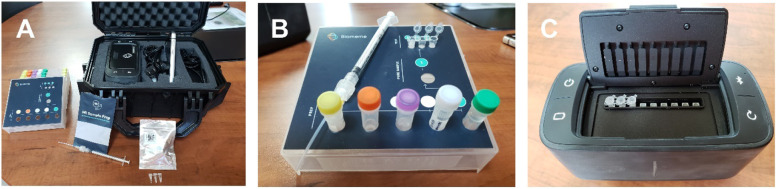
Early detection of Ebola virus spillover into wildlife is crucial for rapid response. We developed and validated a portable, cold-chain independent Ebola virus RT-qPCR assay.
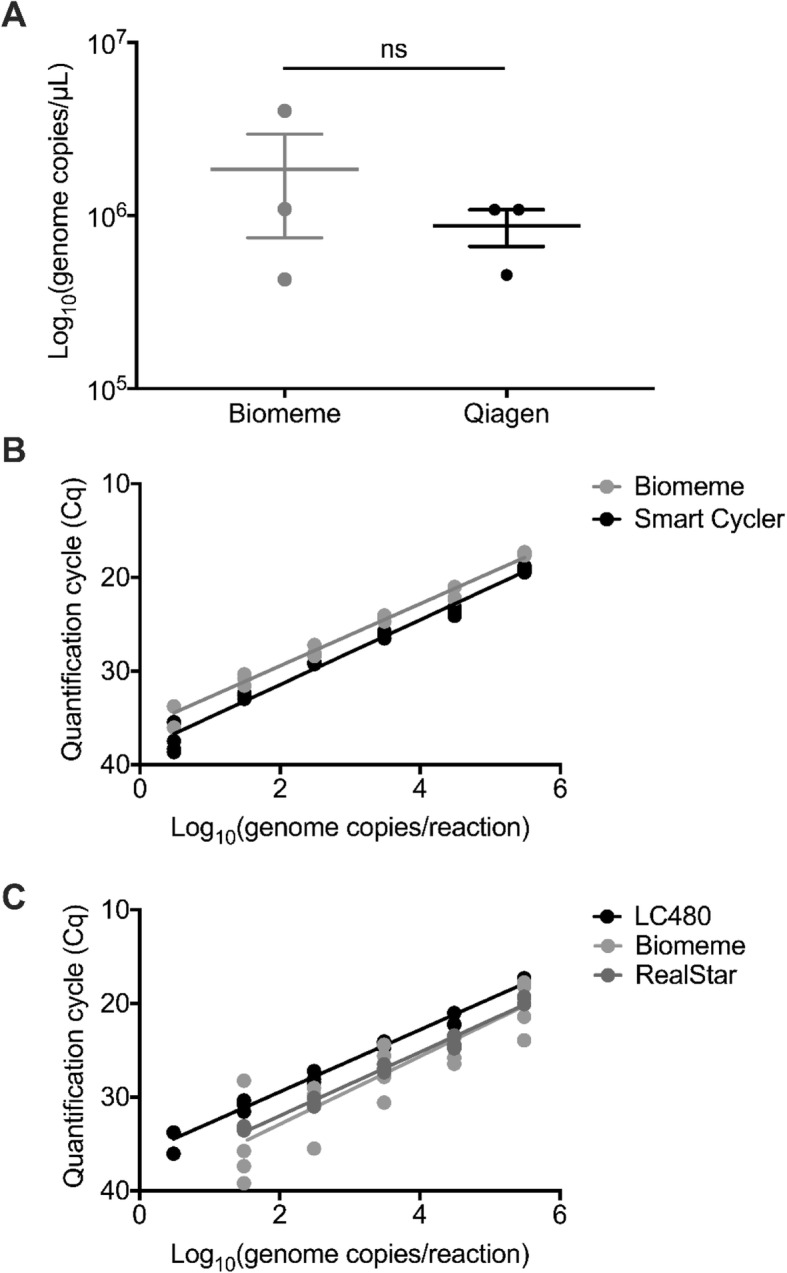
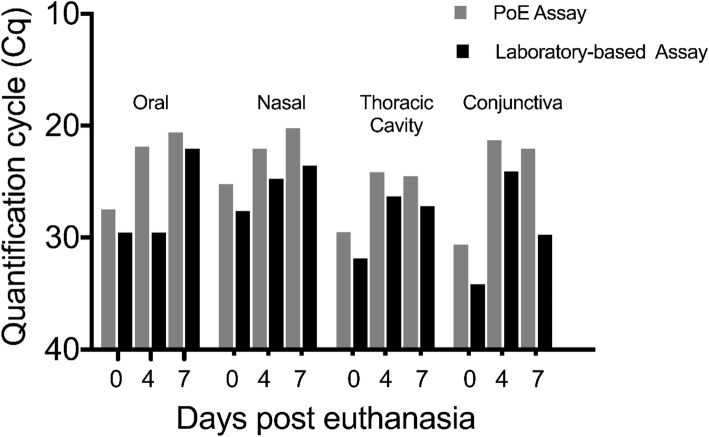
The field syringe-based RNA extraction method was compared with a conventional laboratory-based spin-column RNA extraction method. Next, the qPCR efficiency and limit of detection of the assay was compared to standard laboratory-based reagents and equipment. The specificity of the assay was confirmed by testing against multiple Zaire Ebolavirus (EBOV) variants and other ebolavirus species. Lastly, swabs from an EBOV-infected non-human primate carcass, stored at environmental conditions mimicking central and west Africa, were analyzed to mimic in field conditions.
The syringe-based RNA extraction method performed comparably to a standard laboratory spin-column-based method. The developed assay was comparable in sensitivity and specificity to standard laboratory-based diagnostic assays. The assay specifically detected EBOV and not any of the other tested ebolavirus species, including Reston ebolavirus, Sudan ebolavirus, Bundibugyo ebolavirus, and Tai Forrest ebolavirus. Notably, the assays limit of detection for EBOV isolates were all below 4 genome copies/μL. The assay was able to detect EBOV in oral, nasal, thoracic cavity, and conjunctiva swabs obtained from an infected non-human primate.
We developed a field-based Ebolavirus assay which is comparable in sensitivity and specificity to laboratory-based assays. Currently, the assay is being incorporated into wildlife carcass surveillance in the Republic of the Congo and is being adapted for other infectious disease agents.
早期发现埃博拉病毒向野生动物的溢出对于快速应对至关重要。我们开发并验证了一种便携式、无需冷链的埃博拉病毒逆转录定量聚合酶链反应(RT-qPCR)检测方法。
将基于现场注射器的RNA提取方法与传统的基于实验室的离心柱RNA提取方法进行比较。接下来,将该检测方法的定量聚合酶链反应(qPCR)效率和检测限与基于标准实验室的试剂和设备进行比较。通过针对多种扎伊尔埃博拉病毒(EBOV)变体和其他埃博拉病毒物种进行检测来确认该检测方法的特异性。最后,对在模拟中非和西非环境条件下储存的感染EBOV的非人灵长类动物尸体的拭子进行分析,以模拟现场条件。
基于注射器的RNA提取方法与标准实验室离心柱提取方法表现相当。所开发的检测方法在灵敏度和特异性方面与基于标准实验室的诊断检测方法相当。该检测方法能特异性检测EBOV,而不会检测包括雷斯顿埃博拉病毒、苏丹埃博拉病毒、本迪布焦埃博拉病毒和塔伊森林埃博拉病毒在内的任何其他检测的埃博拉病毒物种。值得注意的是,该检测方法对EBOV分离株的检测限均低于4个基因组拷贝/微升。该检测方法能够在从受感染的非人灵长类动物获得的口腔、鼻腔、胸腔和结膜拭子中检测到EBOV。
我们开发了一种基于现场的埃博拉病毒检测方法,其在灵敏度和特异性方面与基于实验室的检测方法相当。目前,该检测方法正在被纳入刚果共和国的野生动物尸体监测中,并正在针对其他传染病原体进行调整。