Janssen Pharmaceutical Companies of Johnson & Johnson, Titusville, NJ, United States of America.
Department of Internal Medicine, University of Missouri-Kansas City, Kansas City, MO, United States of America.
PLoS One. 2021 May 24;16(5):e0251963. doi: 10.1371/journal.pone.0251963. eCollection 2021.
The success of vaccination efforts to curb the COVID-19 pandemic will require broad public uptake of immunization and highlights the importance of understanding factors associated with willingness to receive a vaccine.
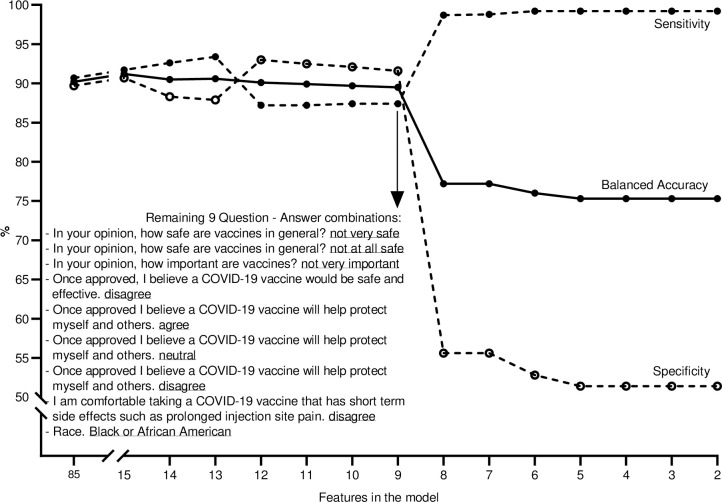
U.S. adults aged 65 and older enrolled in the HeartlineTM clinical study were invited to complete a COVID-19 vaccine assessment through the HeartlineTM mobile application between November 6-20, 2020. Factors associated with willingness to receive a COVID-19 vaccine were evaluated using an ordered logistic regression as well as a Random Forest classification algorithm.
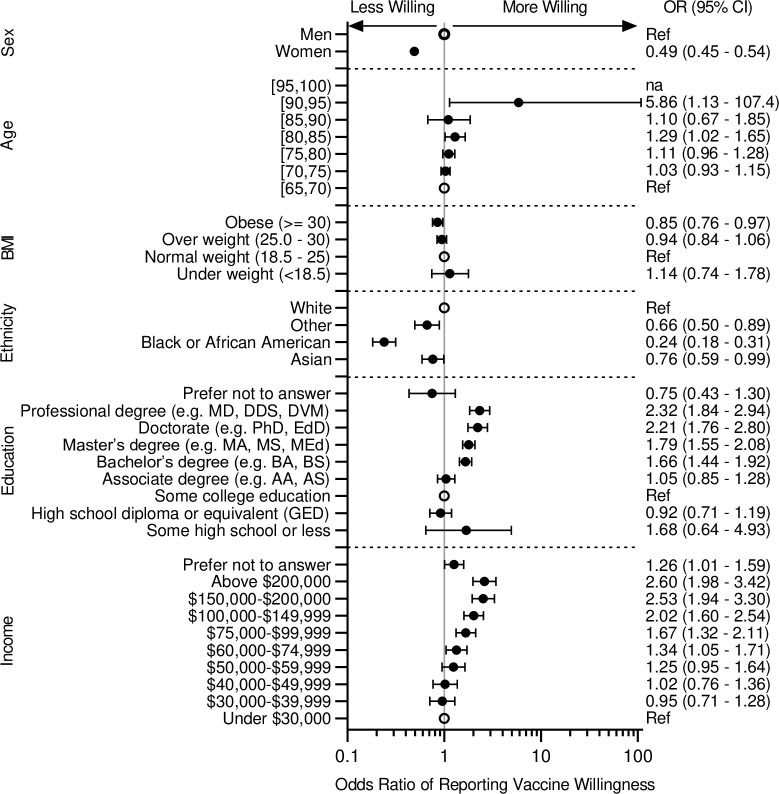
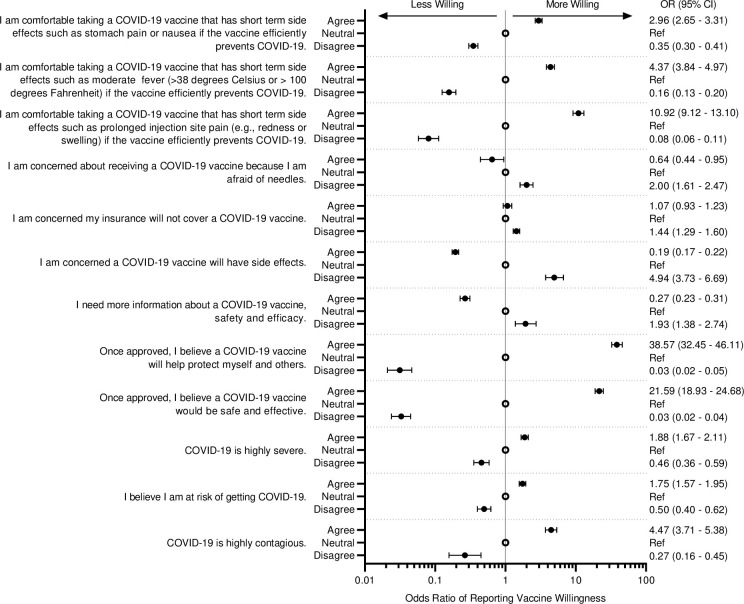
Among 9,106 study participants, 81.3% (n = 7402) responded and had available demographic data. The majority (91.3%) reported a willingness to be vaccinated. Factors most strongly associated with vaccine willingness were beliefs about the safety and efficacy of COVID-19 vaccines and vaccines in general. Women and Black or African American respondents reported lower willingness to vaccinate. Among those less willing to get vaccinated, 66.2% said that they would talk with their health provider before making a decision. During the study, positive results from the first COVID-19 vaccine outcome study were released; vaccine willingness increased after this report.
Even among older adults at high-risk for COVID-19 complications who are participating in a longitudinal clinical study, 1 in 11 reported lack of willingness to receive COVID-19 vaccine in November 2020. Variability in vaccine willingness by gender, race, education, and income suggests the potential for uneven vaccine uptake. Education by health providers directed toward assuaging concerns about vaccine safety and efficacy can help improve vaccine acceptance among those less willing.
Clinicaltrials.gov NCT04276441.
疫苗接种工作的成功将有助于遏制新冠疫情,这需要公众广泛接受疫苗接种,同时凸显了了解与接种意愿相关因素的重要性。
我们邀请了参加 HeartlineTM 临床研究的美国 65 岁及以上的成年人通过 HeartlineTM 移动应用程序在 2020 年 11 月 6 日至 20 日期间完成 COVID-19 疫苗评估。使用有序逻辑回归和随机森林分类算法评估与接种意愿相关的因素。
在 9106 名研究参与者中,81.3%(n=7402)做出了回应并提供了可用的人口统计学数据。大多数(91.3%)人表示愿意接种疫苗。与接种意愿最密切相关的因素是对 COVID-19 疫苗和一般疫苗的安全性和有效性的信念。女性和黑人和非裔美国人受访者表示接种意愿较低。在那些不太愿意接种疫苗的人中,66.2%的人表示他们会在做出决定之前与他们的医疗服务提供者交谈。在研究期间,第一个 COVID-19 疫苗结果研究的积极结果公布;在该报告发布后,疫苗接种意愿增加。
即使在参与纵向临床研究的 COVID-19 并发症高风险的老年人中,仍有 1/11 的人在 2020 年 11 月表示不愿意接种 COVID-19 疫苗。性别、种族、教育程度和收入方面的疫苗接种意愿存在差异,这表明疫苗接种的接受程度可能存在不均衡。医疗服务提供者通过教育消除对疫苗安全性和有效性的担忧,可以帮助提高那些不太愿意接种疫苗的人的疫苗接受度。
Clinicaltrials.gov NCT04276441。