Department of Otorhinolaryngology Head and Neck Surgery, The Affiliated Yantai Yuhuangding Hospital of Qingdao University, No. 20 East Yuhuangding Road, Yantai, 264000, Shandong, China.
Department of Ophthalmology, The Affiliated Yantai Yuhuangding Hospital of Qingdao University, Yantai, 264000, China.
Eur Arch Otorhinolaryngol. 2022 Jan;279(1):49-60. doi: 10.1007/s00405-021-06900-8. Epub 2021 May 25.
A systematic review and meta-analysis were performed to evaluate the prevalence and prognosis of otorhinolaryngological symptoms in patients with the diagnosed coronavirus disease 2019 (COVID-19).
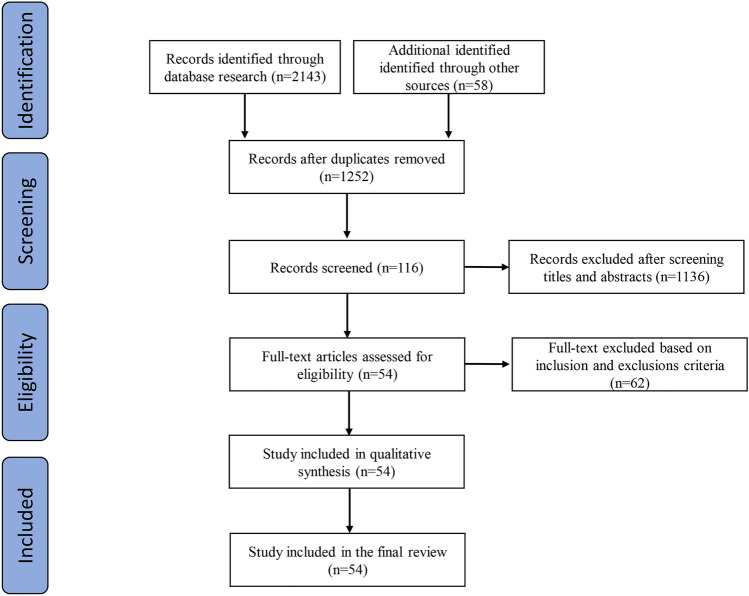
A systematic search of PubMed, Embase, Web of Science, and Google Scholar databases was performed up to August 19, 2020.We included studies that reported infections with COVID-19 and symptoms of otolaryngology. The retrieved data from the respective studies were evaluated and summarized. The study's immediate result was to assess the combined prevalence of otorhinolaryngological symptoms in patients with COVID-19. However, the secondary result was to determine the exacerbation of COVID-19 infection in patients with otorhinolaryngological symptoms.
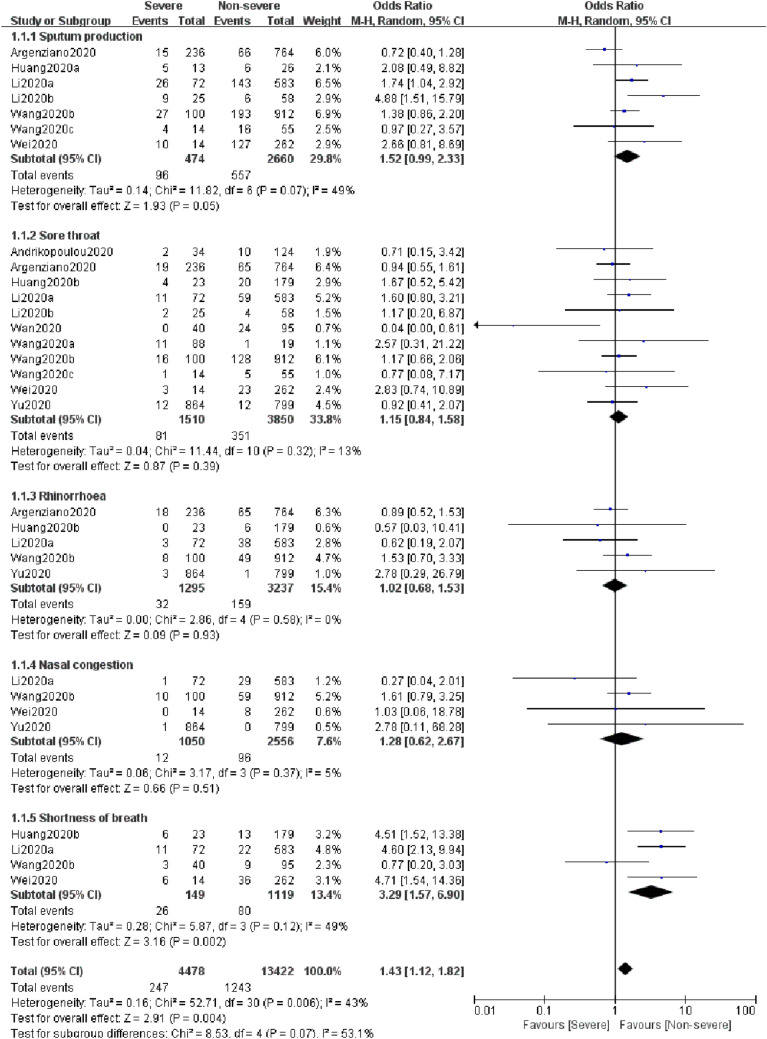
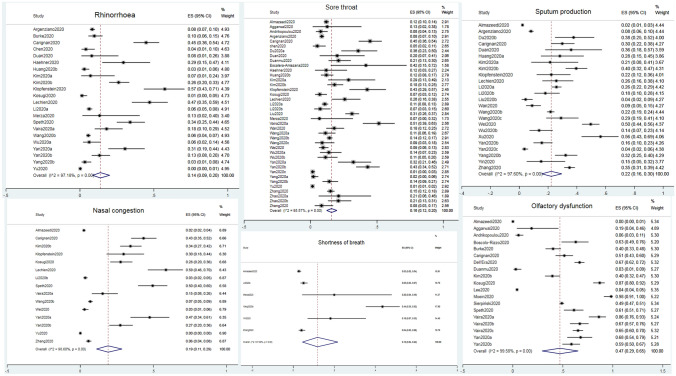
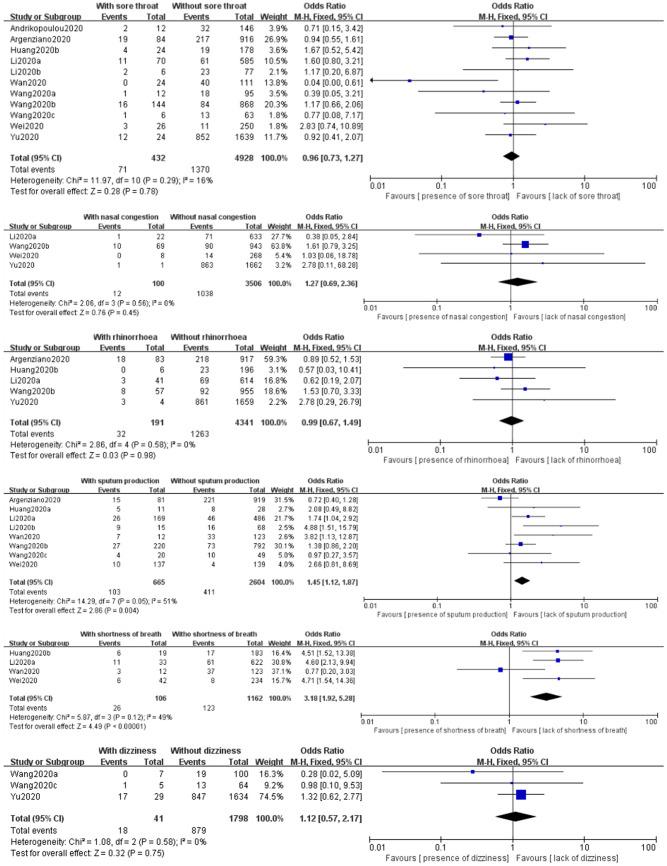
Fifty-four studies with 16,478 patients were included. Olfactory dysfunction, sneezing and sputum production were the 3 most prevalent otorhinolaryngological symptoms in patients with COVID-19. The pooled prevalence amongst the prevalent symptoms was 47% (95% CI 29-65; range 0-98; I = 99.58%), 27% (95% CI 11-48; range 12-40; I = 93.34%), and 22% (95% CI 16-30; range 2-56; I = 97.60%), respectively. The proportion of severely ill patients with sputum production and shortness of breath was significantly higher among patients with COVID-19 infections (OR 1.66 [95% CI 1.08-2.54]; P = 0.02, I = 51% and 3.29 [95% CI 1.57-6.90]; P = 0.002, I = 49%, respectively). Subgroup analysis showed no statistically significant differences between the incidence of otolaryngology symptoms in severely ill patients and non-severely ill patients (OR 1.43 [95% CI 1.12-1.82]; P = 0.07 I = 53.1%). In contrast, the incidence of shortness of breath in severely ill patients was significantly increased (3.29 [1.57-6.90]; P = 0.002, I = 49%).
Our research shows that otorhinolaryngology symptoms in patients with COVID-19 are not uncommon, which should attract otorhinolaryngologists' attention.
对已确诊的 2019 冠状病毒病(COVID-19)患者的耳鼻喉症状的患病率和预后进行系统评价和荟萃分析。
截至 2020 年 8 月 19 日,我们对 PubMed、Embase、Web of Science 和 Google Scholar 数据库进行了系统检索。我们纳入了报告 COVID-19 感染和耳鼻喉症状的研究。评估并总结了各自研究中的检索数据。该研究的直接结果是评估 COVID-19 患者中耳鼻喉症状的综合患病率。然而,次要结果是确定有耳鼻喉症状的 COVID-19 感染患者的恶化情况。
纳入了 54 项研究,共计 16478 名患者。嗅觉功能障碍、打喷嚏和咳痰是 COVID-19 患者最常见的 3 种耳鼻喉症状。常见症状的总患病率为 47%(95%CI 29-65;范围 0-98;I=99.58%)、27%(95%CI 11-48;范围 12-40;I=93.34%)和 22%(95%CI 16-30;范围 2-56;I=97.60%)。咳痰和呼吸急促的重症患者在 COVID-19 感染患者中所占比例明显更高(OR 1.66 [95%CI 1.08-2.54];P=0.02,I=51%和 3.29 [95%CI 1.57-6.90];P=0.002,I=49%)。亚组分析显示,重症患者和非重症患者的耳鼻喉症状发生率无统计学差异(OR 1.43 [95%CI 1.12-1.82];P=0.07,I=53.1%)。相比之下,重症患者呼吸急促的发生率明显升高(3.29 [1.57-6.90];P=0.002,I=49%)。
我们的研究表明,COVID-19 患者的耳鼻喉症状并不少见,这应该引起耳鼻喉科医生的重视。