Department of Biosciences, Durham University, Durham, UK.
Medical Research Council Unit The Gambia at the London School of Hygiene & Tropical Medicine, Banjul, The Gambia.
J R Soc Interface. 2021 May;18(178):20210256. doi: 10.1098/rsif.2021.0256. Epub 2021 May 26.
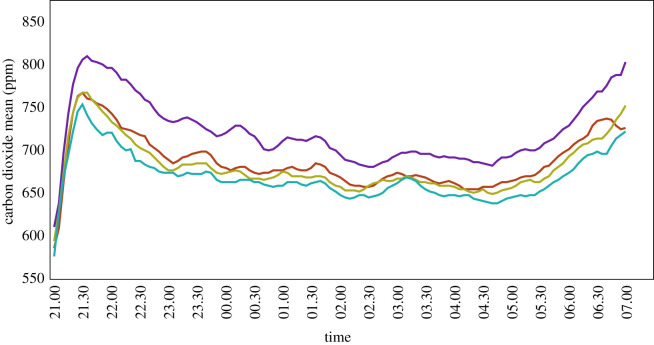
Most malaria infections in sub-Saharan Africa are acquired indoors, thus finding effective ways of preventing mosquito house entry should reduce transmission. Since most malaria mosquitoes fly less than 1 m from the ground, we tested whether raising buildings off the ground would prevent the entry of , the principal African malaria vector, in rural Gambia. Nightly collections of mosquitoes were made using light traps from four inhabited experimental huts, each of which could be moved up or down. Mosquito house entry declined with increasing height, with a hut at 3 m reducing house entry by 84% when compared with huts on the ground. A propensity for malaria vectors to fly close to the ground and reduced levels of carbon dioxide, a major mosquito attractant, in elevated huts, may explain our findings. Raised buildings may help reduce malaria transmission in Africa.
在撒哈拉以南非洲,大多数疟疾感染是在室内获得的,因此寻找有效的方法来防止蚊子进入房屋应该可以减少传播。由于大多数疟蚊从地面起飞不到 1 米,我们测试了将建筑物升高离开地面是否可以防止冈比亚农村地区主要的非洲疟蚊传播媒介进入。使用灯光诱捕器从四个有人居住的实验小屋中每晚收集蚊子,每个小屋都可以上下移动。蚊子进入房屋的数量随着高度的增加而减少,与地面上的小屋相比,3 米高的小屋使蚊子进入的数量减少了 84%。靠近地面飞行的疟疾传播媒介的倾向以及升高的小屋中二氧化碳水平的降低,二氧化碳是一种主要的蚊子引诱剂,可能解释了我们的发现。升高的建筑物可能有助于减少非洲的疟疾传播。