Departments of Pediatrics, Neurology and Psychiatry, University of Massachusetts Medical School, 55 N. Lake Ave., Worcester, MA, 01655, USA.
Department of Pharmacology and Molecular Sciences, and The Cullman Chemoprotection Center, Johns Hopkins University School of Medicine, 725 N. Wolfe St., Baltimore, MD, 21205, USA.
Mol Autism. 2021 May 25;12(1):38. doi: 10.1186/s13229-021-00447-5.
Sulforaphane (SF), an isothiocyanate in broccoli, has potential benefits relevant to autism spectrum disorder (ASD) through its effects on several metabolic and immunologic pathways. Previous clinical trials of oral SF demonstrated positive clinical effects on behavior in young men and changes in urinary metabolomics in children with ASD.
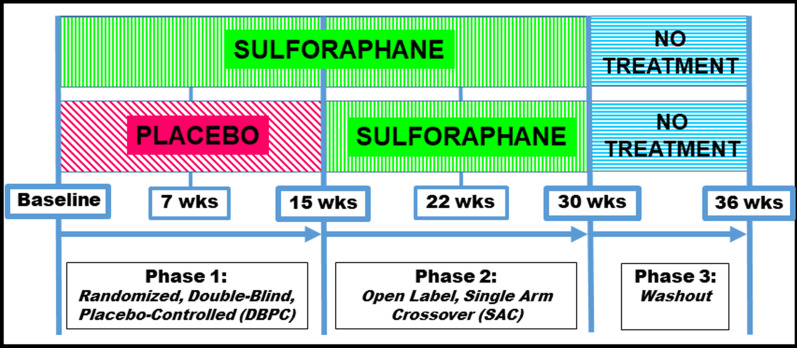
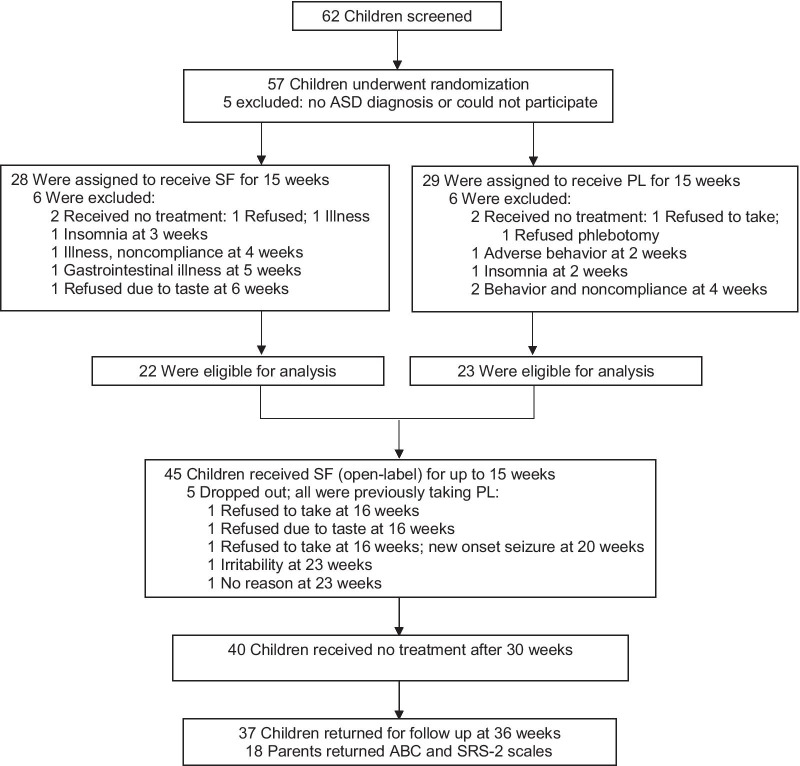
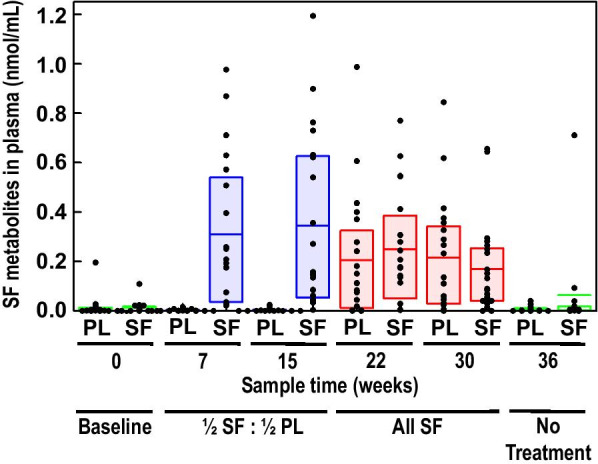
We conducted a 15-week randomized parallel double-blind placebo-controlled clinical trial with 15-week open-label treatment and 6-week no-treatment extensions in 57 children, ages 3-12 years, with ASD over 36 weeks. Twenty-eight were assigned SF and 29 received placebo (PL). Clinical effects, safety and tolerability of SF were measured as were biomarkers to elucidate mechanisms of action of SF in ASD.
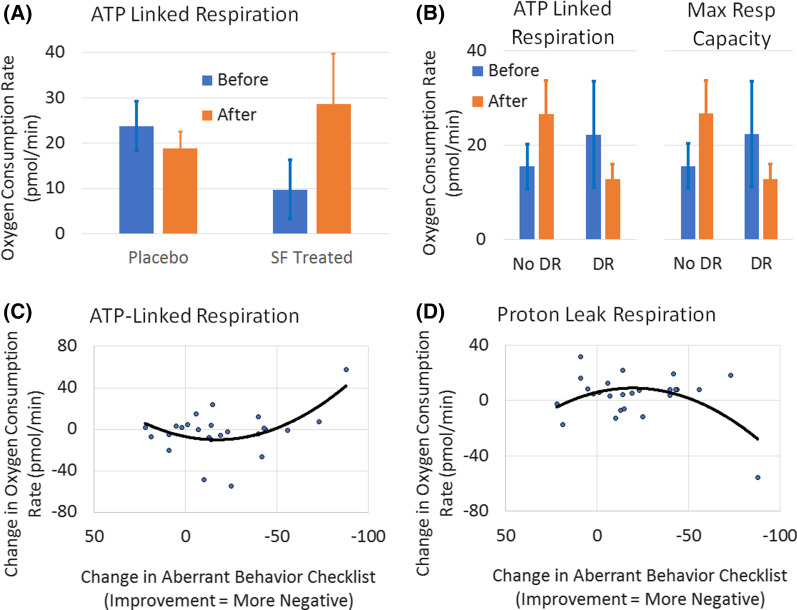
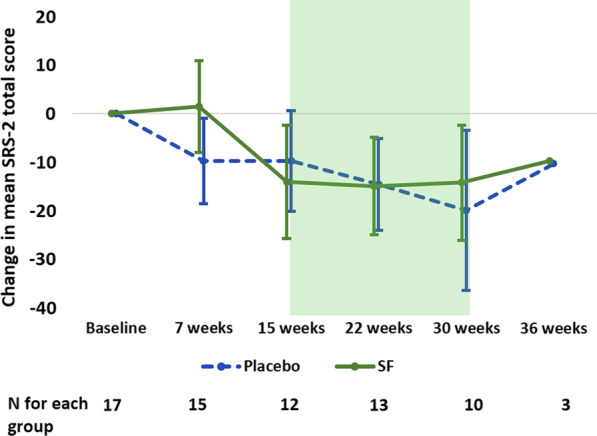
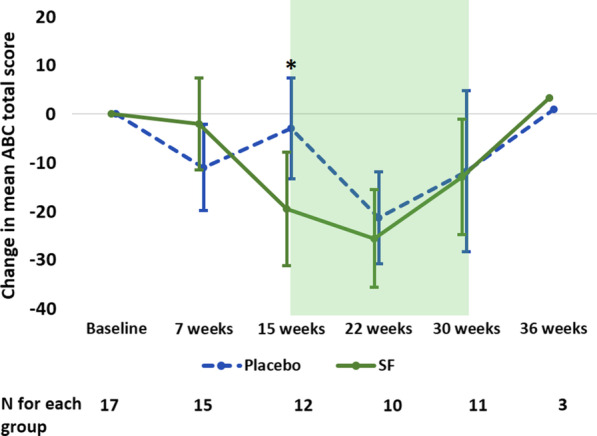
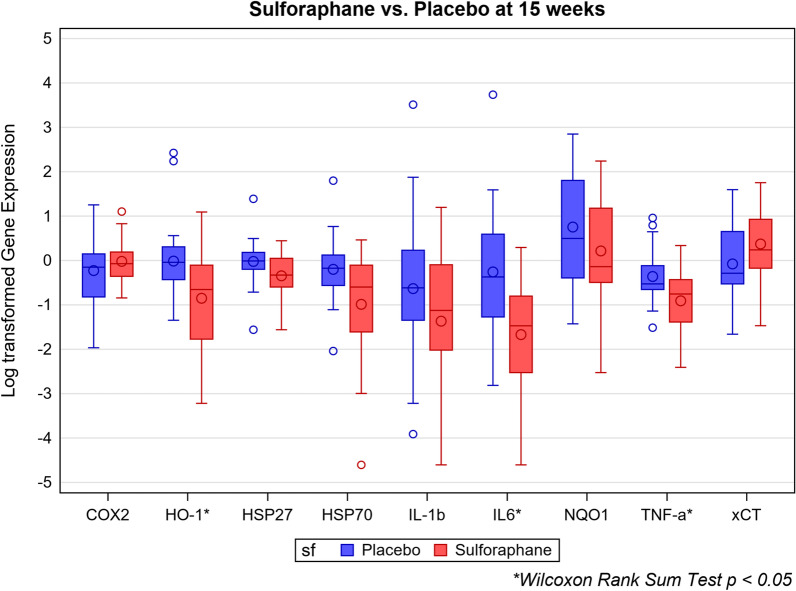
Data from 22 children taking SF and 23 on PL were analyzed. Treatment effects on the primary outcome measure, the Ohio Autism Clinical Impressions Scale (OACIS), in the general level of autism were not significant between SF and PL groups at 7 and 15 weeks. The effect sizes on the OACIS were non-statistically significant but positive, suggesting a possible trend toward greater improvement in those on treatment with SF (Cohen's d 0.21; 95% CI - 0.46, 0.88 and 0.10; 95% CI - 0.52, 0.72, respectively). Both groups improved in all subscales when on SF during the open-label phase. Caregiver ratings on secondary outcome measures improved significantly on the Aberrant Behavior Checklist (ABC) at 15 weeks (Cohen's d - 0.96; 95% CI - 1.73, - 0.15), but not on the Social Responsiveness Scale-2 (SRS-2). Ratings on the ABC and SRS-2 improved with a non-randomized analysis of the length of exposure to SF, compared to the pre-treatment baseline (p < 0.001). There were significant changes with SF compared to PL in biomarkers of glutathione redox status, mitochondrial respiration, inflammatory markers and heat shock proteins. Clinical laboratory studies confirmed product safety. SF was very well tolerated and side effects of treatment, none serious, included rare insomnia, irritability and intolerance of the taste and smell.
The sample size was limited to 45 children with ASD and we did not impute missing data. We were unable to document significant changes in clinical assessments during clinical visits in those taking SF compared to PL. The clinical results were confounded by placebo effects during the open-label phase.
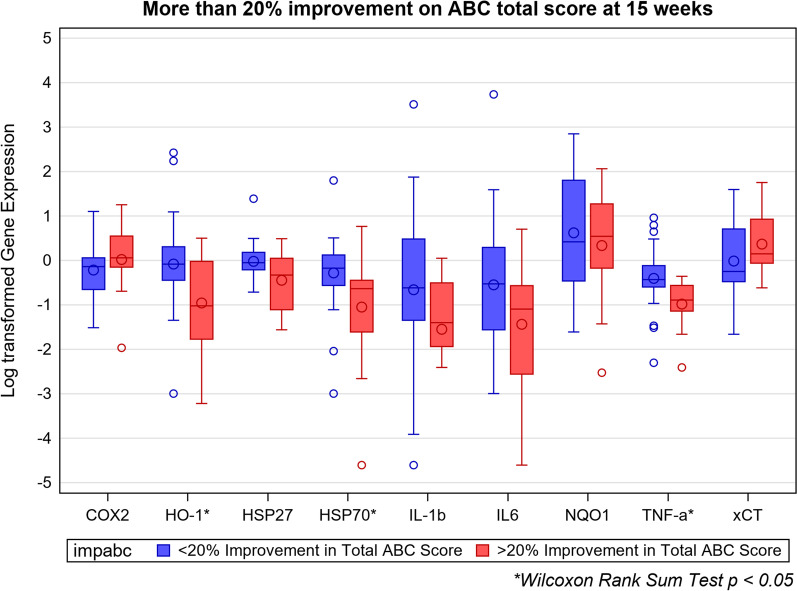
SF led to small yet non-statistically significant changes in the total and all subscale scores of the primary outcome measure, while for secondary outcome measures, caregivers' assessments of children taking SF showed statistically significant improvements compared to those taking PL on the ABC but not the SRS-2. Clinical effects of SF were less notable in children compared to our previous trial of a SF-rich preparation in young men with ASD. Several of the effects of SF on biomarkers correlated to clinical improvements. SF was very well tolerated and safe and effective based on our secondary clinical measures.
This study was prospectively registered at clinicaltrials.gov (NCT02561481) on September 28, 2015. Funding was provided by the U.S. Department of Defense.
西兰花中的异硫氰酸酯——萝卜硫素 (SF),通过其对几种代谢和免疫途径的影响,可能对自闭症谱系障碍 (ASD) 有潜在益处。先前对口服 SF 的临床研究表明,SF 对年轻男性的行为有积极的临床影响,并改变 ASD 儿童的尿液代谢组学。
我们进行了一项为期 15 周的随机平行双盲安慰剂对照临床试验,其中 57 名 3-12 岁的 ASD 儿童在 36 周内接受了 15 周的开放性治疗和 6 周的无治疗期。28 名儿童接受 SF 治疗,29 名接受安慰剂(PL)治疗。SF 在 ASD 中的作用机制的生物标志物来衡量 SF 的临床效果、安全性和耐受性。
对服用 SF 的 22 名儿童和服用 PL 的 23 名儿童的数据进行了分析。SF 和 PL 组在第 7 周和第 15 周的自闭症总体水平的主要观察指标俄亥俄州自闭症临床印象量表(OACIS)上的治疗效果无显著差异。OACIS 的效应大小无统计学意义但为阳性,表明治疗组的 SF 可能有更大的改善趋势(Cohen's d 0.21;95%CI -0.46,0.88 和 0.10;95%CI -0.52,0.72)。当在开放性阶段服用 SF 时,两组在所有亚量表中均有改善。次要观察指标的护理者评分在第 15 周时在异常行为检查表(ABC)上显著改善(Cohen's d -0.96;95%CI -1.73,-0.15),但在社交反应量表-2(SRS-2)上没有改善。与治疗前基线相比,与非随机分析 SF 暴露长度相关的 ABC 和 SRS-2 评分均有所改善(p<0.001)。与 PL 相比,SF 组的谷胱甘肽氧化还原状态、线粒体呼吸、炎症标志物和热休克蛋白的生物标志物有显著变化。临床实验室研究证实了产品的安全性。SF 耐受性非常好,治疗的副作用,没有严重的副作用,包括罕见的失眠、易怒和无法耐受味道和气味。
样本量限制为 45 名 ASD 儿童,我们没有对缺失数据进行插补。我们无法在接受 SF 治疗的儿童与接受 PL 治疗的儿童之间记录到在临床访视期间的临床评估中发生的显著变化。在开放性阶段,安慰剂效应混淆了临床结果。
SF 导致主要观察指标的总分和所有亚量表评分的小但无统计学意义的变化,而对于次要观察指标,与服用 PL 的儿童相比,服用 SF 的护理者对儿童的评估在 ABC 上有统计学意义的改善,但 SRS-2 上没有。SF 对儿童的临床效果不如我们之前对 ASD 年轻男性进行的富含 SF 的制剂的临床试验显著。SF 对生物标志物的几种影响与临床改善相关。SF 非常耐受良好且安全有效,基于我们的次要临床措施。
本研究于 2015 年 9 月 28 日在美国临床试验注册中心(NCT02561481)进行了前瞻性注册。资金由美国国防部提供。