Ling Rui, Sit Hao Fong, Balaji Suvasini, Lam Agnes I F, Latkin Carl A, Tucker Joseph D, Hall Brian J
Global and Community Mental Health Research Group, New York University (Shanghai), Shanghai, People's Republic of China.
Department of International Health, Johns Hopkins Bloomberg School of Public Health, Johns Hopkins University, Baltimore, MD, USA.
Internet Interv. 2021 May 5;25:100397. doi: 10.1016/j.invent.2021.100397. eCollection 2021 Sep.
Digital mental health is an emerging field that can leverage technology and mobile apps to deliver mental health treatment to populations in areas with limited mental health services. Despite widespread availability of these apps, uptake remains low. Enhanced marketing is necessary to increase public engagement. There is growing recognition that mental health intervention beneficiaries should be engaged in all phases of treatment development, adaptation, and delivery. Crowdsourcing - consulting the public to solve problems and sharing the solutions - can foster community-informed ideas for public health, but has yet been applied to digital mental health marketing.
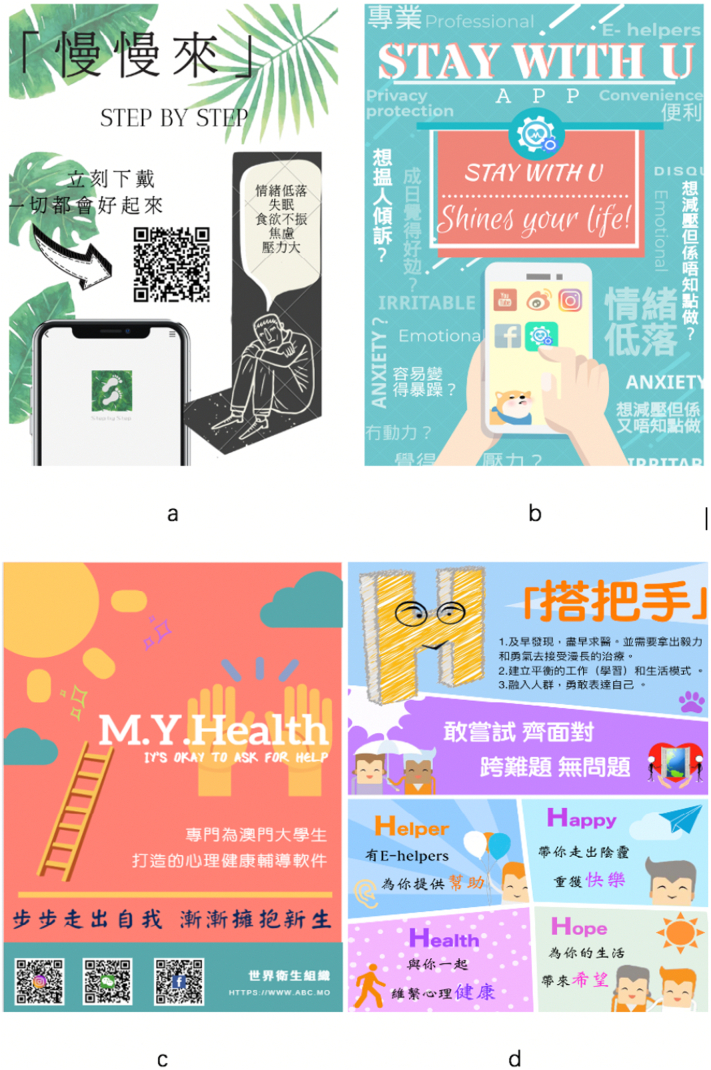
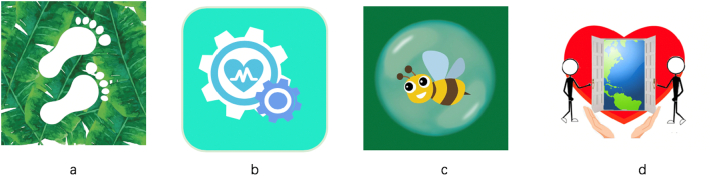
With the goal of engaging potential intervention beneficiaries in digital mental health dissemination, the current project implemented a digital mental health crowdsourcing designathon for Chinese college students in Macao SAR, China and evaluated the feasibility of the contest and the products. The contest asked participants to design marketing packages for Step-by-Step, a scalable WHO digital mental health intervention focusing on depression.
Designathon participants, recruited from a global health class, were sorted into teams with balanced areas of expertise. Two judging panels - one of experts in relevant fields and another of Chinese college students - evaluated the marketing packages and selected finalists. The designathon was held in-person over four days and involved debriefing, workshops, a contest, and an awards ceremony. A parallel mixed-methods approach was applied, including qualitative feedback from judges and participants alongside quantitative data on participant satisfaction and depressive symptoms to enrich our understanding of the event. Additionally, based on judges' feedback given to participants, the communication packages of the contest were ranked.
49 participants (8 teams of 6-7 members each) were involved in the designathon. Using a cutoff score of 10 on the Patient Health Questionnaire-9 (PHQ-9), 11.4% of participants had moderate or higher depressive symptoms. All teams successfully produced complete digital mental health marketing packages. Four finalists' packages were selected quantitatively with judges' scores and the top finalist's package was described by judges' comments as simple, thoughtful, and appealing, although not informative enough. Participants were overall satisfied with the designathon, but some mentioned that time was insufficient and that organization/instruction clarity could have been improved.
The designathon is a novel, feasible strategy to collect crowd input for the dissemination of a mental health intervention. Compared with traditional communication strategies, this bottom-up approach included and engaged potential intervention beneficiaries to take an active role in creating digital mental health marketing communication. Future contests should allow participants more time and reconsider aspects of event organization.
数字心理健康是一个新兴领域,它可以利用技术和移动应用程序为心理健康服务有限地区的人群提供心理健康治疗。尽管这些应用程序广泛可用,但使用率仍然很低。加强营销对于提高公众参与度是必要的。人们越来越认识到,心理健康干预的受益者应该参与治疗开发、调整和提供的各个阶段。众包——咨询公众以解决问题并分享解决方案——可以促进基于社区的公共卫生理念,但尚未应用于数字心理健康营销。
为了让潜在的干预受益者参与数字心理健康传播,当前项目为中国澳门特别行政区的大学生举办了一场数字心理健康众包设计马拉松,并评估了竞赛和产品的可行性。该竞赛要求参与者为“步步为营”设计营销方案,这是世界卫生组织一项针对抑郁症的可扩展数字心理健康干预措施。
从一门全球健康课程中招募的设计马拉松参与者被分成具有平衡专业领域的团队。两个评审小组——一个由相关领域专家组成,另一个由中国大学生组成——对营销方案进行评估并选出决赛入围者。设计马拉松为期四天,以面对面的形式举行,包括汇报、研讨会、竞赛和颁奖典礼。采用了一种并行的混合方法,包括来自评委和参与者的定性反馈以及关于参与者满意度和抑郁症状的定量数据,以加深我们对该活动的理解。此外,根据评委给参与者的反馈,对竞赛的传播方案进行了排名。
49名参与者(8个团队,每个团队6 - 7名成员)参与了设计马拉松。使用患者健康问卷-9(PHQ - 9)的临界值10分,11.4%的参与者有中度或更高的抑郁症状。所有团队都成功制作了完整的数字心理健康营销方案。根据评委打分,定量选出了四个决赛入围者的方案,尽管信息不够丰富,但评委们认为冠军决赛入围者的方案简单、周到且有吸引力。参与者总体上对设计马拉松感到满意,但一些人提到时间不足,组织/指导的清晰度还有待提高。
设计马拉松是一种新颖、可行的策略,可用于收集公众意见以传播心理健康干预措施。与传统的传播策略相比,这种自下而上的方法让潜在的干预受益者参与进来,并让他们在创建数字心理健康营销传播中发挥积极作用。未来的竞赛应该给参与者更多时间,并重新考虑活动组织的各个方面。