Department Anatomy and Neuroscience, Amsterdam University Medical Center (VUmc), Amsterdam, the Netherlands; Department Biomedical Sciences of Cells & Systems, University Medical Center, University of Groningen, Groningen, the Netherlands; MS-center Amsterdam (www.vumc.com), the Netherlands.
Department Anatomy and Neuroscience, Amsterdam University Medical Center (VUmc), Amsterdam, the Netherlands; MS-center Amsterdam (www.vumc.com), the Netherlands.
EBioMedicine. 2021 Jun;68:103392. doi: 10.1016/j.ebiom.2021.103392. Epub 2021 May 24.
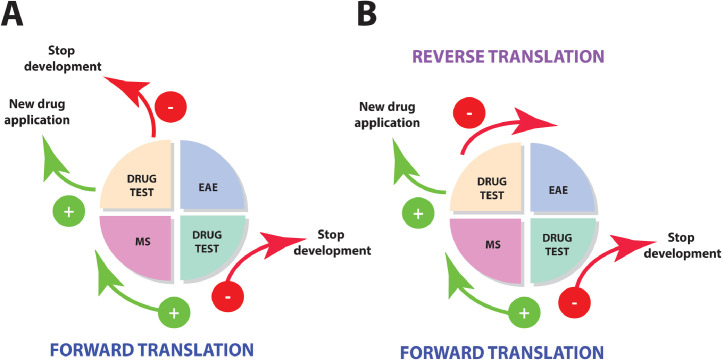
Multiple sclerosis (MS) is after trauma the most important neurological disease in young adults, affecting 1 per 1000 individuals. With currently available medications, most of these targeting the immune system, satisfactory results have been obtained in patients with relapsing MS, but these can have serious adverse effects. Moreover, despite some promising developments, such as with B cell targeting therapies or sphingosine-1-phosphate modulating drugs, there still is a high unmet need of safe drugs with broad efficacy in patients with progressive MS. Despite substantial investments and intensive preclinical research, the proportion of promising lead compounds that reaches the approved drug status remains disappointingly low. One cause lies in the poor predictive validity of MS animal models used in the translation of pathogenic mechanisms into safe and effective treatments for the patient. This disturbing situation has raised criticism against the relevance of animal models used in preclinical research and calls for improvement of these models. This publication presents a potentially useful strategy to enhance the predictive validity of MS animal models, namely, to analyze the causes of failure in forward translation (lab to clinic) via reverse translation (clinic to lab). Through this strategy new insights can be gained that can help generate more valid MS models.
多发性硬化症(MS)是仅次于创伤的青年成年人中最重要的神经疾病,每 1000 人中就有 1 人患病。目前可使用的药物大多数针对免疫系统,对复发型 MS 患者取得了令人满意的效果,但这些药物可能会产生严重的不良反应。此外,尽管在 B 细胞靶向治疗或鞘氨醇-1-磷酸调节药物等方面取得了一些有希望的进展,但仍有很大的未满足的需求,需要在进展型 MS 患者中使用具有广泛疗效且安全的药物。尽管进行了大量投资和深入的临床前研究,但有希望成为先导化合物的比例达到批准药物状态仍然令人失望地低。一个原因在于用于将发病机制转化为针对患者的安全有效治疗的 MS 动物模型的预测有效性较差。这种令人不安的情况引发了对临床前研究中使用的动物模型相关性的批评,并呼吁改进这些模型。本出版物提出了一种增强 MS 动物模型预测有效性的潜在有用策略,即通过反向翻译(从临床到实验室)分析向前翻译(从实验室到临床)失败的原因。通过这种策略,可以获得新的见解,帮助生成更有效的 MS 模型。