Nutrition and Clinical Services Division (NCSD), International Centre for Diarrhoeal Disease Research, Bangladesh (icddr, b), Dhaka, Bangladesh.
PATH, Seattle, WA, USA.
Eur J Clin Nutr. 2021 Sep;75(9):1359-1367. doi: 10.1038/s41430-020-00843-9. Epub 2021 May 27.
BACKGROUND/OBJECTIVES: Stunted children often have poor appetite, which may limit their response to nutritional interventions. We investigated the effect of a nutritional intervention on the appetite status of stunted children.
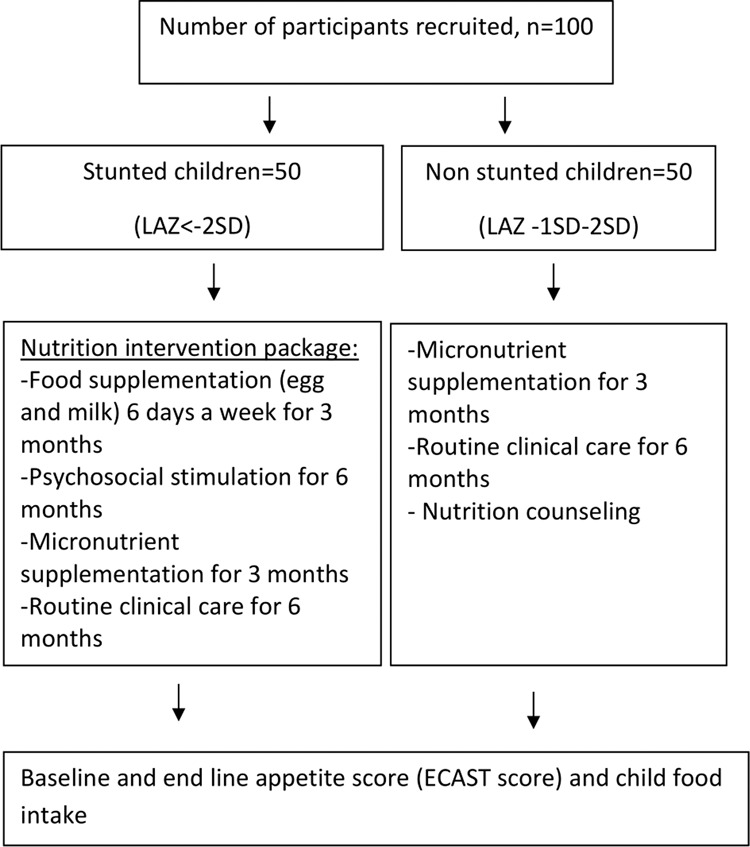
A longitudinal prospective intervention study was conducted with 50 stunted (length for age; LAZ < -2) (age and sex matched) aged 12-18 months and their mothers in Bauniabadh slum of Dhaka city. The stunted children received the following intervention package: one boiled egg and 150 ml milk daily 6 days a week for 3 months; psychosocial stimulation including structured play activities and parental counseling for 6 months; routine clinical care. Appetite status was measured using an interview-based tool "Early Childhood Appetite and Satiety Tool."
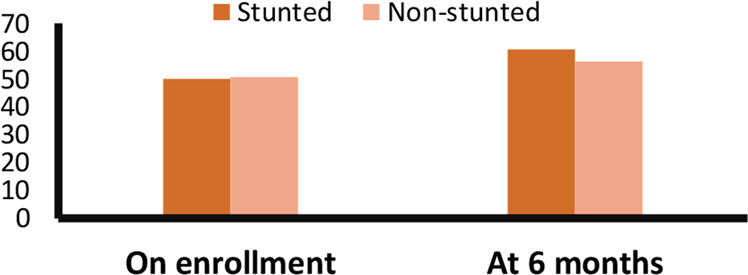
Over the period of nutritional intervention, the mean appetite score increased from 49 to 60 in the stunted children and was associated with increased food consumption. Over the intervention period, both egg and milk consumption increased (40.3-49.6 g and 83.8-138.5 ml, respectively).
Assessment of appetite status using EACST appears to be a useful tool for monitoring a nutritional intervention in stunted children. This tool may be useful for programs in managing child stunting in low-income countries and an important way to assess the efficacy of a nutritional intervention in these children.
背景/目的:发育迟缓的儿童通常食欲不佳,这可能限制了他们对营养干预的反应。我们研究了营养干预对发育迟缓儿童食欲状况的影响。
对达卡市巴努阿布德贫民窟的 50 名(年龄和性别匹配)12-18 个月龄的发育迟缓(身长别年龄;LAZ<-2)儿童及其母亲进行了一项纵向前瞻性干预研究。发育迟缓儿童接受以下干预措施:每周 6 天,每天食用 1 个煮鸡蛋和 150ml 牛奶,持续 3 个月;接受为期 6 个月的心理社会刺激,包括结构化游戏活动和家长咨询;接受常规临床护理。使用基于访谈的工具“幼儿食欲和饱腹感工具”(Early Childhood Appetite and Satiety Tool)来评估食欲状况。
在营养干预期间,发育迟缓儿童的平均食欲评分从 49 分增加到 60 分,这与食物摄入量的增加有关。在干预期间,鸡蛋和牛奶的摄入量都有所增加(分别为 40.3-49.6g 和 83.8-138.5ml)。
使用 EACST 评估食欲状况似乎是监测发育迟缓儿童营养干预的有用工具。该工具可能对在低收入国家管理儿童发育迟缓的项目有用,也是评估这些儿童营养干预效果的重要方法。