Department of Pharmacology, Institute of Biomedical Science, University of São Paulo, São Paulo, Brazil.
Front Immunol. 2021 May 12;12:674739. doi: 10.3389/fimmu.2021.674739. eCollection 2021.
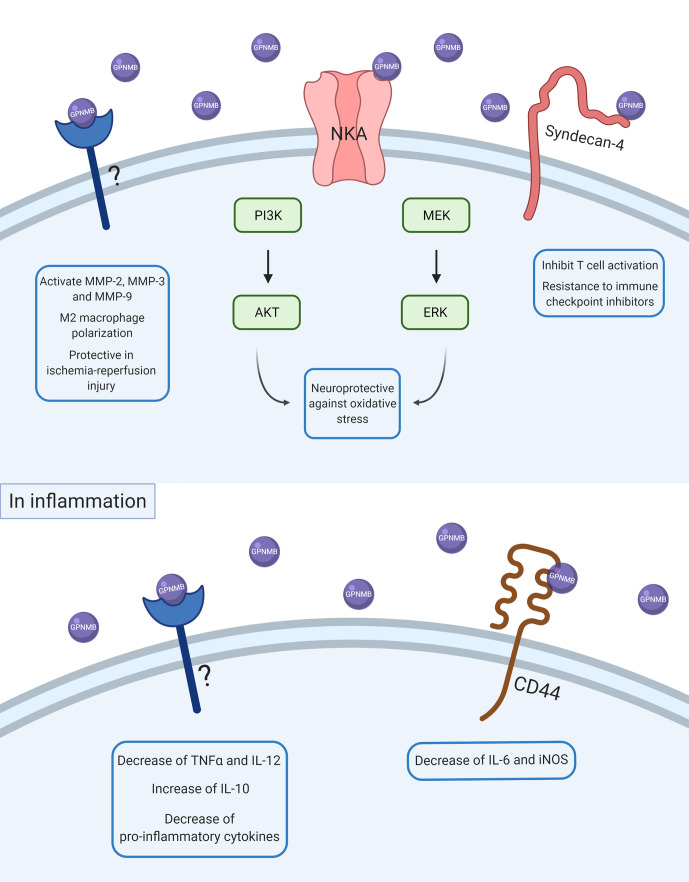
Inflammation is a response to a lesion in the tissue or infection. This process occurs in a specific manner in the central nervous system and is called neuroinflammation, which is involved in neurodegenerative diseases. GPNMB, an endogenous glycoprotein, has been recently related to inflammation and neuroinflammation. GPNMB is highly expressed in macrophages and microglia, which are cells involved with innate immune response in the periphery and the brain, respectively. Some studies have shown increased levels of GPNMB in pro-inflammatory conditions, such as LPS treatment, and in pathological conditions, such as neurodegenerative diseases and cancer. However, the role of GPNMB in inflammation is still not clear. Even though most studies suggest that GPNMB might have an anti-inflammatory role by promoting inflammation resolution, there is evidence that GPNMB could be pro-inflammatory. In this review, we gather and discuss the published evidence regarding this interaction.
炎症是组织损伤或感染的一种反应。这个过程在中枢神经系统中以特定的方式发生,被称为神经炎症,它与神经退行性疾病有关。GPNMB 是一种内源性糖蛋白,最近与炎症和神经炎症有关。GPNMB 在巨噬细胞和小胶质细胞中高度表达,这两种细胞分别参与外周和大脑中的固有免疫反应。一些研究表明,在促炎条件下,如 LPS 处理,以及在病理条件下,如神经退行性疾病和癌症,GPNMB 的水平升高。然而,GPNMB 在炎症中的作用尚不清楚。尽管大多数研究表明,GPNMB 通过促进炎症消退可能具有抗炎作用,但有证据表明 GPNMB 可能具有促炎作用。在这篇综述中,我们收集并讨论了已发表的关于这种相互作用的证据。