Department of Ophthalmology, Erasmus Medical Center, Room Ee 1663, P.O. Box 2040, 3000 CA, Rotterdam, The Netherlands.
School of Optometry, Graduate Group in Vision Science and Helen Wills Neuroscience Institute, University of California, Berkeley, Berkeley, CA, USA.
Graefes Arch Clin Exp Ophthalmol. 2021 Oct;259(10):3149-3157. doi: 10.1007/s00417-021-05193-1. Epub 2021 May 31.
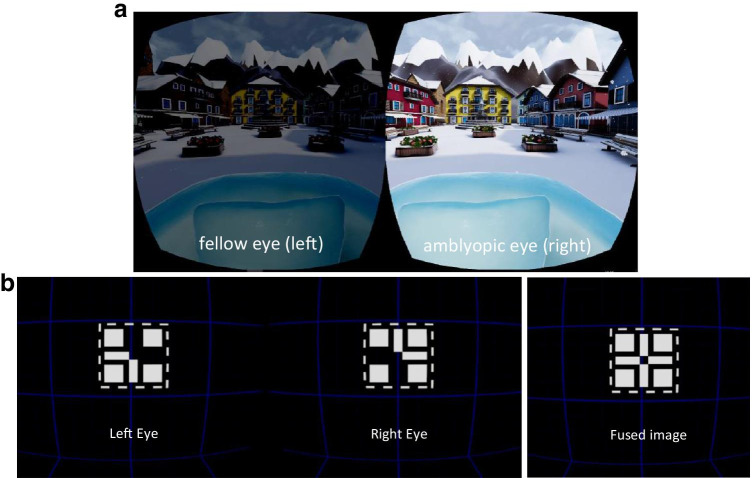
In an ongoing randomised clinical trial comparing dichoptic VR video games with patching for amblyopia, we evaluated any potential barriers to successful use of this novel amblyopia treatment method.
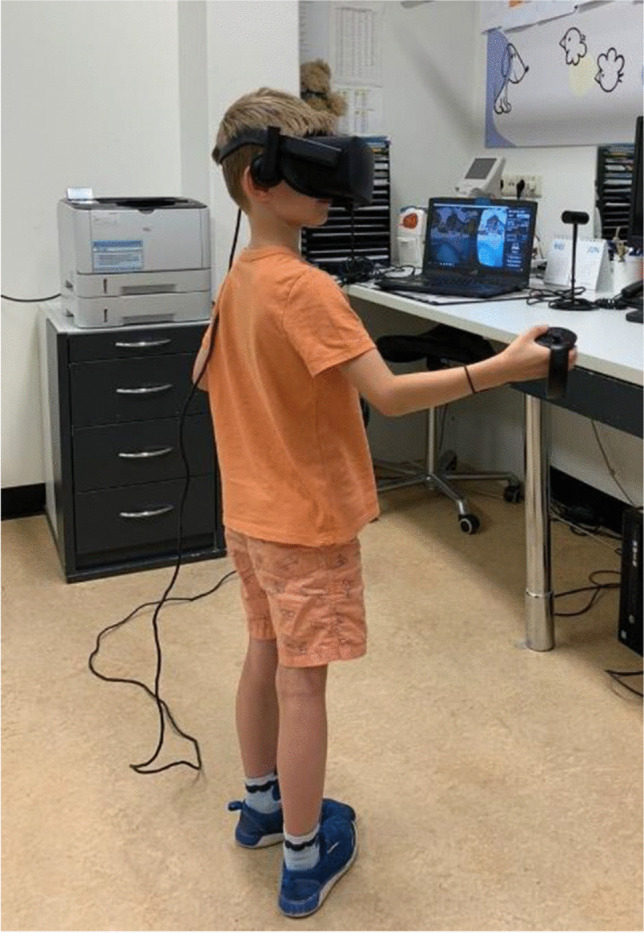
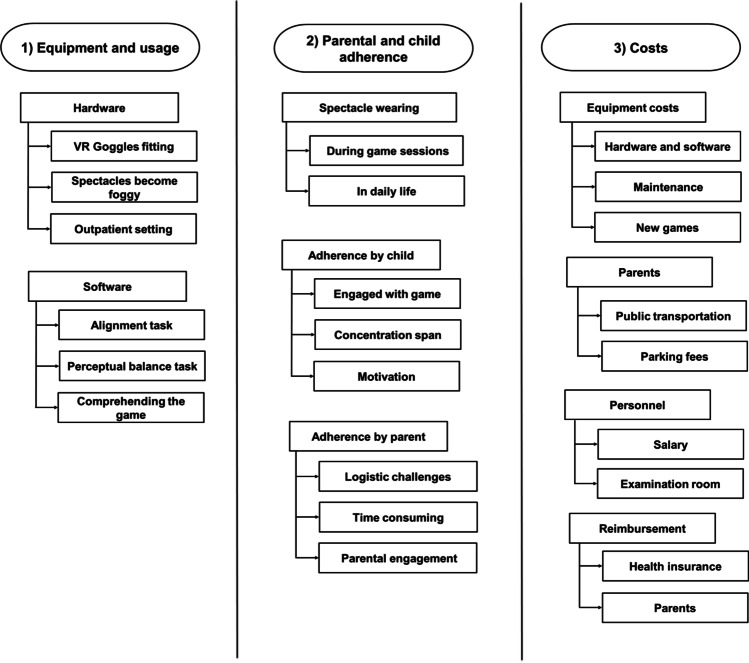
From December 2017, all newly diagnosed amblyopic children were recruited. Excluded were children under age 4 and patients with strabismus exceeding 30PD. The video game was played for 1 h per week at the outpatient clinic under direct supervision. Records were kept of difficulties encountered during treatment and categorised into domains. Factors influencing the successful completion of this treatment were identified and related to patient characteristics.
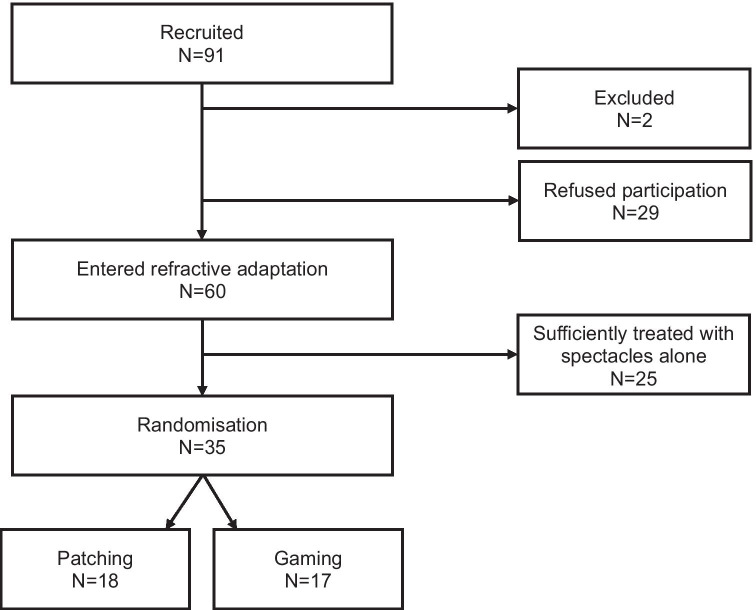
Ninety-one children were recruited for the trial, 20 parents refused participation before randomisation, because of the logistical challenges the outpatient dichoptic treatment would cause them. Of the 17 children who commenced dichoptic treatment (median age 6.2 years; IQR 4.9-8.4 years), 10 did not complete treatment. Children under age 5.5 years were unable to comprehend the game settings or the game itself. Older children (N = 7; 41%) were less willing to comply with the video game. Loss of interest in the game (N = 8; 47%) was found to be a limiting factor at all ages.
Half of the children failed to complete VR dichoptic treatment, mainly due to young age. In countries with nationwide screening where amblyopia is detected before age 6, the applicability of such dichoptic treatment is limited.
在一项正在进行的比较双眼视虚拟现实视频游戏与遮盖治疗弱视的随机临床试验中,我们评估了这种新型弱视治疗方法成功应用的任何潜在障碍。
从 2017 年 12 月开始,招募所有新诊断的弱视儿童。排除年龄小于 4 岁和斜视超过 30PD 的患者。视频游戏在门诊每周进行 1 小时,在直接监督下进行。记录治疗过程中遇到的困难,并按领域进行分类。确定影响完成这种治疗的因素,并与患者特征相关联。
91 名儿童参加了试验,20 名家长在随机分组前因门诊双眼视治疗对他们造成的后勤挑战而拒绝参与。17 名开始双眼视治疗的儿童(中位数年龄 6.2 岁;四分位距 4.9-8.4 岁)中,有 10 名未完成治疗。年龄小于 5.5 岁的儿童无法理解游戏设置或游戏本身。年龄较大的儿童(N=7;41%)不太愿意遵守视频游戏规则。对游戏失去兴趣(N=8;47%)是所有年龄段的限制因素。
一半的儿童未能完成虚拟现实双眼视治疗,主要是因为年龄较小。在全国范围内进行弱视筛查的国家,弱视在 6 岁之前被发现,这种双眼视治疗的适用性有限。