Division of Gastroenterology and Hepatology, Department of Internal Medicine, University of Michigan, Ann Arbor, MI, United States.
Division of Gastroenterology and Hepatology, Department of Internal Medicine, Tokai University School of Medicine, Isehara, Japan.
Expert Rev Clin Immunol. 2021 Jul;17(7):727-736. doi: 10.1080/1744666X.2021.1935877. Epub 2021 Jun 8.
Oral health is closely related to extra-oral disease status, as may be represented by the manifestations of gastrointestinal and liver diseases.
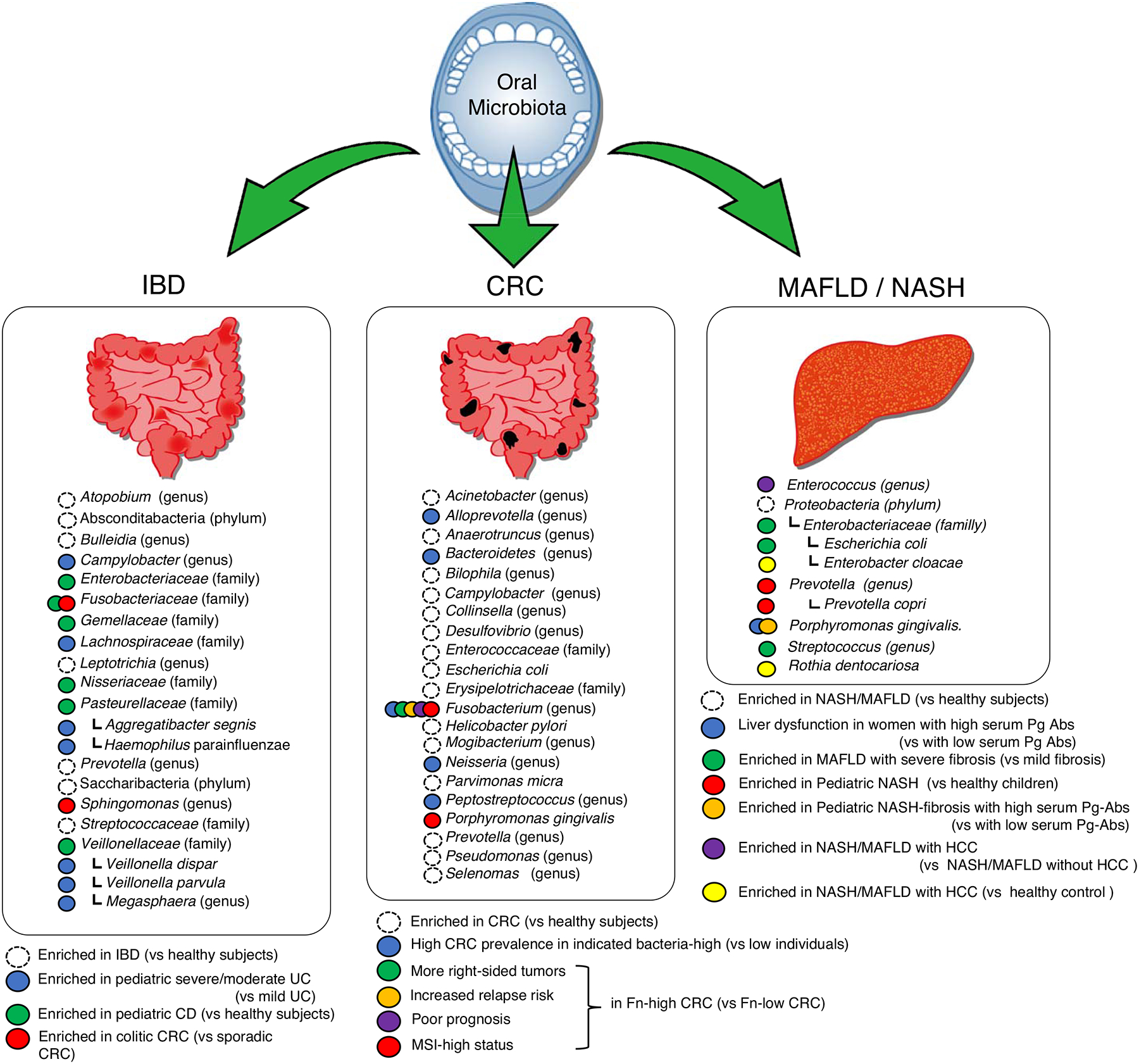
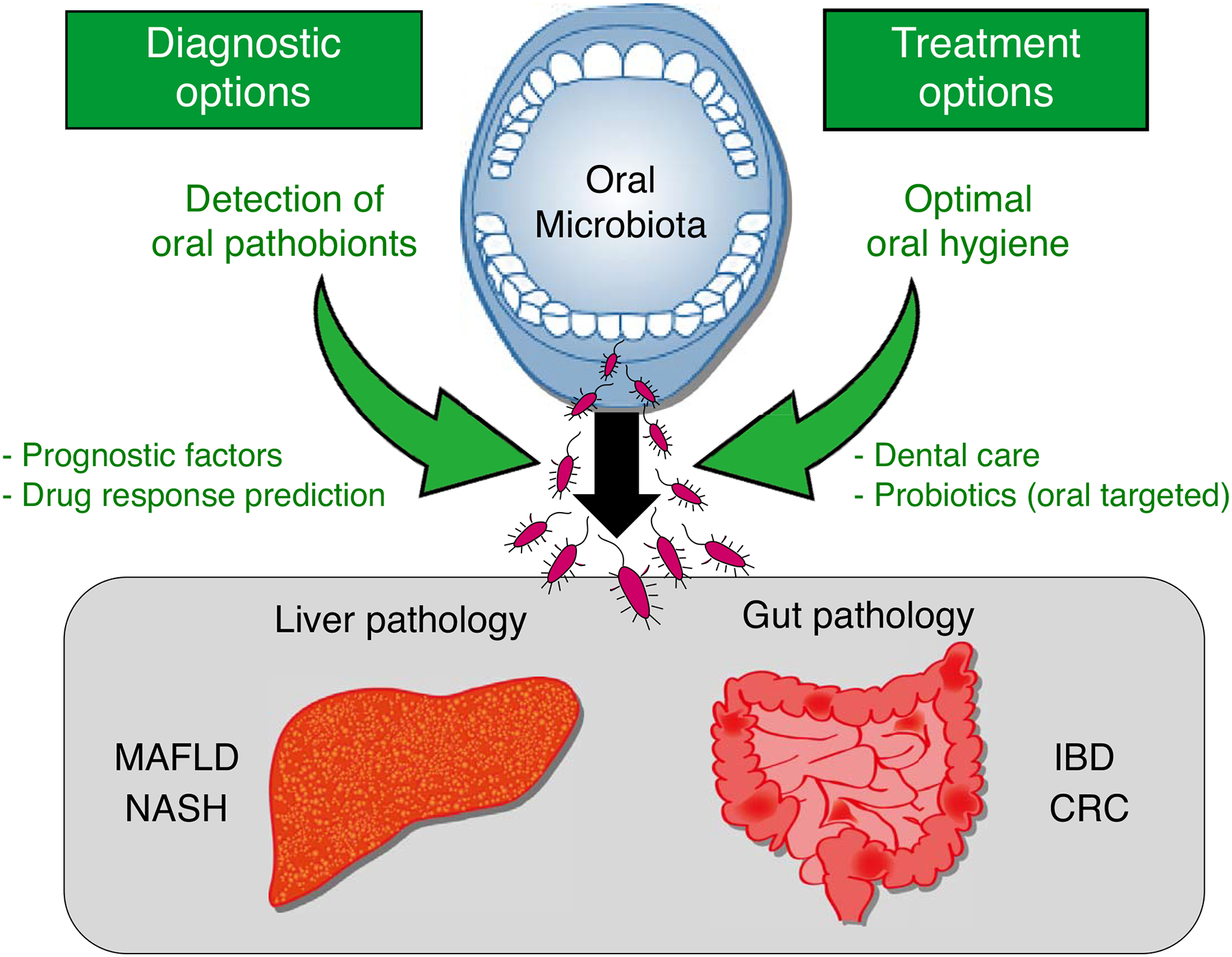
This review focuses on the roles that the oral-gut or the oral-gut-liver axis play in the pathogenesis of inflammatory bowel disease, colorectal cancer, metabolic fatty liver disease, and nonalcoholic steatohepatitis. The discussion will begin with clinical data, including data from preclinical animal models, to elucidate mechanisms. We will also discuss ways to target oral dysbiosis and oral inflammation to treat gastrointestinal and liver diseases.
Several studies have demonstrated that oral pathobionts can translocate to the gastrointestinal tract where they contribute to inflammation and tumorigenesis. Furthermore, oral bacteria that migrate to the gastrointestinal tract can disseminate to the liver and cause hepatic disease. Thus, oral bacteria that ectopically colonize the intestine may serve as biomarkers for gastrointestinal and liver diseases. Also, understanding the characteristics of the oral-gut and oral-gut-liver microbial and immune axes will provide new insights into the pathogenesis of these diseases.
口腔健康与口腔外疾病状况密切相关,例如胃肠道和肝脏疾病的表现。
本综述重点介绍了口腔-肠道或口腔-肠道-肝脏轴在炎症性肠病、结直肠癌、代谢性脂肪性肝病和非酒精性脂肪性肝炎发病机制中的作用。讨论将从临床数据开始,包括来自临床前动物模型的数据,以阐明机制。我们还将讨论针对口腔菌群失调和口腔炎症来治疗胃肠道和肝脏疾病的方法。
几项研究表明,口腔条件致病菌可以易位到胃肠道,从而导致炎症和肿瘤发生。此外,迁移到胃肠道的口腔细菌可以传播到肝脏并引起肝脏疾病。因此,异位定植于肠道的口腔细菌可作为胃肠道和肝脏疾病的生物标志物。此外,了解口腔-肠道和口腔-肠道-肝脏微生物和免疫轴的特征将为这些疾病的发病机制提供新的见解。