Department of Obstetrics and Gynecology, Feinberg School of Medicine, Northwestern University, Chicago, IL 60611, USA.
Department of Anatomy and Cell Biology, University of Kansas Medical Center, Kansas City, KS 66160, USA.
Int J Mol Sci. 2021 May 5;22(9):4902. doi: 10.3390/ijms22094902.
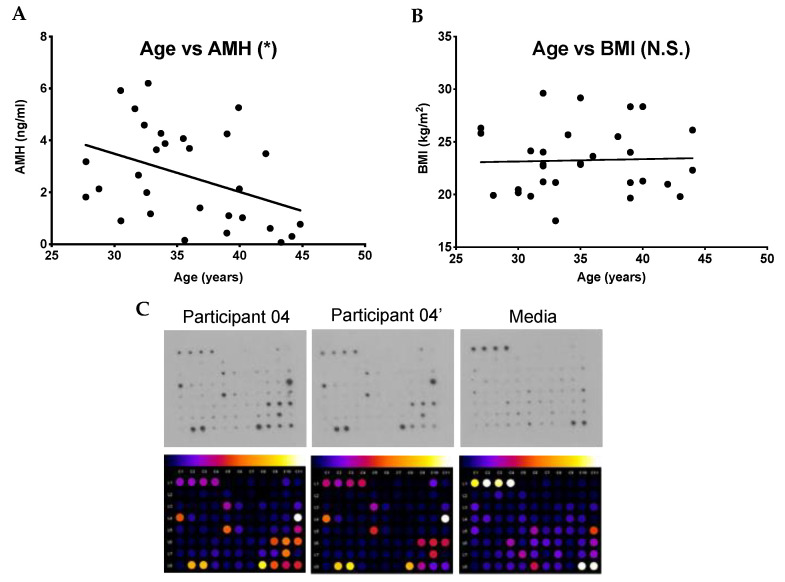
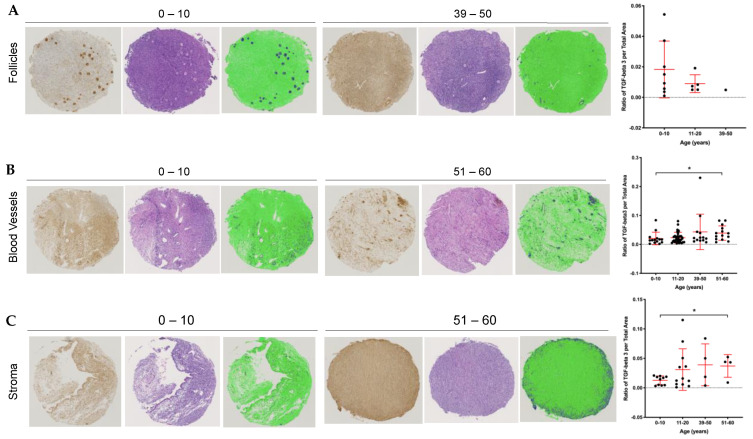
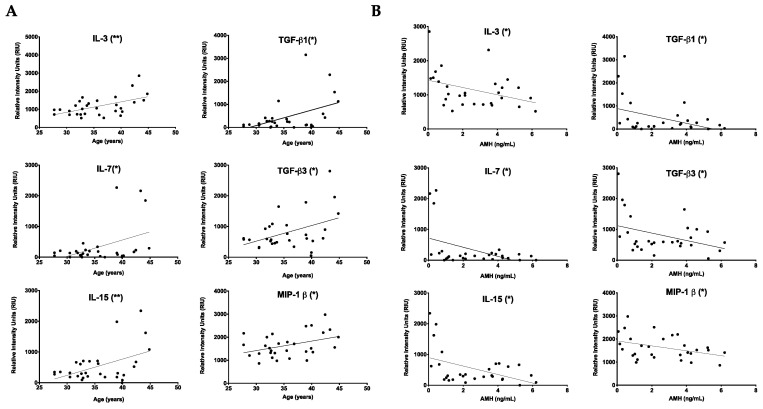
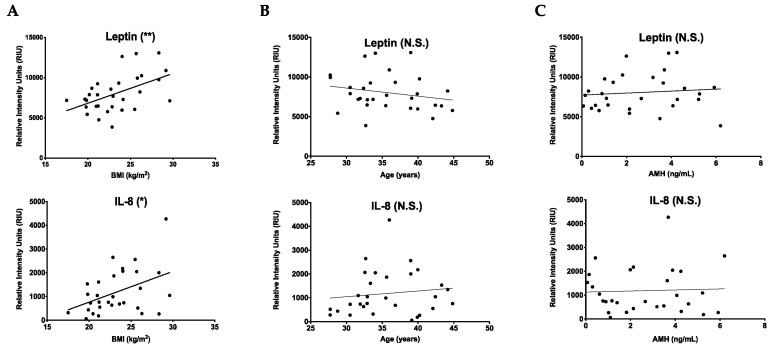
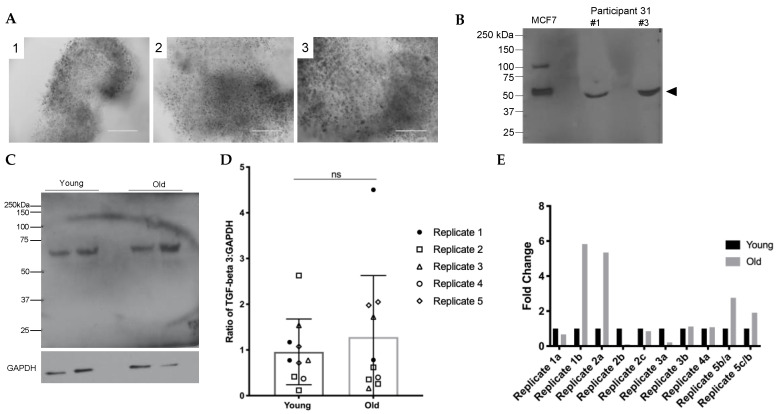
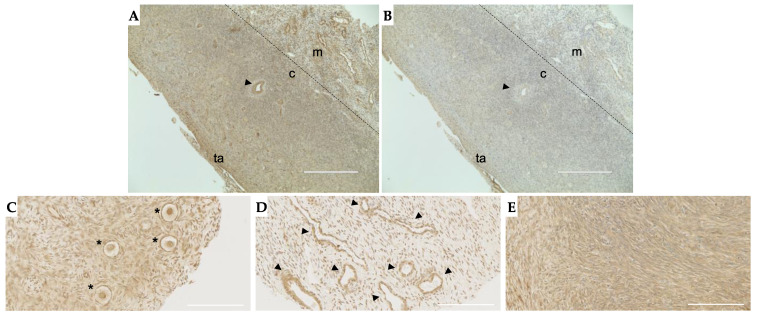
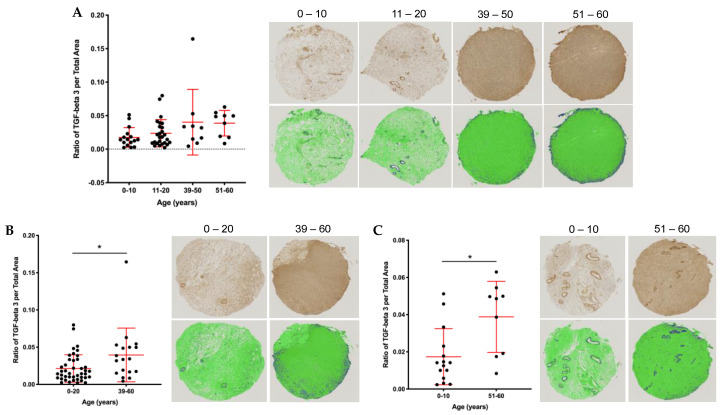
The female reproductive system ages before any other organ system in the body. This phenomenon can have tangible clinical implications leading to infertility, miscarriages, birth defects and systemic deterioration due to estrogen loss. "Fibroinflammation" is a hallmark of aging tissues; there is an increase in inflammatory cytokines and fibrotic tissue in the aging ovarian stroma. We systematically evaluated immunomodulatory factors in human follicular fluid, which, like the stroma, is a critical ovarian microenvironment directly influencing the oocyte. Using a cytokine antibody array, we identified a unique fibroinflammatory cytokine signature in follicular fluid across an aging series of women (27.7-44.8 years). This signature (IL-3, IL-7, IL-15, TGFβ1, TGFβ3 and MIP-1) increased with chronologic age, was inversely correlated to anti-Müllerian hormone (AMH) levels, and was independent of body mass index (BMI). We focused on one specific protein, TGFβ3, for further validation. By investigating this cytokine in human cumulus cells and ovarian tissue, we found that the age-dependent increase in TGFβ3 expression was unique to the ovarian stroma but not other ovarian sub-compartments. This study broadens our understanding of inflammaging in the female reproductive system and provides a defined fibroinflammatory aging signature in follicular fluid and molecular targets in the ovary with potential clinical utility.
女性生殖系统比身体中的任何其他器官系统都更早衰老。这种现象可能会对生育能力、流产、出生缺陷和因雌激素流失导致的全身恶化产生切实的临床影响。“纤维炎症”是衰老组织的标志;老化卵巢基质中炎症细胞因子和纤维组织增加。我们系统地评估了人类卵泡液中的免疫调节因子,这些因子与基质一样,是直接影响卵母细胞的关键卵巢微环境。使用细胞因子抗体阵列,我们在一系列年龄逐渐增长的女性(27.7-44.8 岁)的卵泡液中鉴定出一种独特的纤维炎症细胞因子特征。该特征(IL-3、IL-7、IL-15、TGFβ1、TGFβ3 和 MIP-1)随年龄的增长而增加,与抗苗勒氏管激素(AMH)水平呈负相关,且与体重指数(BMI)无关。我们专注于一种特定的蛋白质 TGFβ3 进行进一步验证。通过研究这种细胞因子在人类卵丘细胞和卵巢组织中的表达,我们发现 TGFβ3 表达的年龄依赖性增加仅发生在卵巢基质中,而不是其他卵巢亚区。这项研究拓宽了我们对女性生殖系统炎症老化的认识,并提供了卵泡液中明确的纤维炎症老化特征和卵巢中的分子靶标,具有潜在的临床应用价值。