Division of Gastroenterology, University of Calgary, Calgary, AB T2N 1N4, Canada.
Division of Internal Medicine, University of Calgary, Calgary, AB T2N 1N4, Canada.
Nutrients. 2021 May 9;13(5):1581. doi: 10.3390/nu13051581.
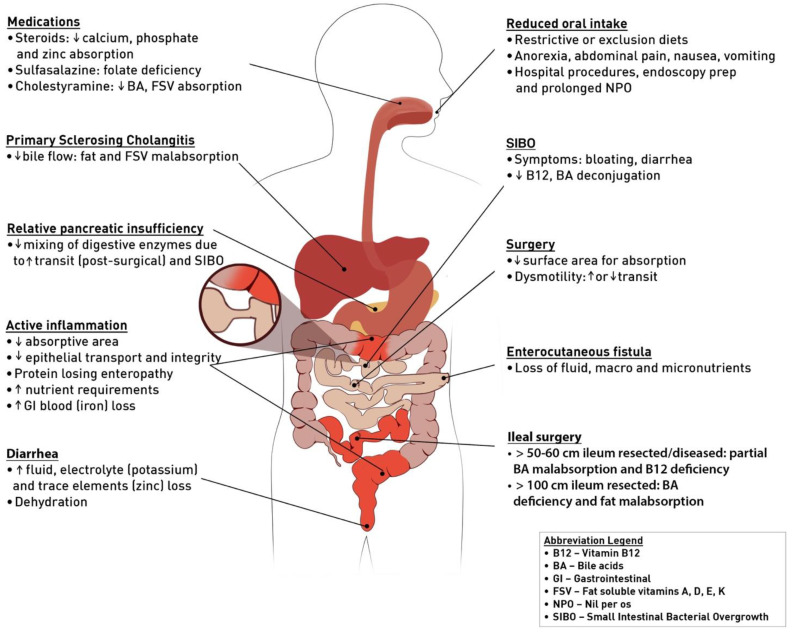
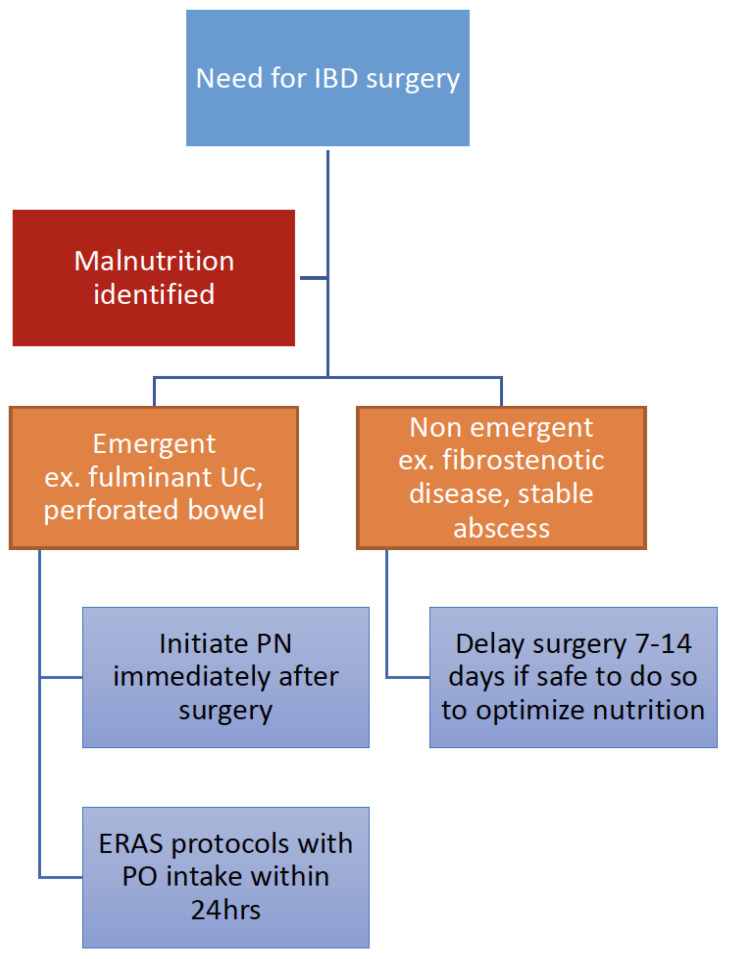
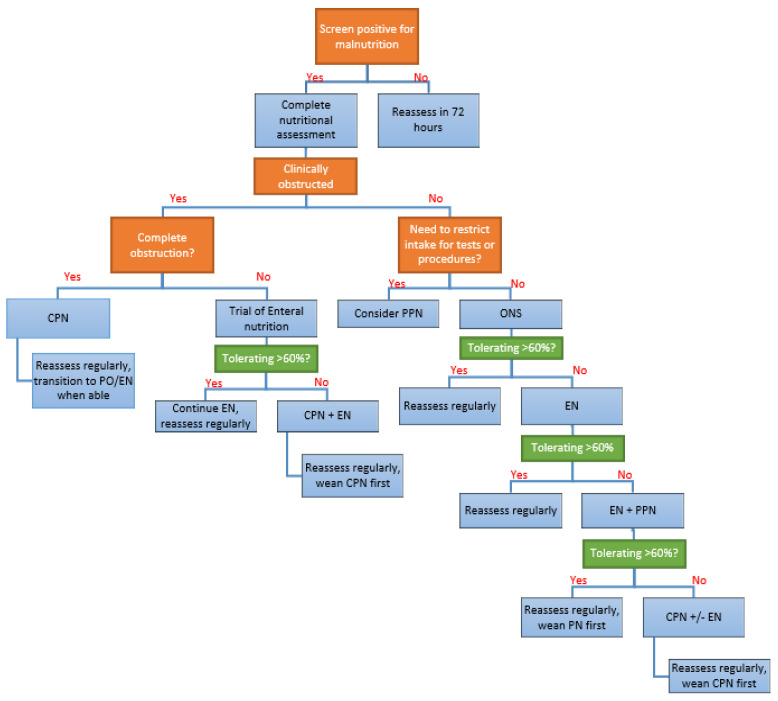
Malnutrition is highly prevalent in inflammatory bowel disease (IBD) patients and disproportionately affects those admitted to hospital. Malnutrition is a risk factor for many complications in IBD, including prolonged hospitalization, infection, greater need for surgery, development of venous thromboembolism, post-operative complications, and mortality. Early screening for malnutrition and prompt nutrition intervention if indicated has been shown to prevent or mitigate many of these outlined risk factors. There are many causes of malnutrition in IBD including reduced oral food intake, medications, active inflammation, and prior surgical resections. Hospitalization can further compound pre-existing malnutrition through inappropriate diet restrictions, nil per os (NPO) for endoscopy and imaging, or partial bowel obstruction, resulting in "post-hospital syndrome" after discharge and readmission. The aim of this article is to inform clinicians of the prevalence and consequences of malnutrition in IBD, as well as available screening and assessment tools for diagnosis, and to offer an organized approach to the nutritional care of hospitalized adult IBD patients.
营养不良在炎症性肠病(IBD)患者中非常普遍,并且不成比例地影响那些住院的患者。营养不良是 IBD 许多并发症的一个风险因素,包括延长住院时间、感染、更需要手术、发生静脉血栓栓塞、术后并发症和死亡率。早期筛查营养不良并在需要时及时进行营养干预已被证明可以预防或减轻许多这些列出的风险因素。IBD 中导致营养不良的原因很多,包括口服食物摄入减少、药物、活动炎症和先前的手术切除。住院治疗可能会通过不适当的饮食限制、内镜和影像学检查的禁食(NPO)或部分肠梗阻进一步加重先前存在的营养不良,导致出院后和再次入院后的“住院后综合征”。本文的目的是告知临床医生 IBD 患者营养不良的流行程度和后果,以及用于诊断的可用筛查和评估工具,并为住院成年 IBD 患者的营养护理提供一种有组织的方法。